
What's Happening?
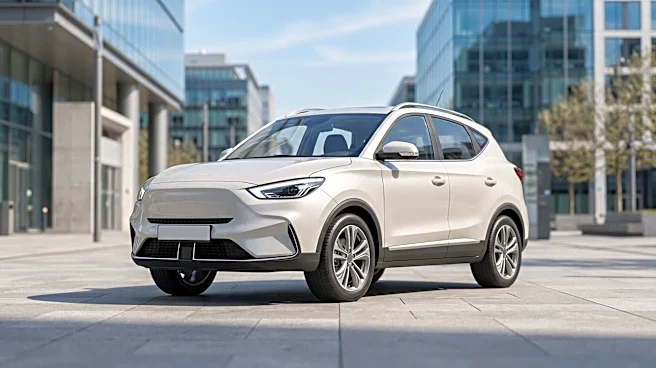
Kia's compact electric SUV, the EV3, is on track to become the brand's first electric vehicle to surpass 100,000 annual sales. As of January-September this year, global wholesale sales for the EV3 reached
82,295 units, requiring only 17,705 more units to hit the 100,000 mark. This achievement is largely attributed to strengthening domestic sales and the EV3's recent entry into new markets in North and Latin America. The EV3's sales performance is notable, especially given a general slowdown in EV demand. The model was also recognized as the World Car of the Year at the 2025 World Car Awards, underscoring its product competitiveness. This success positions the EV3 as a key driver in Kia's expanding EV lineup, contributing to the brand's overall EV sales growth, which already surpassed last year's full-year total by September.
Why It's Important?
The potential for the Kia EV3 to reach 100,000 annual sales signifies a significant milestone for Kia in the competitive electric vehicle market, particularly within the U.S. and North American regions. The EV3's strong performance, especially its entry into the U.S. and Canadian markets via production at Kia's Mexico plant, indicates a strategic shift and growing consumer acceptance of Kia's EV offerings in these key automotive markets. This success could lead to increased investment in EV production and infrastructure in the region, potentially creating jobs and fostering economic growth. For U.S. consumers, the availability of a popular and award-winning EV like the EV3 could expand choices and accelerate the transition to electric vehicles. The investment by Kia in its Mexican plant to produce both internal combustion engine vehicles and EVs also highlights a broader trend of automakers localizing production to serve North American demand, impacting supply chains and regional manufacturing.
What's Next?
With the EV3 nearing its 100,000-unit annual sales target, Kia is likely to continue its focus on expanding the model's presence in North and Latin American markets. The company's investment of $649 million through 2028 to convert existing production lines in Mexico for EV manufacturing and expand charging infrastructure suggests a long-term commitment to the region. This investment is expected to create 2,000 direct jobs by 2030, indicating a positive economic impact. Future developments may include further localization of EV component manufacturing and increased marketing efforts to capitalize on the EV3's momentum. The success of the EV3 could also influence Kia's strategy for other upcoming EV models, such as the EV5, PV5, EV2, and EV4, potentially leading to similar market entry strategies and production expansions in North America.
Beyond the Headlines
The success of the Kia EV3 in approaching 100,000 annual sales, particularly with its strategic entry into the U.S. market through Mexican production, reflects a broader trend in the automotive industry: the increasing importance of regional manufacturing hubs for electric vehicles. This approach helps mitigate supply chain risks, reduces shipping costs, and can make EVs more competitive in terms of pricing for consumers. The EV3's achievement, following the Ioniq 5 as only the second model in the Hyundai Motor Group to reach this sales volume, underscores the growing maturity and consumer acceptance of non-Tesla EVs. This development could also signal a shift in consumer preferences towards more compact and affordable electric SUVs, influencing future product development across the industry. Furthermore, the investment in Mexico for EV production highlights the evolving economic relationship between the U.S. and its North American neighbors in the context of the global energy transition.