




What's Happening?
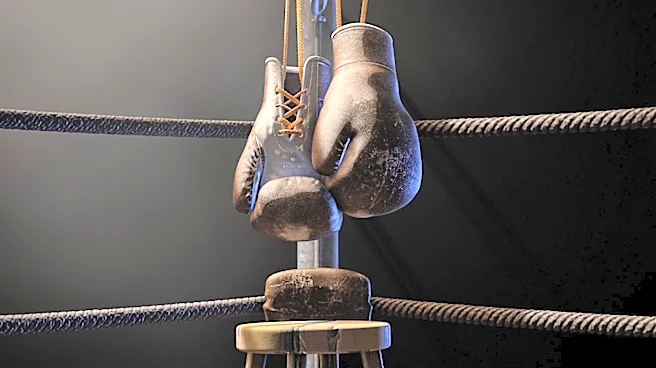
September 23, 2026, marks the 100th anniversary of the first historic boxing match between Jack Dempsey and Gene Tunney. This fight, held in Philadelphia, drew an unprecedented crowd of 120,000 fans and captivated the nation. Jack Dempsey, known for his aggressive
fighting style and charisma, was a dominant heavyweight champion who had revitalized boxing in the 'Roaring Twenties.' Gene Tunney, a brilliant tactician and intellectual, presented a stark contrast to Dempsey's brawling persona. Their first encounter saw Tunney outbox Dempsey over ten rounds, winning every round and securing the heavyweight crown. Dempsey, who had been out of the ring for three years prior to this fight, acknowledged Tunney's superior boxing skills. The event was a monumental spectacle, setting records for attendance and gate receipts, and was widely covered by media, including the first live radio broadcast of a world championship bout.
Why It's Important?
The Dempsey-Tunney rivalry is a cornerstone of American sports history, transcending boxing to become a cultural phenomenon. Their first fight, and the subsequent rematch known for the 'long count' controversy, captured the imagination of a nation and solidified boxing's place as a premier sport. The contrasting personalities of Dempsey, the 'Manassa Mauler,' and Tunney, the 'Fighting Marine' and intellectual, created a compelling narrative that resonated with the public. This rivalry demonstrated the power of sports to unite and excite a diverse audience, from the working class to the elite. The record-breaking attendance and radio listenership highlighted the growing influence of mass media in sports, setting precedents for how major events would be consumed. The fights also showcased the evolution of boxing strategy, pitting Dempsey's raw power against Tunney's scientific approach, influencing future generations of fighters and trainers.
What's Next?
While the event itself is a historical centennial, its legacy continues to influence boxing and sports commentary. Future discussions and analyses will likely revisit the strategic nuances of the fight, the cultural impact of both Dempsey and Tunney, and the broader context of the 'Roaring Twenties' in which their rivalry unfolded. The 'long count' from their second fight, which occurred a year later, remains a subject of debate and will undoubtedly be a focal point in any retrospective. The centennial serves as an opportunity for sports historians and enthusiasts to re-examine the careers of these two legends and their contributions to the sport. Educational institutions and media outlets may produce documentaries, articles, or special programs to commemorate this significant anniversary, ensuring that the story of Dempsey and Tunney continues to be told to new audiences.
Beyond the Headlines
The Dempsey-Tunney fights offer a deeper look into the societal values and cultural shifts of early 20th-century America. Dempsey's journey from a 'hobo' to a national hero embodied the American dream, while Tunney's intellectual pursuits challenged the stereotype of the unrefined boxer, sparking discussions about intelligence and athleticism. The massive public interest, including the presence of women in the audience and the involvement of political figures, reflected boxing's transition from a marginalized activity to a mainstream spectacle. The media's portrayal of Dempsey as a 'villain' against Carpentier, and later his eventual acceptance by the public after his loss to Tunney, illustrates the complex relationship between athletes, media, and public perception. The rivalry also highlights the enduring human fascination with competition, courage, and the pursuit of greatness, making it a timeless narrative that continues to resonate beyond the boxing ring.