
What's Happening?
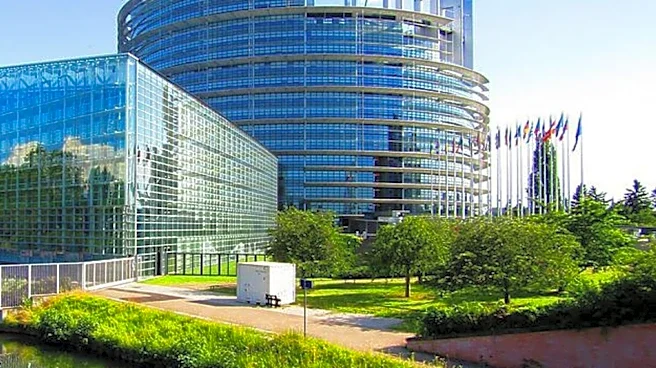
The European Union has announced a significant investment of €21 billion into 46 critical minerals projects. This initiative is a strategic move to bolster Europe's supply chain for essential materials
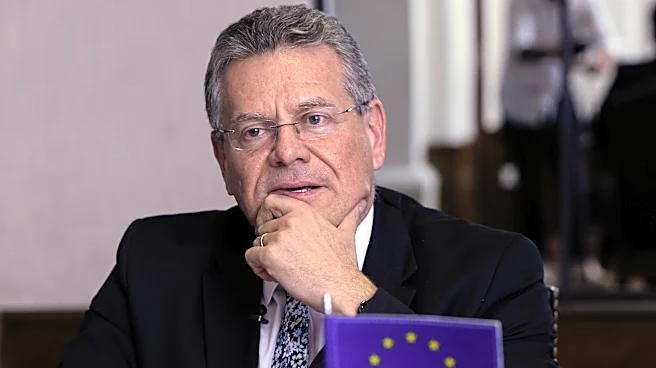
like lithium, gallium, and rare earths, which are crucial for electric vehicles, defense equipment, and renewable energy technologies. The goal is to increase European production of these minerals by 2030, thereby reducing the bloc's reliance on foreign suppliers, particularly China. EU industry commissioner Stéphane Séjourné warned of potential economic disruption in the coming months, emphasizing the geopolitical challenge that could arise from over-dependence on external sources. This announcement comes amidst ongoing trade negotiations between EU trade commissioner Maroš Šefčovič and China, aimed at addressing China's trade surplus with the EU.
Why It's Important?
This investment is critical for the EU's economic sovereignty and strategic autonomy, particularly in sectors vital for future growth and security. By securing its own supply of critical minerals, the EU aims to mitigate risks associated with potential trade tensions and supply chain disruptions. The move reflects a broader global trend among major economic powers to de-risk their supply chains and reduce reliance on single-source suppliers for strategic resources. For the U.S., this development in the EU could signal a strengthening of allied supply chains, potentially offering more diversified sourcing options for American industries that also rely on these critical minerals. It also highlights the increasing global competition for these resources and the strategic importance of domestic production capabilities in a volatile geopolitical landscape.
What's Next?
The EU's critical minerals projects are expected to be operational by 2030, with some facilities, like a rare earths plant near Pau, France, projected to begin operations in late 2026. These projects, including a gallium plant in Greece and a lithium processing facility in Finland, are part of the EU's Critical Raw Materials Act, introduced in 2024. The success of these initiatives will be closely watched as they aim to reduce dependence on foreign suppliers. Concurrently, EU trade commissioner Maroš Šefčovič will continue negotiations with China, which could influence the immediate trade landscape and the urgency of these domestic mineral projects. The long-term impact will depend on the effectiveness of these projects in meeting the EU's demand and their ability to withstand global market fluctuations and geopolitical pressures.
Beyond the Headlines
The EU's proactive investment in critical minerals underscores a fundamental shift in global economic strategy, moving away from purely efficiency-driven supply chains towards resilience and security. This initiative has significant ethical and environmental dimensions, as the extraction and processing of these minerals can have substantial ecological impacts. The EU's commitment to domestic production will likely involve stringent environmental regulations and sustainable practices, potentially setting new global standards. Furthermore, this move could reshape international trade dynamics, fostering new alliances and potentially intensifying competition for mineral resources globally. It also highlights the growing recognition that economic security is inextricably linked to resource security, particularly in the context of advanced technologies and green energy transitions.