
What's Happening?
The November 4 episode of 'WWE NXT' garnered an average of 552,000 viewers, marking a 30% decrease compared to the 792,000 viewers who tuned into 'AEW Dynamite's' 'Blood and Guts' special. The 'WWE NXT' episode,
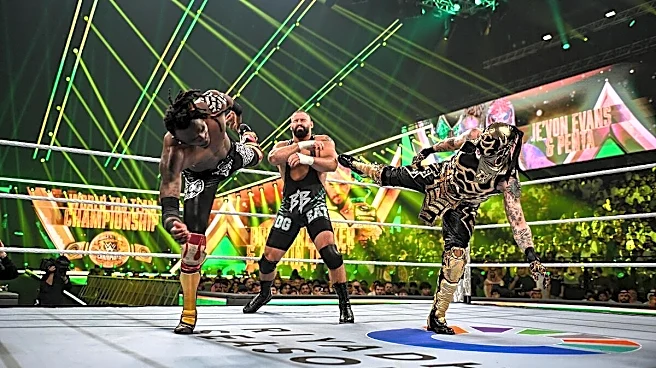
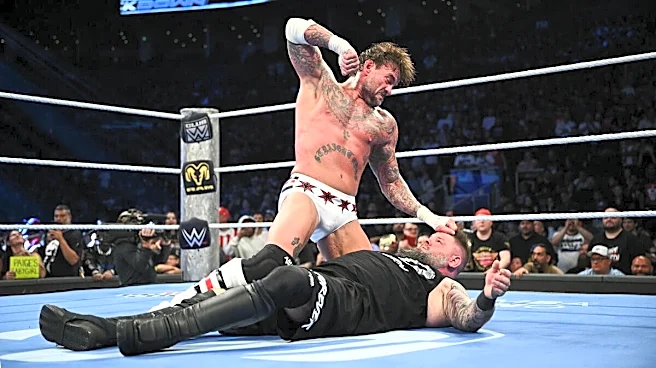
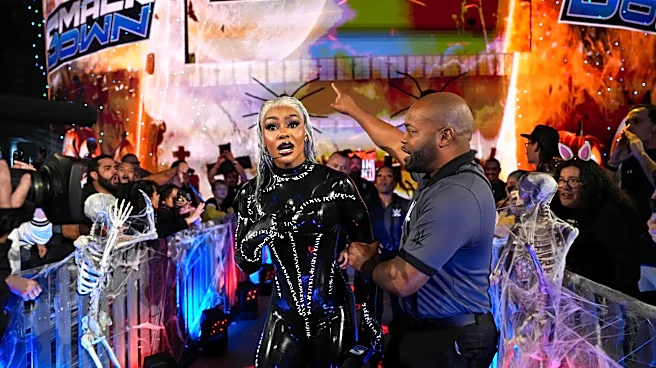
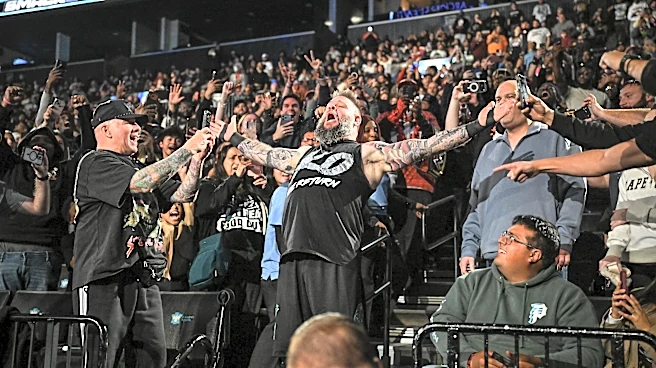
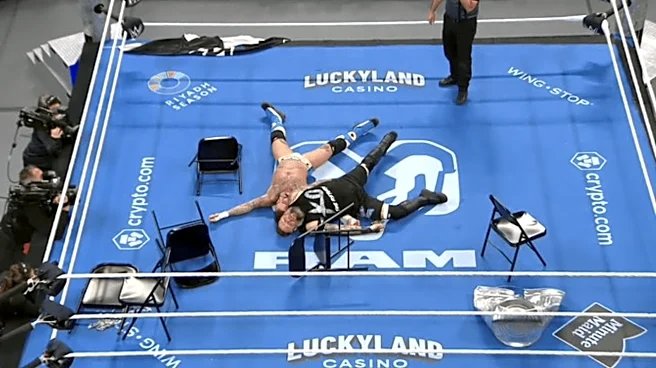
which was moved to Wednesday night due to midterm elections, featured several main roster talents in an attempt to compete with AEW. Notable segments included John Cena inviting Zilla Fatu to the upcoming John Cena Classic, Cody Rhodes presenting the Dusty Tag Team Classic tournament trophy to Noam Dar and Romeo Moreno, and championship challenges from Paige and CM Punk. Paige was unsuccessful in her bid for the WWE NXT Women's Championship against Kelani Jordan, while Kevin Owens' interference led to Grayson Waller retaining his WWE NXT Championship against CM Punk. Despite the overall viewership drop compared to 'Dynamite,' this 'NXT' episode saw a 6% increase from the previous week's 520,000 viewers on October 27. In the 18-49 demographic, 'NXT' achieved a 0.13 rating, a 44% rise from the prior week's 0.09, though still significantly lower than 'Dynamite's' 0.24.
Why It's Important?
This viewership report highlights the intense competition within the professional wrestling landscape in the U.S., particularly between WWE and AEW. The significant viewership disparity, despite WWE's strategic deployment of main roster stars on 'NXT,' underscores AEW's strong appeal, especially with its 'Blood and Guts' special event. For WWE, the 30% drop in viewership against a direct competitor, even with a preempted schedule, indicates a challenge in maintaining audience share when going head-to-head with major events. The slight week-over-week increase for 'NXT' suggests a baseline audience, but the overall trend against a strong competitor points to the need for compelling content and strategic scheduling to capture and retain viewers. This competition directly impacts advertising revenue, network negotiations, and the overall market value of both wrestling promotions, influencing their ability to attract top talent and expand their fan bases.
What's Next?
The ongoing competition between WWE NXT and AEW Dynamite is expected to continue, with both promotions likely to strategize their programming and talent deployment to maximize viewership. WWE may re-evaluate its approach to counter-programming, especially during special events from rival promotions. The performance of 'NXT' in key demographics will be closely monitored as it seeks to grow its audience. Future scheduling decisions, particularly around major holidays or political events, will be critical in avoiding direct conflicts that could dilute viewership. Both promotions will continue to leverage their star power and unique match types to attract and retain viewers, with the ultimate goal of dominating the professional wrestling market.
Beyond the Headlines
The dynamic between WWE and AEW reflects a broader trend in the entertainment industry where established giants face challenges from newer, agile competitors. This rivalry not only drives innovation in wrestling content and presentation but also impacts talent acquisition and development. Wrestlers now have more options, potentially leading to better contracts and creative freedom. The emphasis on specific demographics, like the 18-49 age group, highlights the importance of attracting younger audiences for long-term sustainability in television programming. The 'Monday Night Wars' era of the late 1990s serves as a historical parallel, demonstrating how intense competition can lead to both creative peaks and strategic missteps, ultimately shaping the future of the industry.