



What's Happening?
Magnolia Bakery, a renowned establishment founded in 1996 in New York City, is significantly expanding its presence across the United States and internationally through franchising. Initially known for its classic American baked goods and a cameo in 'Sex
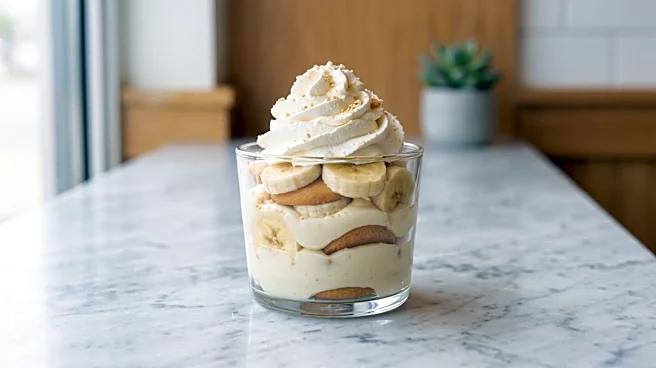
and the City,' the bakery's growth is now largely fueled by the immense popularity of its banana pudding. According to Nathan Lauer, Magnolia's current CEO, banana pudding sales have seen an over 6000% increase in U.S. retail locations since the store opened, now accounting for 30-40% of total sales. Bobbie Lloyd, former CEO and current Chief Branding Officer, identified the pudding as a 'sleeper-hit' and scaled its production to meet demand. New franchised locations have already opened in Kentucky and Utah, with plans for further expansion into cities like Cleveland, Philadelphia, Louisville, and Chicago, as well as deals in Los Angeles and other areas across the country. The company aims to bring the Magnolia experience to more customers globally through these franchising efforts.
Why It's Important?
This expansion signifies a strategic shift in Magnolia Bakery's business model, leveraging franchising to accelerate growth and market penetration. For the U.S. food and beverage industry, it highlights the power of a single 'hero product' to drive significant revenue and brand recognition, even for established businesses. The move into new markets creates job opportunities in retail and food service sectors in various states. It also demonstrates the continued consumer demand for nostalgic and comfort-oriented food items, as noted by Lloyd, who stated that the authenticity and familiarity of Magnolia's offerings resonated with customers tired of overly 'precious' culinary trends. The success of Magnolia's franchising model could serve as a case study for other regional or niche food businesses looking to scale nationally, emphasizing the importance of strong operational leadership and a clear understanding of consumer preferences. The brand's ability to maintain relevance and build upon its pop-cultural influence, as described by Lauer, underscores effective brand management in a competitive market.
What's Next?
Magnolia Bakery plans to continue its aggressive franchising strategy, with CEO Nathan Lauer, who has a background in franchising with companies like Jamba Juice and Jimmy John's, leading the charge. The company anticipates opening more storefronts in various U.S. cities, including Cleveland, Philadelphia, Louisville, and Chicago, and is actively working on deals in Los Angeles and other regions. The focus will be on establishing a widespread presence to make the brand more accessible to customers nationwide. Social media engagement will likely play a crucial role in announcing new locations and generating excitement, given the strong positive response observed when 'feelers' are put out. The ongoing success of the banana pudding will be critical to sustaining this growth, and the company will likely continue to innovate around its core offerings while maintaining the nostalgic appeal that has been central to its brand identity. Further international expansion is also a stated goal, indicating a long-term vision for global reach.
Beyond the Headlines
The story of Magnolia Bakery's expansion, particularly through the unexpected rise of its banana pudding, offers insights into consumer psychology and market trends. The emphasis on 'authenticity' and 'nostalgia' suggests a broader societal yearning for simpler times and comfort, which food brands can effectively tap into. This phenomenon extends beyond just taste, touching upon emotional connections and cultural memory. The brand's ability to capitalize on a 'sleeper-hit' product, rather than its initial star (cupcakes), highlights the importance of adaptability and keen observation of consumer behavior within a business. Furthermore, the strategic use of franchising reflects a modern approach to scaling, allowing for rapid expansion while potentially mitigating some of the direct operational risks associated with company-owned stores. This model also empowers local entrepreneurs, fostering economic activity in diverse communities. The enduring appeal of Magnolia Bakery, even decades after its founding, underscores the power of a strong brand narrative and a product that resonates deeply with its audience, transcending fleeting culinary trends.