



What's Happening?
South Africa's energy system is undergoing a significant transition, moving beyond a severe power crisis, according to BloombergNEF’s (BNEF) South Africa Transition Factbook 2026. The country has seen an end to persistent load shedding as coal power plants
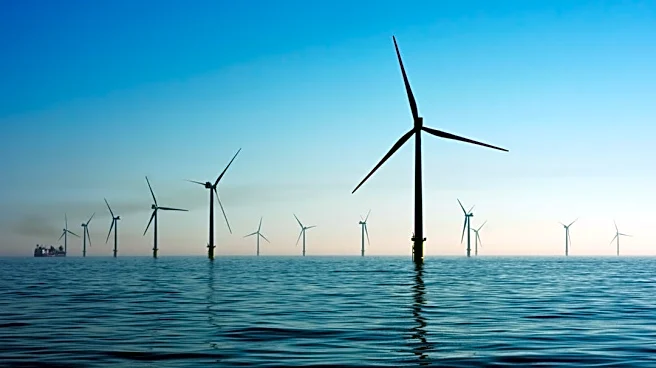
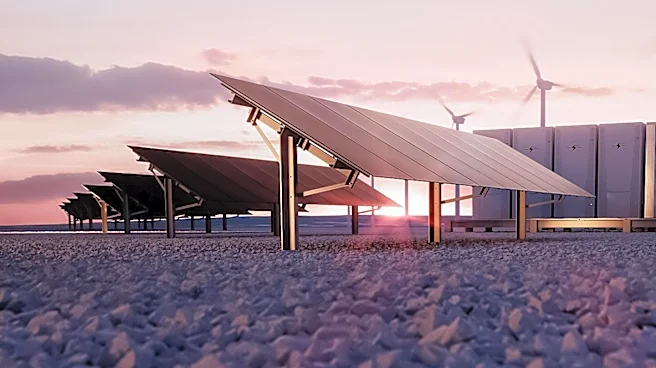
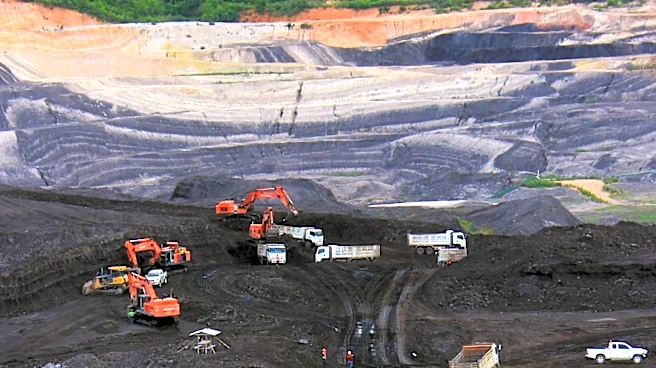
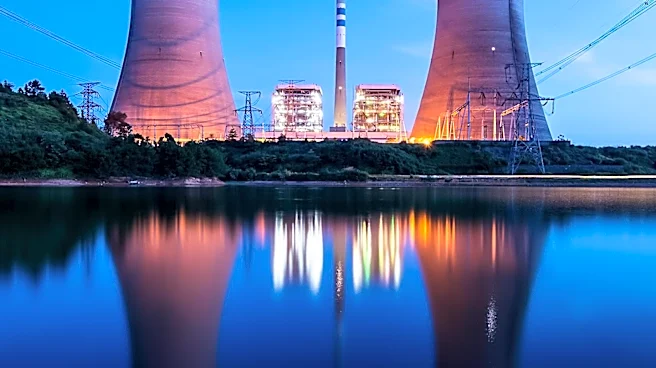
have returned to service and private sector participation in the electricity market has increased. Corporate power purchase agreements (PPAs) are now driving more utility-scale renewable energy additions than government auctions, with corporate buyers expected to support 73% of the 2.3 gigawatts of anticipated solar and wind additions in 2026. Despite this shift, coal remains central to South Africa’s power system, supplying 78% of electricity in 2025, a decrease from 90% in 2015. BNEF's Economic Transition Scenario projects that by 2050, solar and wind will supply 69% of the country's power demand, while coal's share will fall to 21% as aging plants retire. The transition is also influenced by South Africa's increasing reliance on China for clean-energy equipment, with China accounting for 98% of solar and 95% of battery imports in 2025.
Why It's Important?
This energy transition is crucial for South Africa's economic competitiveness and environmental goals. Industrial decarbonization is becoming a key issue, driven by policies like the EU’s Carbon Border Adjustment Mechanism (CBAM), which pressures emissions-intensive exports. South Africa's economy, heavily reliant on energy-intensive mining and metals production, faces a challenge to reduce emissions. The shift to renewables is not just a climate decision but increasingly about securing reliable power, managing costs, and gaining greater control over energy supply for South African businesses. However, high power costs and infrastructure constraints, particularly in transmission grid capacity, are limiting factors that could hinder economic growth and the deployment of more renewables. The country's strategic advantage in critical minerals like platinum-group metals, manganese, and chrome presents an opportunity to build domestic manufacturing and capture more value in the clean-energy supply chain, but high electricity prices currently impede this potential.
What's Next?
The next phase of South Africa's energy transition will heavily depend on whether infrastructure development, especially grid expansion, can keep pace with private investment in clean energy. Expanding the grid and reducing electricity costs are critical for deploying more renewables and enhancing the country's competitiveness in industries such as critical minerals and manufacturing. South Africa also has an opportunity to leverage its position as a major supplier of strategic minerals to build domestic manufacturing capabilities for clean-energy equipment, reducing its dependence on imports, particularly from China. Furthermore, the country's electric vehicle (EV) strategy, supported by incentives like the enhanced Automotive Investment Scheme and tax deductions, aims to revive its auto competitiveness by shifting existing manufacturing capacity towards EVs, aligning with global market transitions away from internal-combustion engines.
Beyond the Headlines
The transition highlights a broader global challenge for developing nations: balancing economic development with climate action. While South Africa is making strides in renewable energy, its continued reliance on coal underscores the complexities of phasing out fossil fuels in economies heavily dependent on them. The increasing dependence on China for clean-energy equipment also raises questions about supply chain resilience and geopolitical influences in the global energy transition. The situation in South Africa could serve as a case study for other African nations aiming for a 'climate leapfrog'—bypassing a fossil fuel-heavy development phase in favor of a low-carbon trajectory. Success in South Africa's transition could demonstrate a viable path for industrial decarbonization and economic growth in resource-rich developing countries, provided that infrastructure and financial challenges are effectively addressed.