







What's Happening?
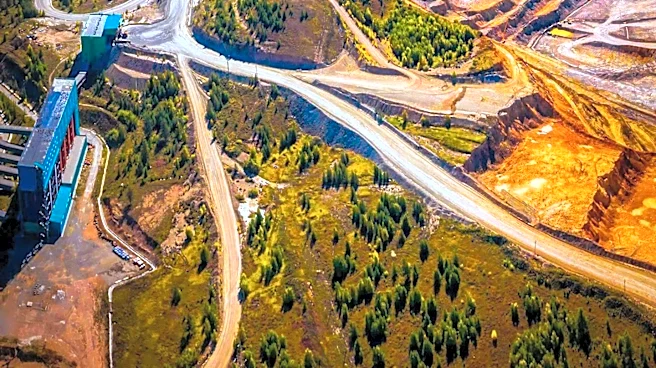
International commodity trader Traxys is actively assessing new sourcing opportunities for critical minerals, specifically tantalum, tungsten, and nickel, in East and Central Africa. This move comes as governments, including the U.S. administration, seek
to diversify their critical mineral supply chains and reduce reliance on a concentrated number of global producers. Traxys founder and Chief Executive Mark Kristoff stated on October 29 that the company is evaluating opportunities in these regions, building on its existing operations in South Africa and Zimbabwe. While Traxys has not yet announced new operations or supply agreements in the targeted African regions, the company is involved in U.S. efforts to secure raw material supplies for its $12 billion strategic critical minerals reserve. The Democratic Republic of Congo accounted for approximately 51% of global tantalum production in 2024, and Rwanda is a leading producer of tantalum and tungsten, highlighting the importance of these African nations to global mineral supplies. Traxys emphasizes its due diligence procedures for minerals from conflict-affected and high-risk areas, ensuring traceability and supply chain verification.
Why It's Important?
This initiative by Traxys is significant for U.S. economic and national security interests, as it directly supports the U.S. administration's strategy to secure critical mineral supplies and reduce dependence on foreign adversaries. The U.S. relies heavily on these minerals for various high-tech industries, defense applications, and renewable energy technologies. By diversifying sourcing to regions like East and Central Africa, the U.S. aims to mitigate supply chain vulnerabilities and geopolitical risks associated with current concentrated production. For African producers, while additional buyers like Traxys could increase mineral exports, the current model often sees minerals exported in raw or semi-processed form. This means that while the U.S. gains access to vital resources, the economic value captured by African economies through local processing may not significantly increase without further investment in processing infrastructure. The emphasis on traceability and due diligence also highlights growing concerns over ethical sourcing and conflict minerals, which can impact the reputation and market access for both producers and traders.
What's Next?
Traxys will continue to evaluate sourcing opportunities in East and Central Africa, with potential announcements of new operations or supply agreements in the future. The company's expansion into regions like Uzbekistan and Saudi Arabia for processing semi-finished products suggests a broader strategy to optimize its supply chain. The U.S. administration will likely continue to engage with commodity traders and international partners to build its strategic critical minerals reserve, potentially leading to more direct investments or partnerships in African mining sectors. The focus on traceability will likely drive stricter compliance requirements for mineral origin and supply chain verification, influencing commercial relationships between African producers and international traders. Future developments may also include discussions around increasing local processing capacity in Africa to allow these nations to capture more value from their mineral resources, although this remains a distinct challenge from securing raw supplies.
Beyond the Headlines
The pursuit of critical minerals by companies like Traxys, backed by U.S. strategic interests, underscores a global scramble for resources essential to modern technology and green energy transitions. This trend could reshape geopolitical alliances and economic dependencies, particularly as nations vie for control over these finite resources. The distinction between sourcing raw materials and developing processing capacity highlights a persistent challenge for mineral-rich developing nations: how to move up the value chain and avoid being merely suppliers of raw goods. Ethical considerations, particularly regarding conflict minerals and labor practices in high-risk areas, will remain a critical dimension. The increased demand for traceability could lead to more robust international standards and monitoring mechanisms, potentially transforming mining practices and governance in affected regions. Ultimately, the long-term implications could include significant shifts in global trade patterns, increased investment in mining infrastructure, and heightened diplomatic efforts to secure access to these vital materials.