






What's Happening?
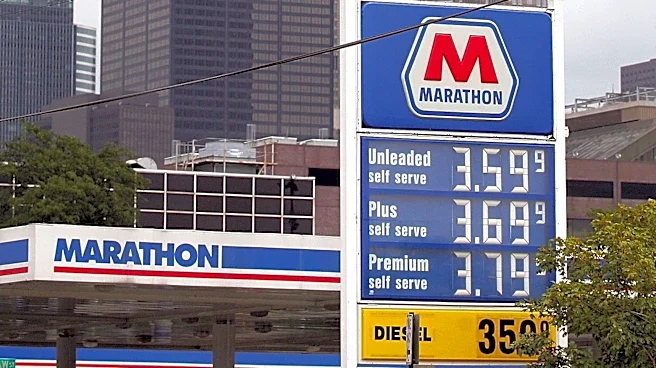
Marathon Petroleum Corporation (MPC) announced robust third-quarter 2026 results, achieving a record 100% refinery utilization across its system. The company reported adjusted EBITDA of $11.7 billion and earnings per share of $26.93, driven by a strong
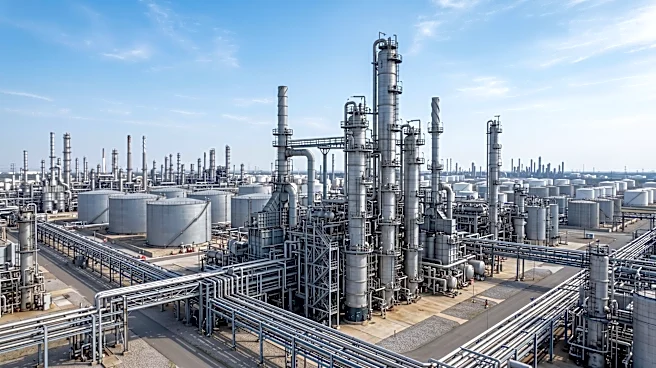
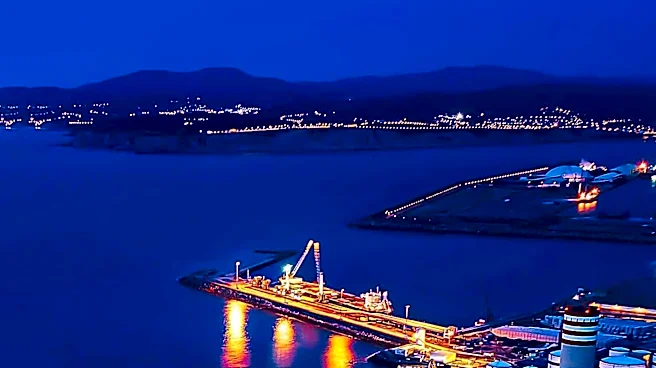
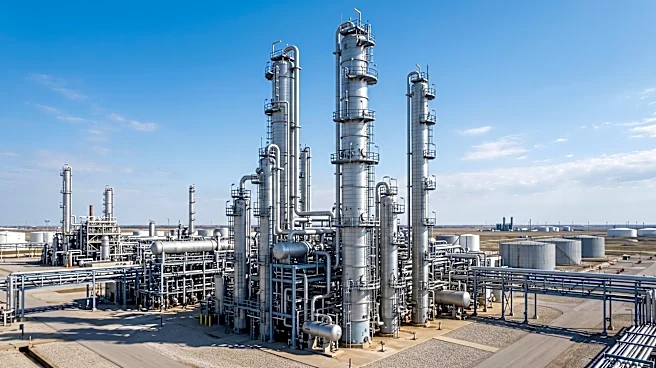
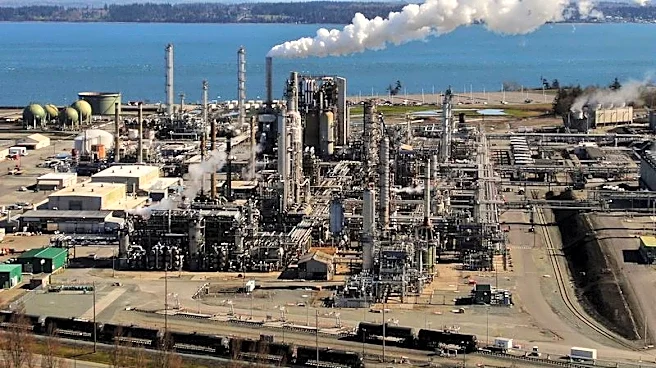
refining margin environment and efficient operations. Concurrently, MPC revealed an agreement to sell its St. Paul Park and Mandan refineries, along with associated midstream assets, to CVR Energy for $4.2 billion. This divestiture is part of MPC's strategy to optimize its portfolio and concentrate capital investments in the U.S. Gulf Coast region, which it identifies as structurally advantaged. The company plans to reinvest the $3.4 billion in proceeds received by MPC from this sale into Gulf Coast opportunities. Additionally, MPC increased its quarterly dividend by 10% and authorized a new $5 billion share repurchase program, underscoring its commitment to returning capital to shareholders. MPLX, MPC's midstream affiliate, also increased its quarterly distribution by 12.5% for the third consecutive year.
Why It's Important?
This strategic move by Marathon Petroleum signifies a significant shift in its operational focus, aiming to enhance long-term competitiveness and profitability. By divesting less strategically aligned assets and reinvesting in the U.S. Gulf Coast, MPC is positioning itself to capitalize on what it perceives as the most robust refining region globally. This concentration of assets could lead to improved operational efficiencies, better access to advantaged crude feedstocks, and increased flexibility to produce high-value products. The substantial capital return to shareholders through increased dividends and share repurchases signals management's confidence in the company's financial health and future earnings potential, which could attract investors. The continued growth and distributions from MPLX further strengthen MPC's financial profile, providing a stable cash flow stream that covers its dividend and capital expenditure requirements, a key differentiator in the energy sector.
What's Next?
Marathon Petroleum expects to finalize the sale of its St. Paul Park and Mandan refineries by the end of the fourth quarter of 2026. The proceeds from this sale are slated for reinvestment into strategic opportunities within the U.S. Gulf Coast, with specific projects likely to be detailed in upcoming earnings calls. The company anticipates higher capital spending in 2027 compared to historical averages, focusing on yield enhancement, reliability improvements, increased flexibility, and cost reduction in its Gulf Coast facilities. MPC projects continued strong performance into the fourth quarter, with crude throughput guidance of 2.8 million barrels per day and planned turnaround expenses of $230 million, primarily in Gulf Coast and West Coast conversion units. MPLX is also expected to see stronger EBITDA growth in 2027, driven by ongoing project ramp-ups and new initiatives in the Permian and Marcellus basins.
Beyond the Headlines
The divestiture and strategic refocus by Marathon Petroleum highlight a broader trend within the U.S. energy sector towards optimizing asset portfolios for long-term sustainability and competitive advantage. Companies are increasingly scrutinizing their operational footprints to concentrate resources in regions offering the best economic returns and strategic alignment. This move also underscores the growing importance of the U.S. Gulf Coast as a global refining hub, driven by its access to diverse crude supplies, robust infrastructure, and export capabilities. The emphasis on returning capital to shareholders, even amidst significant strategic investments, reflects a mature industry's commitment to shareholder value. Furthermore, MPC's continued investment in renewable diesel operations, which saw a significant year-over-year increase in adjusted EBITDA, indicates a dual strategy of maximizing traditional refining profits while also exploring growth in lower-carbon fuel segments, adapting to evolving energy market demands and regulatory landscapes.