






What's Happening?
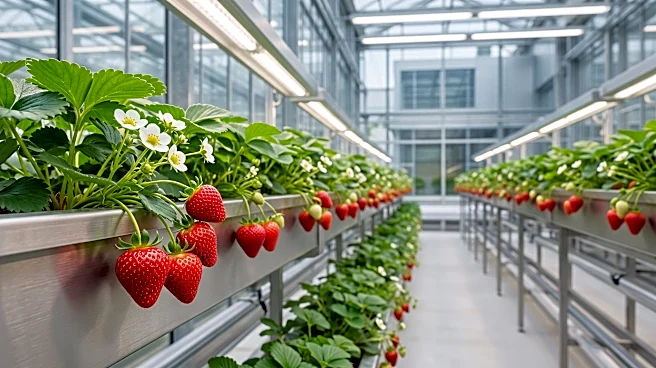
Plantik Biosciences and Hudson River Biotechnology have announced a partnership aimed at developing heat-tolerant strawberry varieties using advanced genome editing techniques. This collaboration seeks to address the increasing challenge of extreme heat events
globally, which significantly impact crop yields and quality, particularly for sensitive crops like strawberries. Plantik will utilize its ATLANTIS machine learning platform to identify specific genomic regions in strawberries that can be edited for heat tolerance. Hudson River Biotechnology will then perform these edits using its 'transgene-free' genome editing methods. The companies plan to initially focus on strawberries, an octoploid species that is genetically complex, before expanding to other crops. Validation trials for the heat-tolerant trait are already underway, building on Plantik's previous success in developing a heat-tolerant tomato in approximately 12 months, a process that traditionally takes five to eight years.
Why It's Important?
This partnership is significant for the U.S. agricultural sector, particularly for fruit growers facing the escalating impacts of climate change. Heat tolerance in crops is becoming a critical trait for ensuring food security and maintaining agricultural productivity. Strawberries, being highly susceptible to high temperatures that disrupt flowering, fruit set, and overall fruit quality, stand to benefit immensely. The ability to develop heat-tolerant varieties more rapidly through genome editing, as opposed to traditional breeding, could provide U.S. farmers with resilient crops that can withstand adverse weather conditions, thereby reducing crop losses and stabilizing supply chains. This innovation also democratizes access to advanced agricultural technology, as Hudson River Biotechnology's BioMaas platform allows breeders, including smaller ones, to utilize genome editing without the substantial in-house R&D investment typically required, potentially fostering broader innovation across the industry.
What's Next?
The immediate next steps involve continuing the validation trials for the heat-tolerant strawberry varieties. Following successful validation, the companies aim to make the heat-tolerance trait available for licensing to strawberry breeders. This will allow for the integration of this crucial trait into various commercial strawberry germplasms. The partnership also intends to invite other companies to bring their own strawberry varieties for trait challenges, suggesting a collaborative approach to expanding the application of this technology. Furthermore, the companies plan to extend this genome-editing approach to other crops beyond strawberries, indicating a broader strategy to address heat tolerance across a wider range of agricultural products. The long-term goal is to provide breeders with a de-risked and cost-effective solution for developing climate-resilient crops.
Beyond the Headlines
The collaboration between Plantik and Hudson River Biotechnology highlights a broader shift in agricultural innovation towards precision breeding and genetic engineering to combat climate change. The use of 'transgene-free' genome editing, which involves editing existing DNA without inserting foreign DNA, could potentially mitigate some of the public and regulatory concerns often associated with genetically modified organisms (GMOs). This approach could pave the way for wider acceptance and faster regulatory approval of such crops in the U.S. and globally. The initiative also underscores the increasing role of machine learning and AI platforms, like Plantik's ATLANTIS, in accelerating scientific discovery and development in biotechnology. This convergence of AI and genetic engineering could fundamentally transform how new crop varieties are developed, offering solutions to complex agricultural challenges with unprecedented speed and efficiency, and potentially reshaping the future of food production.