




What's Happening?
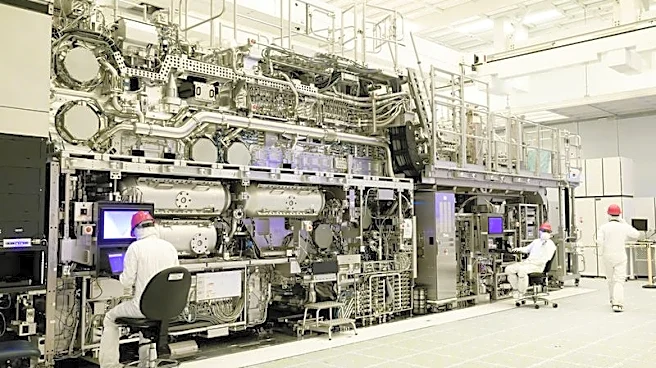
ASML, a leading Dutch technology company known for its production of extreme ultraviolet (EUV) lithography machines, is experiencing a significant market impact following reports of a technological breakthrough by a Chinese state-backed company. This
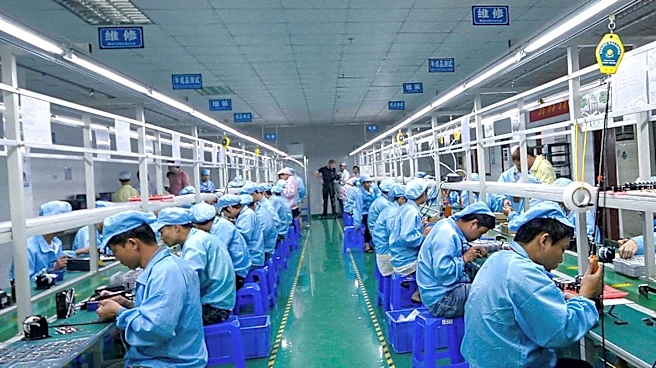
Chinese entity has reportedly begun manufacturing immersion deep-ultraviolet (DUV) lithography machines, which are crucial for producing advanced semiconductor chips. The news has led to a notable decline in ASML's stock value, with shares dropping over 5% in early trading. This development is part of China's ongoing efforts to match Western capabilities in chip manufacturing, a sector where ASML has been a dominant player. The Chinese machines are still in the early stages and do not yet match the sophistication of ASML's technology, but the move represents a strategic push by China to reduce its reliance on foreign technology.
Why It's Important?
The advancement by China in developing its own DUV lithography machines poses a potential threat to ASML's market dominance and could have broader implications for the global semiconductor industry. ASML's technology is critical for producing the cutting-edge chips needed for various applications, including artificial intelligence and advanced computing. If China succeeds in scaling up its production capabilities, it could alter the competitive landscape, affecting not only ASML but also other global players reliant on its technology. This shift could lead to increased competition and potentially lower prices for chip manufacturing equipment, impacting profit margins for established companies. Additionally, China's progress in this area could influence geopolitical dynamics, as technological self-sufficiency in semiconductors is a strategic priority for many nations.
What's Next?
ASML is likely to continue its efforts to expand its manufacturing capacity to meet the growing demand for its EUV machines, which are essential for producing the most advanced chips. The company has already announced plans to increase production, partly to support projects like Elon Musk's Terafab semiconductor initiative. Meanwhile, the Chinese company is expected to ramp up its production of DUV machines, with plans to manufacture five units this year and approximately 20 next year. This development will be closely monitored by industry stakeholders, as it could signal a shift in the global semiconductor supply chain. Regulatory responses from the U.S. and European governments may also play a role in shaping the future of this industry, particularly in terms of export controls and technology sharing.