





What's Happening?
Stephanie Shih, a multidisciplinary artist, has created a new piece titled '梅國 (Still life with chamoy and Dirty T Tamarindo)' for the Los Angeles County Museum of Art (LACMA). This artwork is part of the inaugural presentation in the David Geffen Galleries.
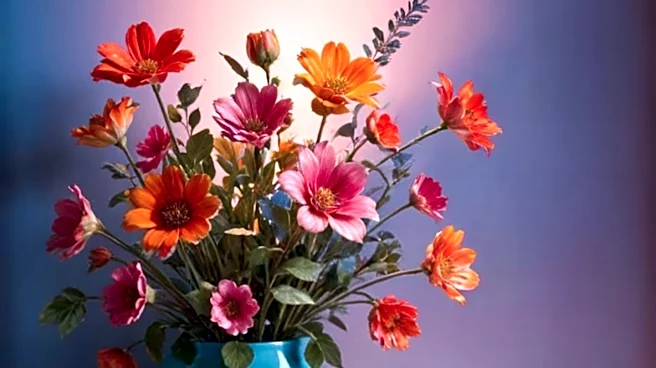
Shih's work, which was developed in a temporary studio within the gallery, features a traditional still life scene with two ceramic vessels. The piece incorporates a variety of elements, including chamoy candies, flowers, and a butterfly, symbolizing the intersection of global and local cultures. The artwork is displayed in 'The Global Appeal of Blue-and-White Ceramics' installation, which explores the historical journey of blue-and-white ceramics from the Middle East to Mexico, highlighting the cultural exchanges facilitated by globalism.
Why It's Important?
Shih's artwork is significant as it reflects the complex layers of cultural identity and global influences. By incorporating elements like chamoy, a condiment with roots in Asian and Mexican traditions, the piece underscores the impact of colonialism and cultural adaptation. This installation at LACMA not only showcases the historical significance of blue-and-white ceramics but also invites viewers to consider the broader implications of cultural exchange and identity formation. The piece serves as a reminder of the interconnectedness of global cultures and the ongoing dialogue between tradition and modernity.
What's Next?
As LACMA continues to redefine its identity with the new David Geffen Galleries, Shih's work may inspire further exploration of cultural narratives and identity in art. The museum's approach to curating exhibitions that transcend traditional art historical silos could lead to more inclusive and diverse representations of global cultures. This could encourage other artists to engage with similar themes, fostering a deeper understanding of cultural heritage and its contemporary relevance.
Beyond the Headlines
Shih's work also raises questions about the role of museums in shaping cultural narratives. By presenting art that challenges traditional Eurocentric perspectives, LACMA is contributing to a broader conversation about representation and inclusivity in the art world. This shift could influence how museums curate and present art, potentially leading to a more nuanced understanding of cultural history and identity.