









What's Happening?
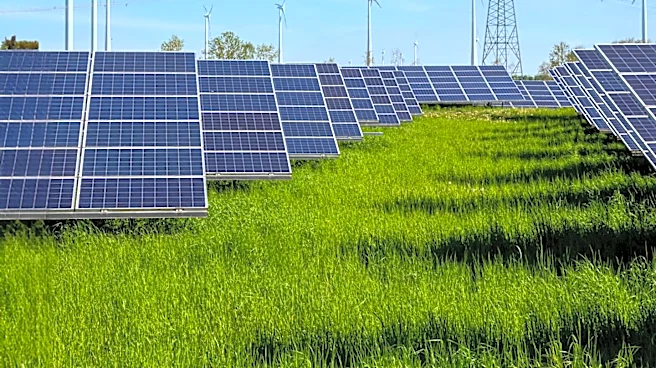
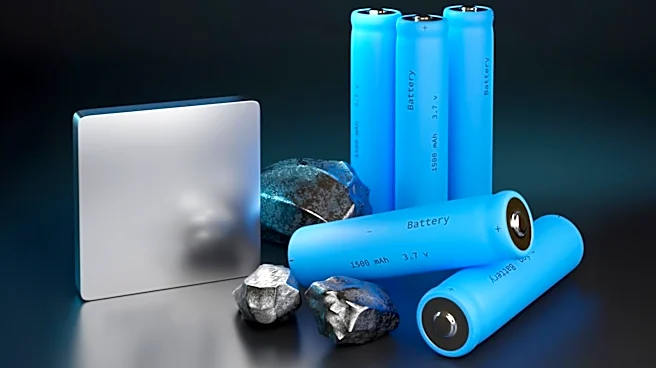
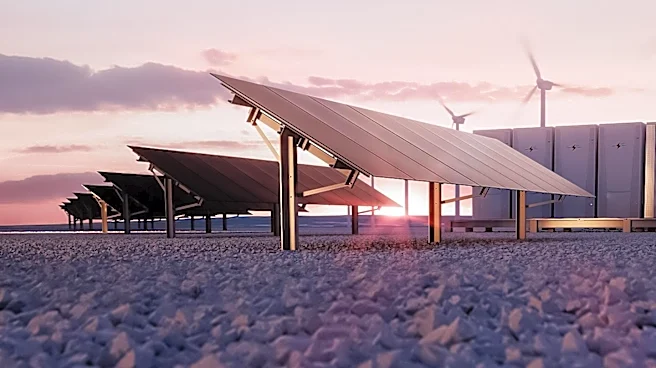
Researchers are exploring the potential of 'mud batteries,' specifically flowing zinc slurry batteries, as a next-generation energy storage solution. These batteries aim to store surplus renewable energy, such as solar and wind power, by circulating a mud-like
zinc slurry. This approach could offer a more scalable and durable alternative to traditional lithium-ion batteries, which are limited by safety and cost issues due to their use of flammable organic solvents. The flowing zinc slurry battery eliminates the fixed electrode, using nanoscale zinc particles dispersed in a conductive liquid medium. This design prevents dendrite formation, a common issue in conventional batteries, and enhances durability. The research team has demonstrated high Coulombic efficiency and durability in laboratory tests, but challenges remain in scaling up the system for practical use.
Why It's Important?
The development of flowing zinc slurry batteries could significantly impact the renewable energy sector by providing a safer and more cost-effective energy storage solution. As the demand for renewable energy grows, the ability to store and release energy efficiently becomes crucial. This technology could reduce reliance on lithium-ion batteries, which are expensive and pose safety risks. By using abundant and inexpensive materials like zinc, these batteries could lower costs and increase accessibility for large-scale energy storage. This advancement supports the transition to a decarbonized society by addressing one of the major bottlenecks in renewable energy deployment.
What's Next?
The next steps involve addressing the technical challenges of scaling up the flowing zinc slurry battery system. Researchers need to develop advanced engineering solutions for pumping technology to ensure uniform slurry circulation and manage thermal stability. Additionally, the system's stability under irregular charge-discharge cycles when connected to renewable energy grids needs verification. If successful, this technology could be expanded to use other metals as flowable energy carriers, potentially revolutionizing energy storage systems and supporting large-scale renewable energy integration.