








What's Happening?
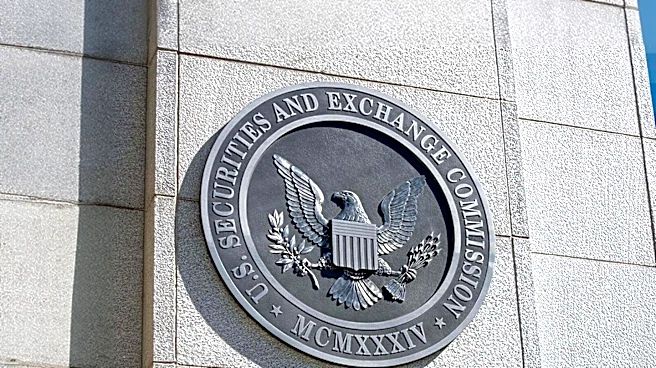
The Digital Asset Market Clarity Act of 2025, known as HR-3633, proposes a new regulatory framework for digital assets in the United States. The bill aims to clarify the roles of the Securities and Exchange Commission (SEC) and the Commodity Futures Trading
Commission (CFTC) in overseeing crypto tokens and related markets. It introduces the concept of 'digital commodities' and assigns the CFTC primary authority over spot markets and intermediaries for these commodities. Meanwhile, the SEC retains authority over certain token offerings and anti-fraud measures. The bill also outlines new registration, disclosure, custody, and trading rules for digital commodities. Additionally, it provides a process for blockchain networks to be certified as 'mature,' allowing some tokens to be treated as non-securities.
Why It's Important?
The introduction of HR-3633 is significant as it seeks to provide much-needed clarity and structure to the rapidly evolving digital asset market in the U.S. By delineating the responsibilities of the SEC and CFTC, the bill aims to protect investors and promote market integrity. It encourages responsible innovation by establishing predictable rules and creating an innovation hub at the SEC. The bill also supports anti-illicit finance efforts by applying Bank Secrecy Act obligations to relevant entities. This regulatory clarity could foster growth in the digital asset industry, keeping businesses and technological development within the U.S., while ensuring consumer protection and market stability.
What's Next?
If passed, HR-3633 will require the SEC and CFTC to conduct multiple rulemakings and studies to implement the new framework. The CFTC will need to register digital commodity exchanges, brokers, and dealers, and establish rules on custody, segregation, and reporting. The SEC will be responsible for certifying blockchains as 'mature systems.' The bill also authorizes the CFTC to collect fees from registrants to cover implementation costs. Stakeholders in the digital asset industry, including exchanges, brokers, and investors, will need to adapt to the new regulations and compliance requirements.