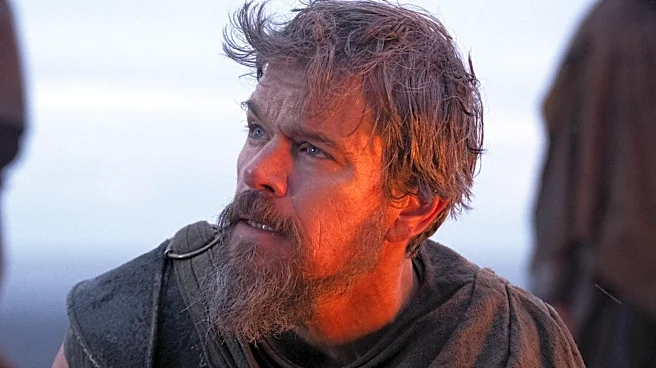







What's Happening?
Christopher Nolan's adaptation of Homer's 'Odyssey' has sparked controversy due to its filming in the occupied territory of Western Sahara. The film, which has been a major box office success, has been criticized for normalizing violence against the indigenous
Sahrawi people by using the region as a backdrop. The ethical concerns have led to calls for a boycott from human rights organizations and notable figures like Greta Thunberg and Javier Bardem. Despite the backlash, the film has grossed nearly $700 million, highlighting the tension between commercial success and ethical filmmaking practices.
Why It's Important?
The controversy surrounding Nolan's 'Odyssey' underscores the ethical responsibilities of filmmakers when choosing filming locations. The use of politically sensitive areas can lead to significant backlash, affecting a film's reputation and the industry's perception. This situation highlights the need for greater awareness and sensitivity in the film industry regarding the impact of production choices on local communities. The calls for a boycott, although unlikely to affect the film's financial success significantly, emphasize the growing importance of ethical considerations in global filmmaking and the potential for public and activist influence on industry practices.