





What's Happening?
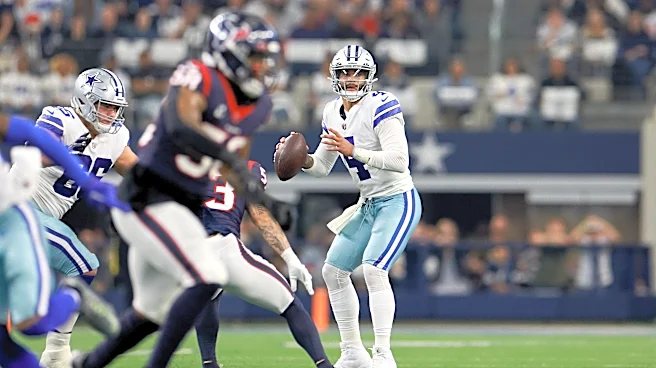
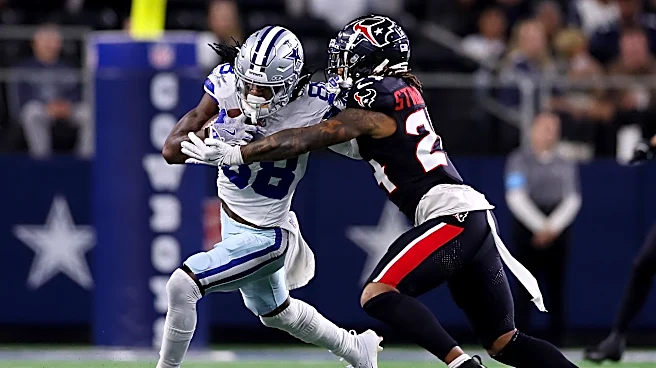
Jerry Jones, owner of the Dallas Cowboys, has indicated that the NFL might explore incorporating more frequent geographic rivalry matchups into its scheduling formula. Speaking on 105.3 The Fan in Dallas, Jones suggested that the league could make the 17th
game a permanent, geographically-based rivalry, citing examples such as Cowboys vs. Texans or Eagles vs. Steelers. He emphasized the appeal of 'my town against your town' dynamics, which he believes are fundamental to the sport's popularity in the United States. While acknowledging the current rotation-based scheduling for fair competition, Jones expressed interest in examining how such rivalries could be integrated across the entire league, not just for specific teams like Dallas and Houston. The NFL's current scheduling formula, established in 2002 and tweaked in 2021 for the 17th game, primarily focuses on divisional play, rotating inter-conference and intra-conference matchups, and games based on prior year standings.
Why It's Important?
This suggestion from a prominent NFL owner like Jerry Jones highlights a potential shift in how the league approaches its schedule, moving beyond purely competitive balance to embrace fan engagement through local rivalries. Implementing more geographic matchups could significantly boost viewership and game-day attendance, particularly for games that might otherwise lack broader appeal. For teams, it could mean more consistent high-stakes games against nearby opponents, fostering deeper fan connections and local pride. Economically, increased interest in these rivalry games could translate to higher advertising revenue, merchandise sales, and local economic activity in host cities. However, a challenge lies in ensuring competitive fairness, as not all teams have a natural geographic rival, especially across conferences. The current scheduling formula aims for equitable competition, and a shift towards geographic rivalries would require careful consideration to avoid creating imbalances or disadvantaging certain franchises.
What's Next?
While Jones's comments suggest an ongoing discussion within the league, no immediate changes to the NFL's scheduling formula have been announced. The league last adjusted its schedule in 2021 to accommodate the 17th game, and any further significant alterations would likely involve extensive deliberation among team owners and league officials. The expansion to an 18-game schedule, anticipated between 2028 and 2031, could provide a more opportune moment for the NFL to reconsider its scheduling philosophy. At that point, the league might explore options such as adding an annual geographic game or an annual international game for each team. The feasibility of implementing widespread geographic rivalries would depend on identifying suitable matchups for all 32 teams, ensuring competitive balance, and assessing the overall impact on the league's existing scheduling structure.
Beyond the Headlines
The idea of prioritizing geographic rivalries taps into a deeper cultural aspect of American sports, where local identity and community pride are deeply intertwined with team allegiance. This approach could re-emphasize the 'my town against your town' ethos that Jones mentioned, potentially strengthening the emotional connection between fans and their teams. However, it also raises questions about the long-term implications for the league's competitive integrity. If some teams consistently face stronger geographic rivals than others, it could create an uneven playing field. Furthermore, the current scheduling formula, designed for competitive balance, ensures a broader rotation of opponents, which some argue is essential for a fair championship race. A shift towards more localized rivalries might inadvertently diminish the significance of inter-conference play or the broader national appeal of certain matchups, potentially altering the league's strategic balance between local passion and national competitive equity.