


What's Happening?
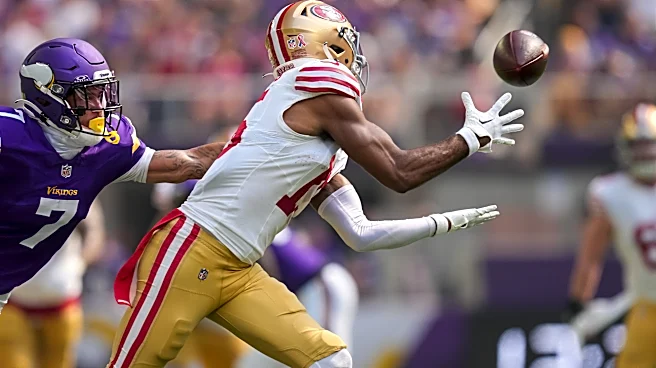
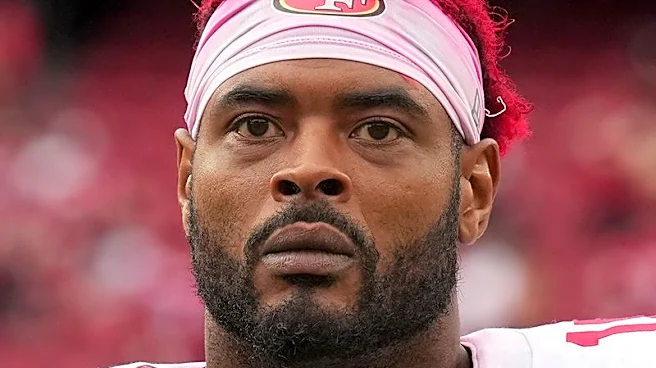
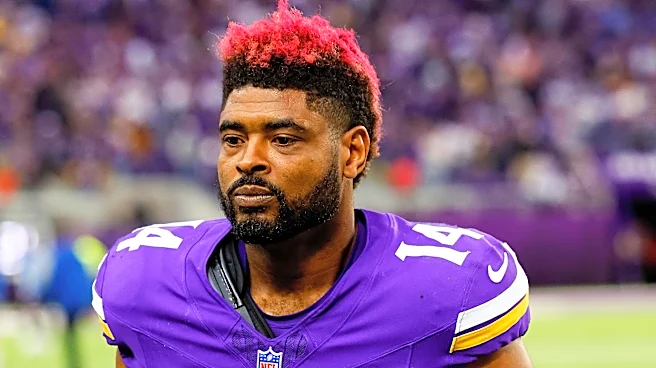
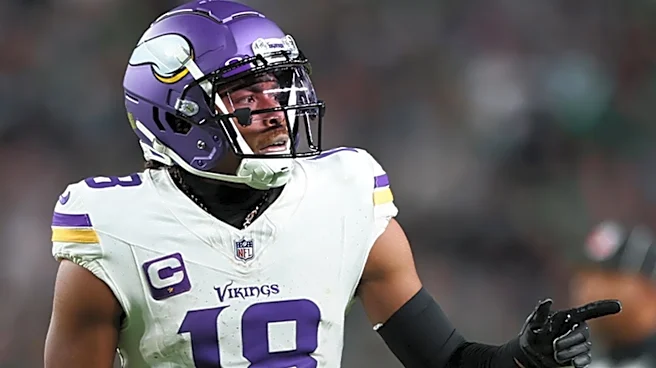
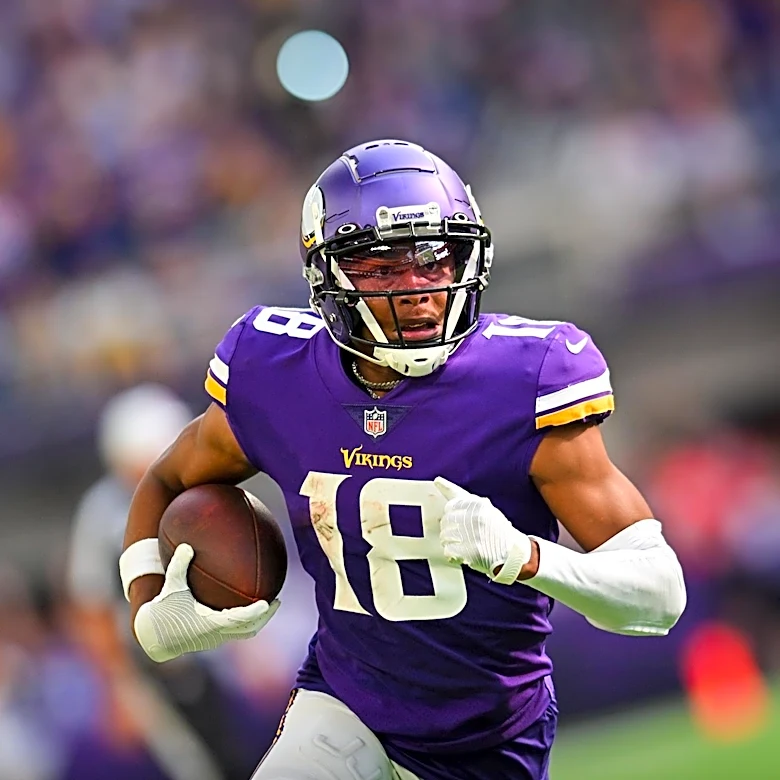
The Minnesota Vikings had a trade agreement in place to send wide receiver Jauan Jennings back to the San Francisco 49ers, but the deal fell through because Jennings refused to return to his former team. According to Fox Sports’ Jay Glazer, the Vikings and
49ers had a trade framework established before Jennings made it clear he was not interested in rejoining San Francisco. This decision stems from a past contract dispute where Jennings felt the 49ers were unwilling to offer him a long-term deal matching his perceived worth, reportedly seeking over $20 million annually compared to San Francisco's $17 million per year offer. Jennings subsequently signed a one-year, nearly $10 million contract with the Vikings, viewing it as a bet on himself. His reluctance to return to the 49ers is attributed to the unresolved issues from their previous contract negotiations.
Why It's Important?
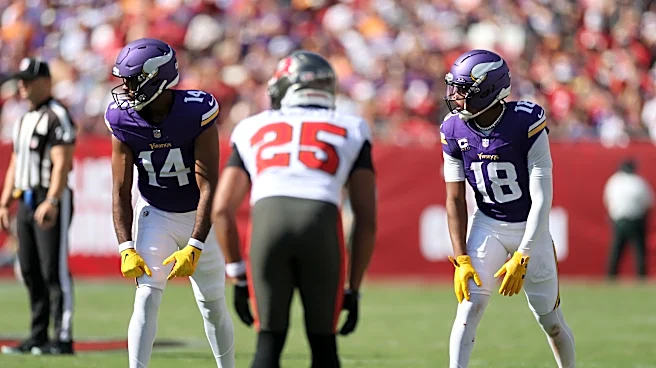
This development highlights the significant influence individual player preferences can have on NFL trade dynamics, even when teams have reached an agreement. For the Minnesota Vikings, keeping Jennings means retaining a quality receiver but foregoing potential draft capital that could have been acquired from the 49ers. This decision also raises questions about the Vikings' assessment of their receiver room and their willingness to move a key player. For Jennings, his choice to remain with the Vikings on a one-year deal is a strategic move to rebuild his market value in an offense where he feels comfortable, free from the baggage of past contract disputes. Both teams are considered potential Super Bowl contenders, making Jennings' decision to stay in Minnesota a calculated risk, as a strong performance could significantly impact his next contract.
What's Next?
Jennings will continue his season with the Minnesota Vikings, aiming to perform well on his one-year contract to secure a more lucrative long-term deal in the future. His performance will be closely watched as it will determine the success of his 'bet on himself.' For the Vikings, they will proceed with Jennings as part of their receiving corps, hoping his presence contributes to a deep playoff run. The decision to retain Jennings, despite the opportunity to gain draft picks, suggests the Vikings prioritize immediate on-field talent for their current competitive window. The 49ers will need to adjust their roster plans, having missed out on reacquiring a player they seemingly valued.
Beyond the Headlines
This situation underscores the evolving power dynamics between NFL players and franchises, particularly concerning contract negotiations and player autonomy. Jennings' refusal to be traded back to a team with whom he had a contentious contract history demonstrates a player's increasing leverage in shaping their career path. It also reveals the personal and emotional factors that can influence professional decisions, extending beyond purely financial considerations. The incident could set a precedent for other players in similar situations, emphasizing the importance of maintaining positive player-team relationships to avoid future complications in trades or re-signings. It also highlights the complex balance NFL front offices must strike between immediate competitive needs and long-term roster building through draft capital.