

What's Happening?
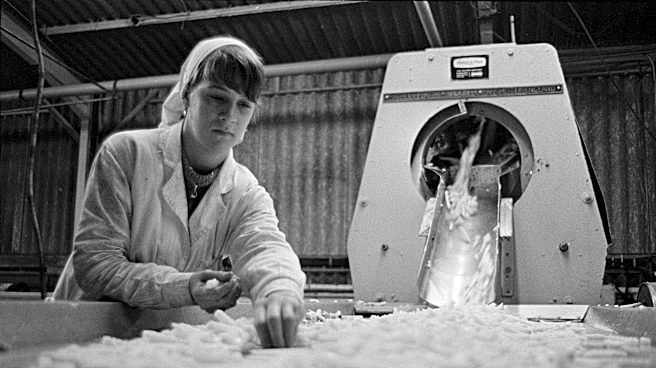
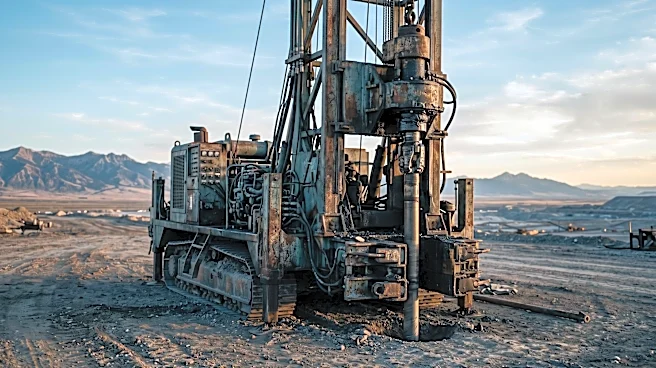
WE Soda Ltd., a London-based company, announced plans to eliminate 350 jobs over the next two years at its Westvaco trona mining operation in Wyoming. The decision stems from a transition to solution mining, a less labor-intensive method, driven by increasing
competition from China and rising costs associated with traditional underground mining. The layoffs, representing a 41% reduction in the facility's workforce from 850 to 500 employees, are expected to begin in January 2027 and continue for two years. This shift will also lead to reduced soda ash production, as WE Soda aims to focus on North American customers rather than aggressively competing in international markets. The announcement has caused significant concern among employees, local officials, and community members in southwest Wyoming, where trona mining is a cornerstone industry.
Why It's Important?
The layoffs at WE Soda represent a significant economic blow to southwest Wyoming, where trona mining provides stable, high-paying jobs that support families, local businesses, and community services. The reduction of 350 jobs will have far-reaching impacts on the region's economy and social fabric. This situation also highlights the vulnerability of U.S. industries to global competition, particularly from China, which U.S. Senator John Barrasso (R-WY) and Senator-Elect Harriet Hageman (R-WY) have accused of rigging the market against American producers. The transition to solution mining, while potentially securing the long-term future of WE Soda's operations, signifies a shift towards less labor-intensive processes, which could have lasting effects on employment in the mining sector. The controversy surrounding a $13 million state grant to WE Soda, requested before the layoff announcement, further complicates the issue, raising questions about state support for companies undergoing significant workforce reductions.
What's Next?
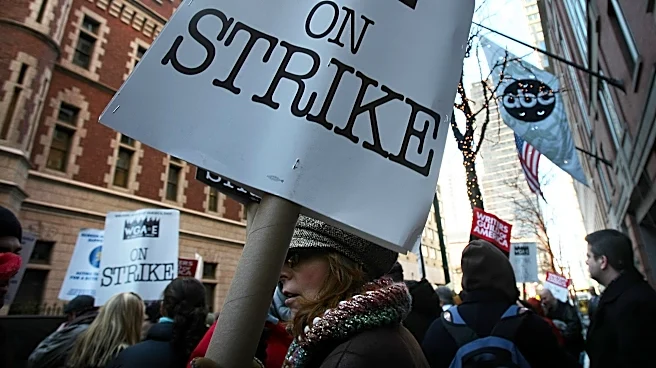
Layoffs are scheduled to commence in January 2027 and will continue for two years as WE Soda phases out conventional underground mining. United Steelworkers Local 13214 President Marshal Cummings is urging company officials to reconsider the pace of the transition and explore alternatives to mitigate the immediate impact on employees, advocating for a slower transition through attrition. Union workers have also called on Wyoming Governor Mark Gordon to freeze a $13 million state taxpayer-funded grant to WE Soda until workers are assured of their jobs. State and local officials, including the City of Green River, City of Rock Springs, and Sweetwater County, are working to mobilize resources for affected community members. U.S. Senator John Barrasso has pressed the U.S. Department of Commerce nominee Christopher Abbott to address unfair trade practices affecting American soda ash producers.
Beyond the Headlines
This situation underscores the complex interplay between global economic forces, technological advancements, and local employment. The shift from traditional underground mining to solution mining reflects a broader trend in resource extraction industries towards automation and less labor-intensive methods, driven by cost pressures and efficiency goals. While such transitions can enhance long-term sustainability for companies, they often come at a significant human cost to communities reliant on traditional employment models. The accusations of unfair trade practices by China highlight ongoing geopolitical economic tensions and their direct impact on American jobs. The debate over the state grant to WE Soda also brings to the forefront the ethical considerations of public funding for private corporations, especially when those corporations are simultaneously reducing their workforce. This event could serve as a case study for how communities and policymakers respond to industrial transitions driven by global competition and technological change.