




What's Happening?
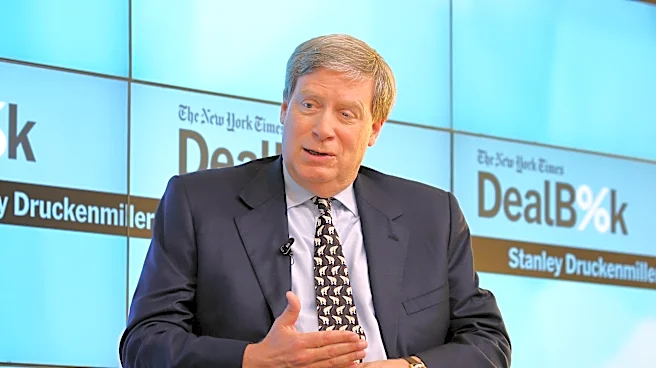
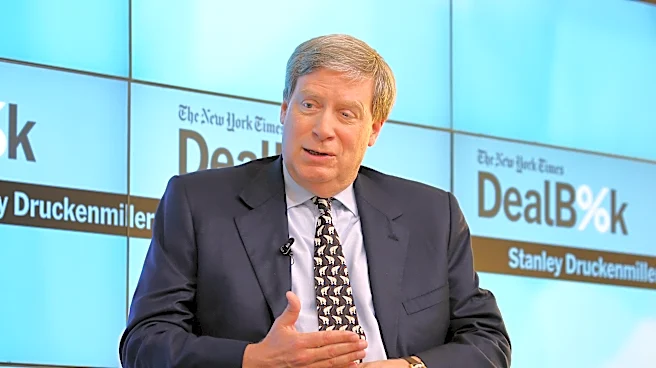
Stanley Druckenmiller's Duquesne Family Office significantly altered its portfolio in the third quarter of 2026, as detailed in its November 16 filing. The firm sold 94.5% of its Taiwan Semiconductor Manufacturing Company (TSMC) shares, reducing its holding
to 32,700 American depositary shares. All 336,300 Alphabet shares were also divested. Concurrently, Duquesne Family Office increased its Amazon holding by 43% to 772,600 shares, making it the third-largest reported position. Other notable sales included all shares of Advanced Micro Devices, Lam Research, and Sandisk, a nearly 50% cut in STMicroelectronics, and the closure of call options on broad market indexes. The firm nearly tripled its Seagate Technology holding and initiated positions in three gold mining companies: Newmont, Barrick, and Agnico Eagle. The overall reported portfolio value decreased from $5.21 billion to $4.47 billion, with the number of positions falling from 95 to 65. Natera, a genetic testing company, became the largest holding, accounting for approximately 30% of the reported total.
Why It's Important?
These portfolio adjustments by a prominent macro investor like Stanley Druckenmiller signal a potential shift in investment strategy and market sentiment. The substantial reduction in holdings of major technology companies like TSMC and Alphabet, coupled with increased investment in Amazon and gold miners, suggests a move towards perceived safer assets and companies with more immediate, tangible returns. Druckenmiller's subsequent statement on November 17, indicating his firm was largely avoiding stocks and aiming 'to not lose money as opposed to make money,' underscores a cautious outlook on the broader market. This could influence other institutional investors and individual traders, potentially leading to a broader re-evaluation of high-growth tech stocks versus more stable or defensive investments. The focus on Amazon, particularly its Amazon Web Services (AWS) unit, highlights a belief in the profitability of cloud infrastructure, even as other AI-related hardware investments are scaled back. The addition of gold miners further reinforces a risk-averse stance, as gold is traditionally seen as a hedge against economic uncertainty and inflation.
What's Next?
The market will closely watch for further indications of Druckenmiller's investment philosophy and any subsequent portfolio changes, which will be revealed in future quarterly filings. Investors will also monitor the performance of the divested tech companies, TSMC and Alphabet, and the newly emphasized holdings, Amazon and the gold miners. The key will be whether Amazon Web Services can maintain its growth trajectory and profitability, as this was a significant factor in Druckenmiller's increased stake. Conversely, the free cash flow and capital spending plans of Alphabet, along with TSMC's monthly revenue, will be scrutinized to see if the market's valuation of AI hardware continues to decline. Druckenmiller's stated lack of clarity regarding the next 12 months suggests a period of continued caution and potential volatility in the market, with investors likely prioritizing companies demonstrating strong operational income and robust cash flow over speculative growth.
Beyond the Headlines
Druckenmiller's moves reflect a deeper narrative about the evolving landscape of artificial intelligence investments. While AI is a transformative technology, his divestment from AI hardware providers like TSMC and his increased stake in Amazon, whose AWS unit profits from AI infrastructure spending, suggests a preference for the 'picks and shovels' of the AI gold rush rather than direct hardware plays. This indicates a potential shift in how investors perceive value creation within the AI ecosystem, favoring companies that provide the foundational services and infrastructure over those manufacturing components. The emphasis on Natera, a genetic testing company, as the largest holding, further diversifies the portfolio away from traditional tech and into specialized diagnostics, highlighting a search for value in less crowded, high-growth sectors. This strategic re-alignment by a seasoned investor could signal a broader trend of institutional capital seeking more immediate and less speculative returns in a period of economic uncertainty.