





What's Happening?
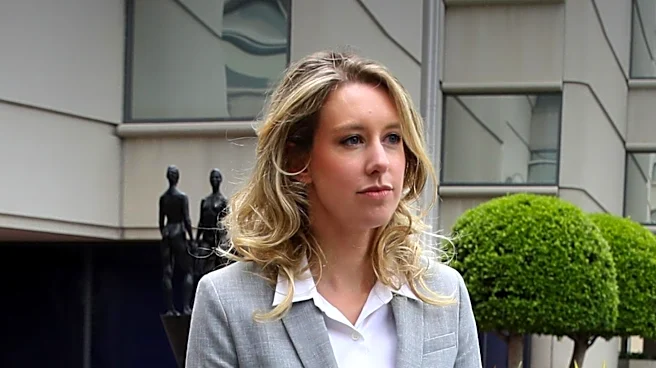
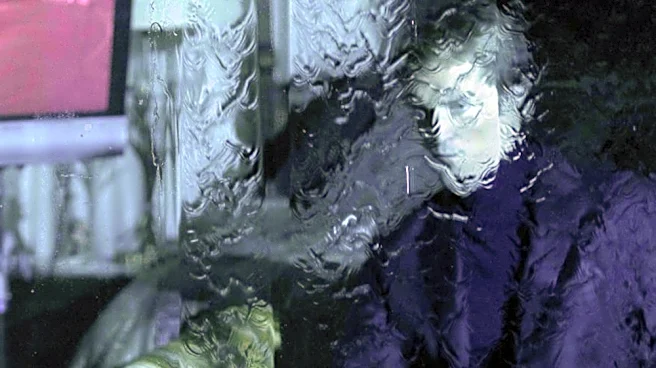
A new documentary titled 'You Can See Everything,' co-directed by Nathan Fielder and Lance Oppenheim, about convicted Theranos founder Elizabeth Holmes, premiered as a surprise screening at the Telluride Film Festival. The film, produced by A24, was made
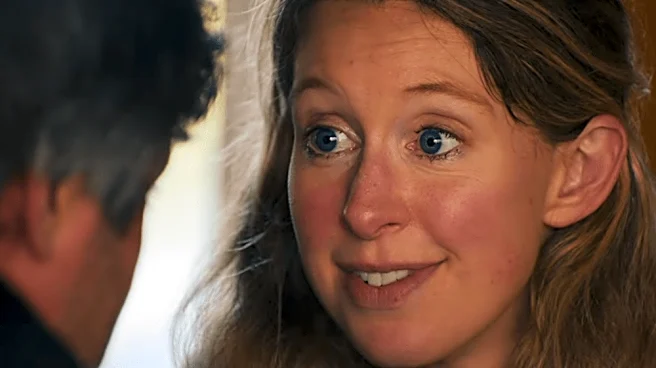
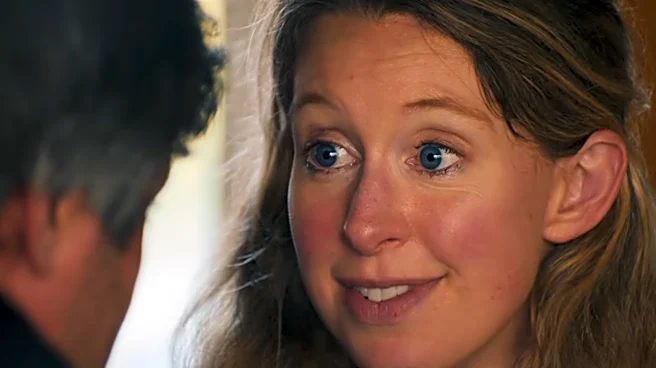
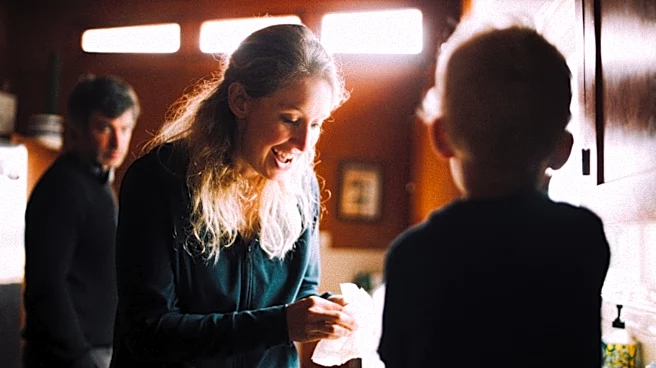
largely in secret over three years and is scheduled for a theatrical release in October. The documentary provides extraordinary access to Holmes' life with her partner, Billy Evans, and their young children, beginning 34 days before she was due to report to federal prison. Holmes and Evans reportedly embraced 'radical transparency' to convince filmmakers and the public that she has been fundamentally misunderstood. However, the film quickly evolves into a more complex narrative, with Fielder becoming drawn into the story and struggling to discern the authenticity of Holmes and Evans' interactions. The documentary includes surreal elements, such as elaborate reenactments with a Hollywood actress, blurring the lines between reality and performance. The project originated from a casual suggestion at the Magic Castle in Los Angeles, leading Fielder to explore Holmes' story despite initial reservations.
Why It's Important?
This documentary is significant for several reasons. Firstly, it offers an unprecedented and intimate look into the life of Elizabeth Holmes, a figure who has been at the center of one of Silicon Valley's most high-profile fraud cases. The film's access to Holmes in the critical period leading up to her imprisonment provides a unique perspective that could influence public perception of her and the Theranos scandal. Secondly, the involvement of Nathan Fielder, known for his unconventional and reality-bending comedic and documentary styles, suggests a departure from traditional investigative journalism. His struggle to understand Holmes' sincerity within the film itself highlights the complexities of truth and perception in media narratives, particularly concerning controversial public figures. The film's secret production and surprise premiere also underscore a growing trend in documentary filmmaking to control narratives and maximize impact upon release. The theatrical release by A24 in October indicates a belief in the film's commercial and critical potential, further solidifying its importance in the current media landscape.
What's Next?
Following its surprise premiere at the Telluride Film Festival, 'You Can See Everything' is slated for a theatrical release by A24 in October. This release will bring the documentary to a wider audience, allowing the public to form their own interpretations of Elizabeth Holmes' narrative as presented by Fielder and Oppenheim. The film's unique approach, blending documentary with Fielder's signature style, is likely to spark considerable discussion and debate among critics and viewers regarding its portrayal of Holmes, the nature of truth, and the ethics of documentary filmmaking. Given the controversial subject matter and Fielder's reputation for pushing boundaries, reactions from various stakeholders, including legal experts, former Theranos employees, and the general public, are anticipated. Neither Holmes nor Evans has seen the finished movie, and their reactions, if any, could also become a point of interest. The film's impact on the ongoing public discourse surrounding corporate fraud and accountability will be closely watched.
Beyond the Headlines
The documentary 'You Can See Everything' delves into deeper implications beyond the immediate facts of Elizabeth Holmes' case. It explores the ethical challenges inherent in documentary filmmaking, particularly when subjects like Holmes, who are known for deception, are given a platform. Fielder's personal struggle within the film to discern truth from manipulation raises questions about the audience's own susceptibility to narrative control and the difficulty of objective reporting. The film's structure, which blurs the lines between reality and performance, could also be seen as a commentary on the performative aspects of public figures and the media's role in shaping their images. Furthermore, the access granted to Holmes and her family, even as she faced imprisonment, highlights the complex interplay between privacy, public interest, and the desire for redemption or re-framing of one's story. This documentary could contribute to a broader conversation about how society processes and understands complex legal and ethical transgressions, especially when presented through a highly stylized and self-aware lens.