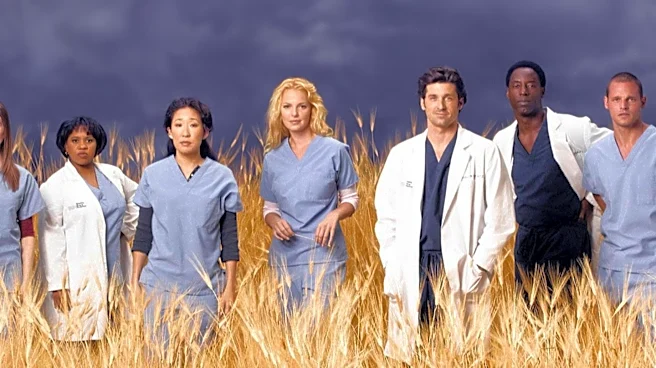

What's Happening?
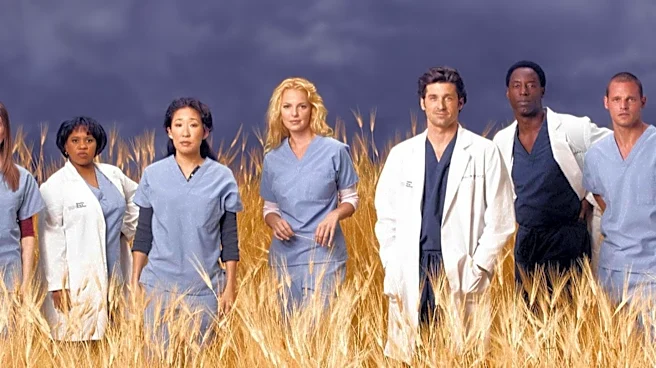
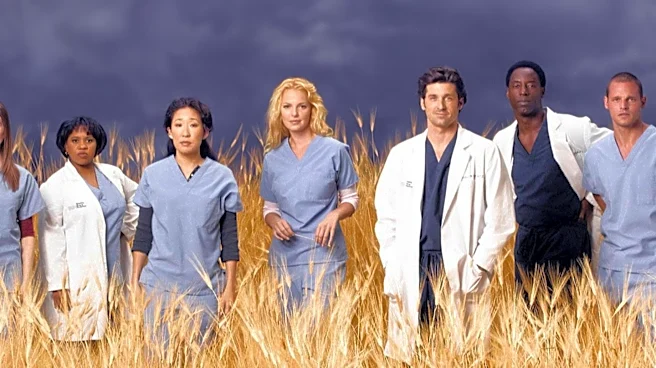
The upcoming 'Grey's Anatomy' spinoff, co-created by Shonda Rhimes and Meg Marinis, will move its production to Albuquerque, New Mexico, after failing to secure film and television tax incentives from
California. The new drama, which will follow medical professionals in a rural West Texas medical center, was initially expected to film in California. Betsy Beers, Rhimes' longtime producing partner, testified at a California Assembly committee hearing, explaining that ABC's application for tax credits was denied because the production did not meet the state's job creation expectations, and Shondaland's long history of employment in California was not considered. This decision has led to production delays, pushing the spinoff's premiere from the 2026-27 to the 2027-28 television season. Beers expressed frustration, stating, 'We lost personnel, we lost a lot of time, and we lost money trying to find a way to stay where we have always been.'
Why It's Important?
This relocation highlights the intense competition among U.S. states to attract film and television productions through tax incentives, and the significant economic impact these decisions have. California, despite its historical dominance in the entertainment industry, is increasingly challenged by states like New Mexico that actively develop their production economies. The denial of incentives for a high-profile project like a 'Grey's Anatomy' spinoff, even from an established production company like Shondaland, underscores the strict criteria and limited funding within California's program. This situation affects not only the production companies but also the local economies, impacting jobs for crew members, equipment suppliers, catering services, and other related businesses. The move to New Mexico demonstrates that financial calculations, particularly tax incentives, can outweigh long-standing relationships and operational advantages, such as geographical proximity for showrunners managing multiple projects.
What's Next?
California is actively responding to these challenges, with Governor Gavin Newsom proposing another expansion of the state's Film and Television Tax Credit Program, increasing annual funding from $750 million to at least $1 billion. This proposal also includes support for independent productions, incentives for companies committing to multiple California projects, and an extension of the program through 2040. These proposed changes aim to enhance California's competitiveness and provide more predictability for production companies. However, the 'Grey's Anatomy' spinoff's move illustrates that even with increased incentives, the fundamental problem of demand exceeding available funding persists. The ongoing legislative and budget processes will determine the final scope of these changes, and their effectiveness in retaining productions will be closely watched by the entertainment industry and other states vying for production activity.
Beyond the Headlines
The relocation of the 'Grey's Anatomy' spinoff to New Mexico reveals a deeper tension within the entertainment industry regarding production geography. While California possesses an unparalleled creative and economic infrastructure, the financial incentives offered by other states are increasingly influencing production decisions. This development prompts a critical policy question: how should incentive programs balance projected economic benefits with the value of long-term employment generated by returning producers with established records? The case of Shondaland, a company that publicly expressed a desire to remain in California, underscores that even strong historical ties and commercial success may not be sufficient without competitive financial support. This trend suggests a future where production hubs may become more decentralized, with states actively competing to become attractive locations for film and television, potentially reshaping the traditional landscape of Hollywood.