







What's Happening?
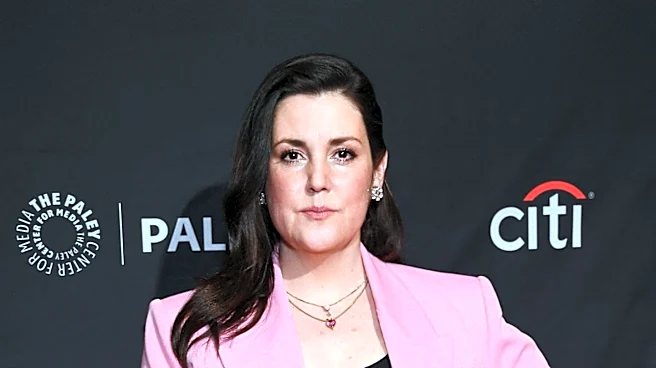
Actress Melanie Lynskey has publicly refuted online claims about her earnings from the CBS sitcom 'Two and a Half Men', stating that the rumored figures of $200,000 to $300,000 per episode were vastly inflated. Lynskey clarified that her actual pay was
significantly lower, approximately one-tenth of the rumored amount. She revealed that she earned around $20,000 per episode when she joined the show and that her highest single-episode paycheck, in the final season, was about $43,000. Lynskey emphasized that these amounts were gross figures, with approximately 50% being deducted for agents, managers, business managers, and taxes. She appeared in 63 episodes as Rose, the neighbor of Charlie Harper. Her statement was made in response to a discussion initiated by her former co-star Holland Taylor, who also expressed dissatisfaction with her salary on the show, despite receiving four Emmy nominations.
Why It's Important?
Melanie Lynskey's detailed account of her 'Two and a Half Men' salary provides crucial insight into the financial realities of working in the television industry, particularly for supporting cast members. Her clarification debunks common public misconceptions about the vast wealth accumulated by all actors on successful shows. It underscores that a significant portion of an actor's gross earnings is allocated to various professional fees and taxes, leading to a much lower take-home pay. This transparency is vital for understanding the economic structure of Hollywood and the often-stark pay disparities between lead actors, such as Charlie Sheen who reportedly earned over $1 million per episode, and other talented cast members. For the public, it offers a more grounded perspective on celebrity finances, moving beyond sensationalized figures.
What's Next?
The ongoing public discourse initiated by Melanie Lynskey and Holland Taylor regarding their 'Two and a Half Men' salaries could contribute to a broader industry conversation about fair compensation and transparency in actor contracts. While individual salary details are typically confidential, these public statements can empower other actors to advocate for more equitable pay structures and clearer financial reporting. This trend of actors speaking out about their earnings may also influence future contract negotiations, potentially leading to more standardized and transparent compensation models across the entertainment sector. It highlights the power of social media as a platform for correcting misinformation and fostering open dialogue on industry practices.
Beyond the Headlines
Melanie Lynskey's decision to openly discuss her 'Two and a Half Men' salary goes beyond a simple correction of figures; it challenges the pervasive myth of instant and immense wealth for all involved in successful entertainment projects. Her experience illustrates how even a steady role on a hit show provides financial stability that, while substantial, is often far from the 'millions' speculated by the public. This narrative is particularly relevant in an era where social media often amplifies exaggerated perceptions of celebrity lifestyles. By demystifying her earnings, Lynskey contributes to a more realistic understanding of the economic landscape for working actors, emphasizing that financial security and the ability to pursue passion projects are often the primary benefits, rather than exorbitant riches.