





What's Happening?
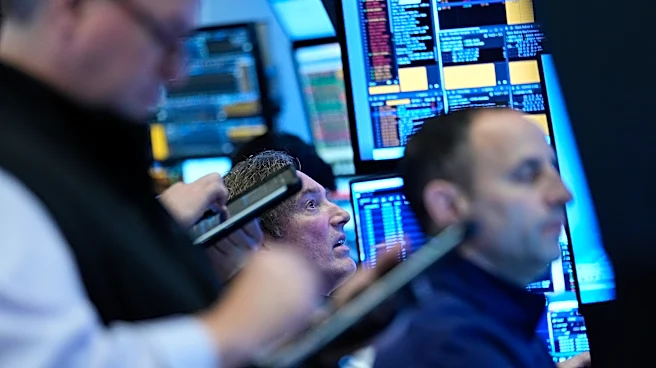
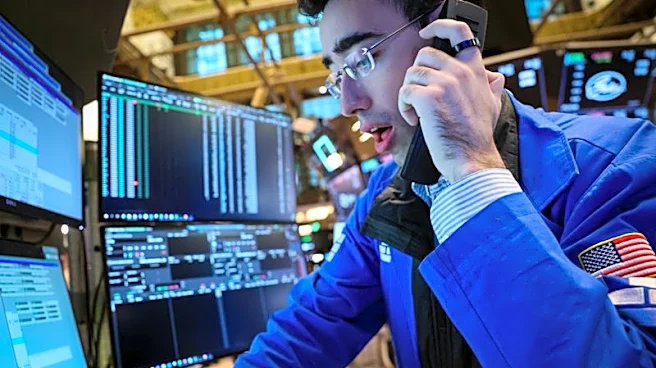
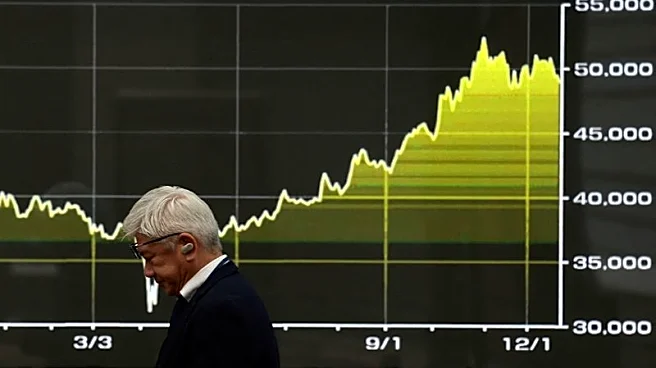
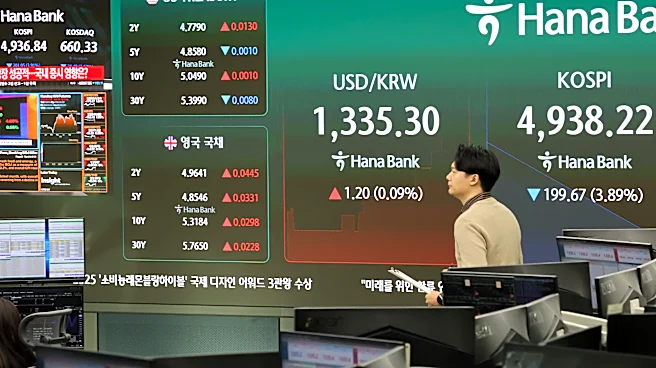
Asian equity markets experienced significant declines on November 20, 2026, mirroring a downturn on Wall Street driven by growing concerns over valuations within the artificial intelligence sector. Major indices in Japan, South Korea, and Hong Kong all posted
losses as investors reassessed their positions in technology and AI-related holdings. This market reaction occurred despite positive economic indicators in several regional economies, suggesting that AI-specific anxieties were the primary driver. Counterbalancing the broader market weakness, Anthropic, an AI safety company, demonstrated notable strength in its recent IPO debut. Its stock performance remained robust, indicating investor confidence in established AI leaders with clear revenue models, even as speculative AI plays faced pressure.
Why It's Important?
The market's reaction signifies a maturing investment landscape for artificial intelligence companies, where investor focus is shifting from growth-at-any-cost narratives to demands for profitability timelines, competitive advantages, and sustainable business models. This increased scrutiny could lead to a bifurcation in the AI market, with well-established companies like Anthropic, demonstrating commercial traction, continuing to attract investment, while less proven entities struggle. The downturn reflects a broader market uncertainty about the long-term returns on AI investments, especially as rising interest rates and increased regulatory scrutiny add to investor caution. This shift towards fundamental analysis will likely separate long-term AI leaders from speculative entrants, fostering a more rational market for AI investments globally.
What's Next?
The market's current sentiment suggests that investors will continue to demand clearer paths to profitability and sustainable business models from AI companies. This could lead to increased pressure on AI startups to demonstrate tangible revenue and market share, potentially slowing down funding for early-stage ventures without clear commercialization strategies. We may see a consolidation in the AI sector as companies with strong fundamentals acquire or outperform those with weaker business models. Furthermore, the divergence between the performance of established AI leaders and the broader sector indicates that investors will become more selective, favoring companies with proven technology and enterprise partnerships. Regulatory bodies may also increase their oversight of AI applications, further influencing market dynamics.
Beyond the Headlines
The market's cautious stance on AI valuations, despite the technology's transformative potential, highlights a classic investment cycle where initial euphoria gives way to more pragmatic assessments. This period of scrutiny could be beneficial in the long run, weeding out unsustainable business models and forcing companies to focus on delivering real value. It also underscores the challenge of valuing rapidly evolving technologies, where traditional metrics may not fully capture future potential. The resilience of companies like Anthropic suggests that investors are increasingly prioritizing ethical AI development and safety, recognizing these as critical factors for long-term success and public trust. This could lead to a greater emphasis on responsible AI practices across the industry, influencing product development and corporate strategies.