



What's Happening?
Lamborghini Chairman and CEO Stephan Winkelmann has confirmed that manual gearboxes are not a priority for the company, despite a recent trend among other high-performance automakers to reintroduce them. During Monterey Car Week, Winkelmann stated that manual transmissions
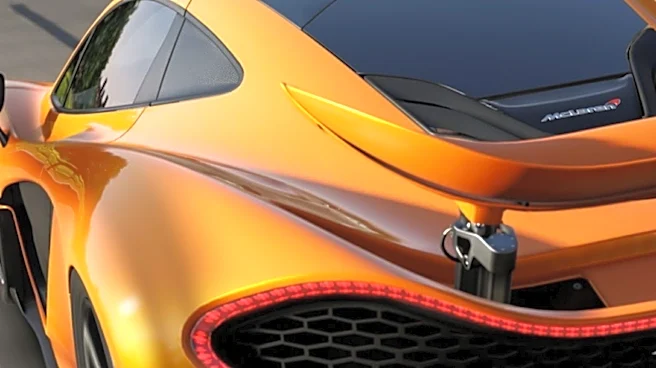
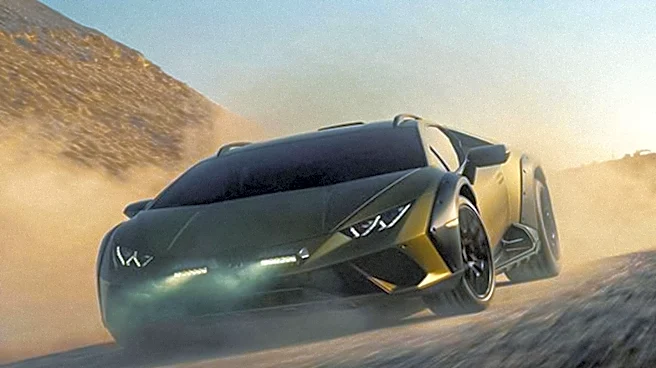
are primarily for collectibles and that Lamborghini has no immediate plans to offer them. This stance comes as other brands like McLaren, Porsche, Spyker, Gordon Murray, RUF, Gunther Werks, and Hennessey are either bringing back or confirming manual options for their limited-production models. Lamborghini's last manual offering was the Gallardo LP560-2, which ceased production in 2014, and only about five Murciélago LP670-4 SVs were ordered with a clutch pedal. The company recently debuted the Revuelto SV, featuring a 1,065-horsepower hybrid V12 engine paired with an eight-speed dual-clutch transmission.
Why It's Important?
This decision by Lamborghini highlights a divergence in strategy within the high-performance automotive sector. While some manufacturers cater to a niche market of collectors seeking a more 'connected' driving experience through manual transmissions, Lamborghini is focusing on advanced technology, such as hybrid powertrains and dual-clutch systems. This approach reflects Lamborghini's commitment to maximizing performance and efficiency, which modern automatic transmissions often deliver more effectively than manuals. The company's argument that 'connection' comes from the engine rather than the gearbox suggests a belief that the visceral experience of a powerful V12 engine, combined with rapid-fire gear changes of a dual-clutch, is what its broader customer base desires. This strategy could solidify Lamborghini's position as a leader in cutting-edge automotive engineering, even if it means foregoing a segment of the enthusiast market.
What's Next?
Lamborghini will likely continue to develop and integrate advanced automatic and dual-clutch transmissions into its future models, particularly as it moves further into electrification. The company's focus will remain on hybrid and potentially fully electric powertrains, where manual transmissions present significant engineering challenges. While other brands may continue to offer limited-run manual vehicles to cater to collectors, Lamborghini's production volumes and market strategy suggest a sustained commitment to its current technological path. This could lead to further innovations in automatic transmission technology and hybrid performance, reinforcing its brand identity as a purveyor of high-tech, high-performance supercars. The ongoing debate between manual and automatic transmissions in the supercar world will continue, with Lamborghini firmly on the side of technological advancement.
Beyond the Headlines
Lamborghini's stance on manual transmissions reflects a broader philosophical question within the automotive industry about the definition of a 'driver's car' in the modern era. As technology advances, the traditional elements of driver engagement, such as a manual gearbox, are being re-evaluated against the benefits of sophisticated electronic systems. The company's emphasis on the engine as the primary source of 'connection' suggests a shift in how manufacturers perceive and market the driving experience. This also touches upon the evolving nature of luxury and exclusivity; while scarcity drives the value of manual collectibles for some brands, Lamborghini aims for exclusivity through unparalleled performance and advanced engineering. This strategic choice could influence future design and marketing trends, pushing the boundaries of what constitutes a premium driving experience in an increasingly automated world.