









What's Happening?
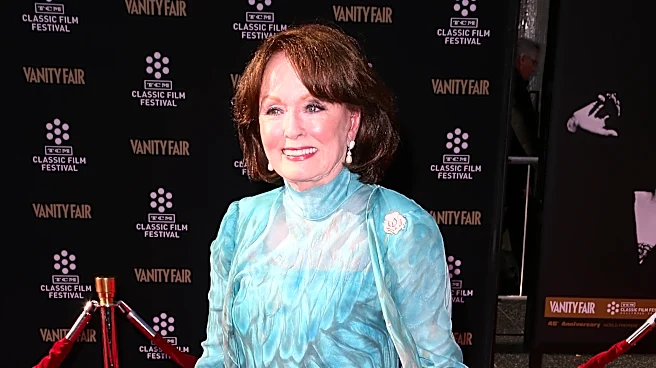
Ann Blyth, renowned for her Oscar-nominated role as the daughter of Joan Crawford's character in the 1945 film 'Mildred Pierce,' has died at the age of 98. Her death was reported by KABC's George Pennachio. Blyth's career spanned several decades, during
which she appeared in notable films such as 'Brute Force' (1947), 'The Great Caruso' (1951), and 'The Helen Morgan Story' (1957). Despite a sledding accident in 1945 that left her in a back brace for over a year, Blyth continued to work in Hollywood, eventually transitioning to musical theater and television. Her television appearances included roles in 'Wagon Train,' 'Twilight Zone,' and 'Murder, She Wrote.' Blyth was married to Dr. James McNulty from 1953 until his death in 2007, and she is survived by their five children, ten grandchildren, and five great-grandchildren.
Why It's Important?
Ann Blyth's passing marks the end of an era for classic Hollywood cinema. Her role in 'Mildred Pierce' not only earned her an Oscar nomination but also solidified her place in film history. Blyth's career is a testament to the resilience and adaptability required in the entertainment industry, as she successfully transitioned from film to theater and television. Her work in musical theater and television expanded her influence beyond the silver screen, contributing to the cultural landscape of mid-20th century America. Blyth's legacy is significant for both her artistic contributions and her personal story of overcoming adversity, which continues to inspire actors and audiences alike.
What's Next?
While Ann Blyth's passing closes a chapter in Hollywood history, her work will continue to be celebrated through film retrospectives and screenings. Institutions like Turner Classic Movies may feature her films, allowing new generations to appreciate her talent. Additionally, her story may inspire biographical works or documentaries that explore her life and career. The entertainment industry may also reflect on the contributions of actresses from Blyth's era, potentially leading to renewed interest in classic films and the preservation of Hollywood's golden age.