





What's Happening?
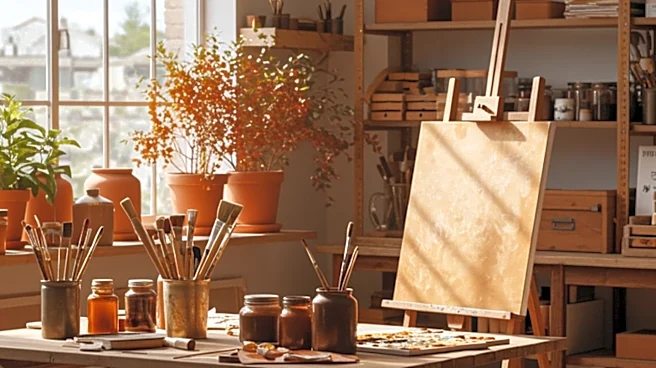
Effective art studio design prioritizes specific elements to foster a productive and inspiring workspace, according to expert insights. The core principles revolve around honest light, a functional layout, and efficient storage. Light is considered the
foundation, with a preference for steady daylight that allows for accurate color judgment, complemented by artificial lighting designed for color-critical work. The layout typically divides the studio into three zones: an easel or main work zone near the best light, a work table for flat and messy tasks, and a clear 'looking wall' for evaluating finished pieces. Storage is crucial for material conservation, ensuring paints, papers, and tools are organized and protected. The design philosophy stresses that a studio is a workspace for daily practice, not just a decorative space, and should be adaptable to various mediums and room sizes.
Why It's Important?
The thoughtful design of an art studio directly impacts an artist's productivity, well-being, and the quality of their work. For the U.S. art community, understanding these principles can help artists, from hobbyists to professionals, create more effective environments, regardless of space constraints. Proper lighting prevents eye strain and ensures accurate color perception, which is fundamental to visual arts. An organized layout minimizes distractions and maximizes workflow efficiency, allowing artists to focus on creation rather than searching for supplies. Effective storage protects valuable materials, reducing waste and long-term costs. By emphasizing these practical aspects, artists can transform any space into a functional studio, thereby supporting sustained creative output and contributing to the broader cultural landscape.
What's Next?
Artists looking to optimize their workspaces can apply these principles in stages, starting with light and the main work zone, then adding storage as materials accumulate, and finally focusing on comfort and display. The advice suggests prioritizing functional elements over aesthetic perfection, building a studio that evolves with the artist's practice. Future trends in studio design may incorporate more adaptable and modular furniture solutions, as well as technology that aids in organization and environmental control. The emphasis on practical, cost-effective solutions, such as using second-hand furniture or building simple storage, indicates a continued focus on accessibility for artists with varying budgets. The ongoing evolution of art materials and techniques will also likely influence future studio design needs, particularly concerning ventilation and specialized equipment.
Beyond the Headlines
The discussion on art studio design delves into the deeper psychological and practical aspects of creative work. It highlights that the physical environment is not merely a backdrop but an active participant in the creative process. A well-designed studio reduces friction, making it easier for artists to begin and sustain their work, thereby fostering discipline and consistency. This perspective underscores the idea that creativity is not solely an innate talent but also a practice supported by intentional environmental design. The principles discussed—such as the 'weekly reckoning' for creative stock-taking—also touch upon the importance of routine and reflection in artistic development. This holistic view of the studio as a 'haven' for independent creatives emphasizes the need for spaces that support both the technical and emotional demands of artistic endeavor.