





What's Happening?
The Minnesota Timberwolves have re-signed guard Bones Hyland to a minimum contract, marking his third season with the team. Hyland initially joined the Timberwolves late in the 2024-25 season on a two-way deal. Last season, he played a significant role,
averaging 8.5 points, 1.8 rebounds, and 2.6 assists in 16.6 minutes per game off the bench. His shooting percentages were 45.3% from the field, 38.8% from three-point range, and 78.0% from the free-throw line. Hyland's performance was notably consistent, scoring 20 or more points in six different games. At 25 years old, his offensive capabilities make him a valuable asset for the Timberwolves, who are currently focused on building depth in their roster.
Why It's Important?
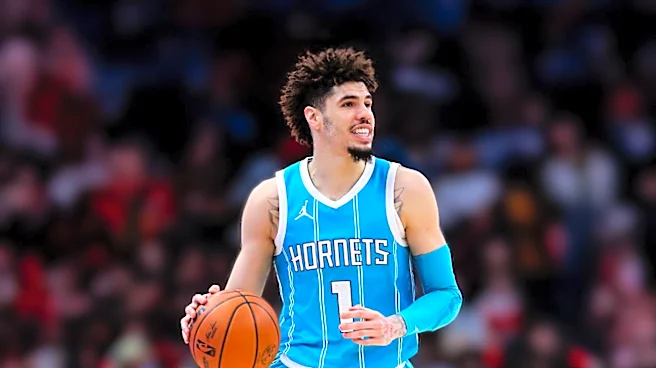
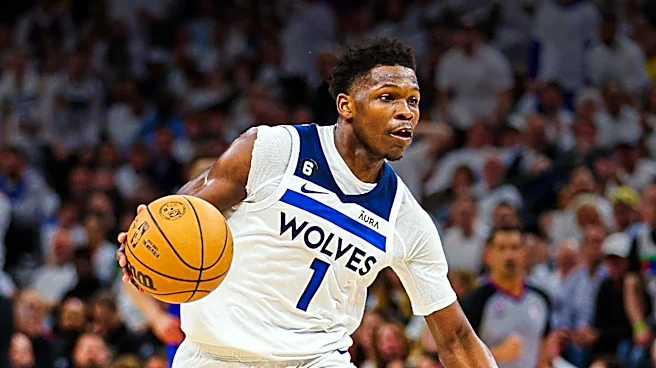
Re-signing Bones Hyland is a strategic move for the Timberwolves as they aim to strengthen their bench depth. Hyland's ability to provide offensive firepower at a low cost is crucial for the team's financial flexibility, especially given their current roster's salary commitments. With key players like Anthony Edwards and LaMelo Ball commanding significant salaries, retaining a productive player like Hyland on a minimum contract allows the team to allocate resources to other areas of need, such as the power forward position. This decision reflects the Timberwolves' broader strategy to balance talent acquisition with salary cap management, positioning them to remain competitive in the NBA.
What's Next?
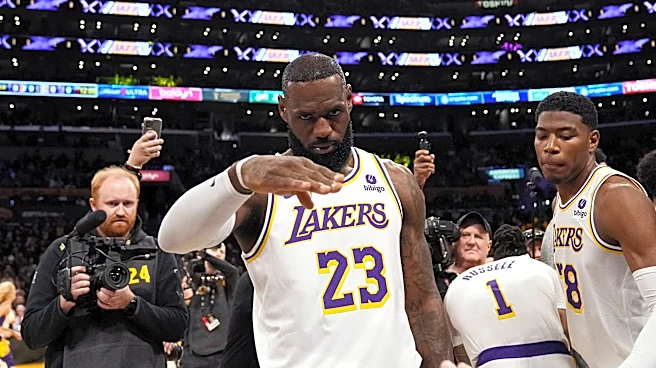
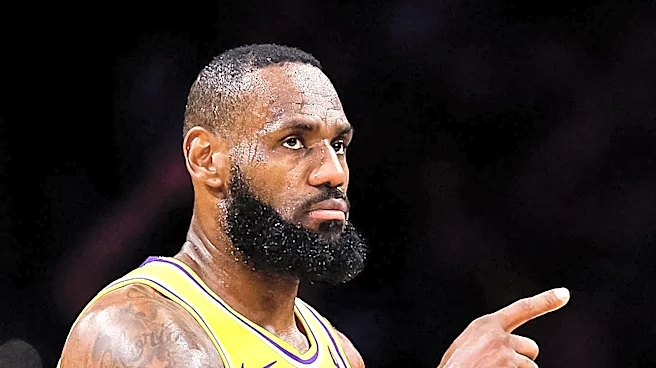
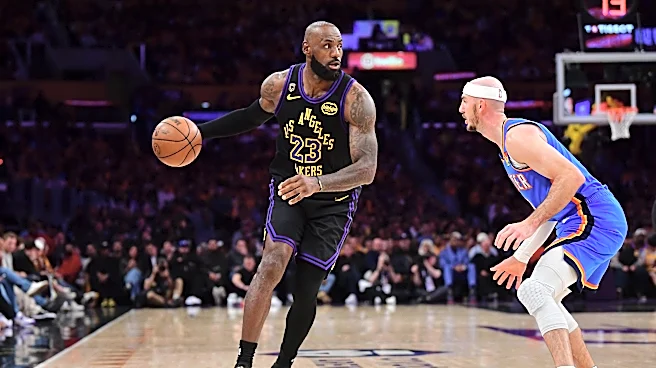
The Timberwolves are expected to continue their roster adjustments, with a focus on filling at least two more standard roster spots to meet the NBA's minimum requirement. They are also considering re-signing veteran Kyle Anderson, who is an impending free agent. Additionally, there is speculation about potential interest from LeBron James, who has announced he will not return to the Lakers next season. While the Timberwolves could offer him an intriguing basketball opportunity, financial constraints may limit their ability to offer more than a minimum contract. The team's next steps will likely involve strategic decisions to enhance their competitiveness while managing their salary cap effectively.