




What's Happening?
The weather forecast for the Monday Night Football game between the Philadelphia Eagles and the Chicago Bears is emphasizing the dynamic nature of environmental conditions throughout the game. With an approximate 8:15 PM ET kickoff, the entire game will
be played after dark. This late start means that temperatures are expected to fall progressively through the second half of the game. Concurrently, humidity and dew levels are projected to rise on both the ball and the turf. Furthermore, the afternoon wind, which can be a significant factor in daytime games, is anticipated to ease considerably after sunset. This detailed approach to weather forecasting for Monday Night Football games highlights that a single 'game-time' forecast is insufficient to capture the full range of conditions that will impact play from start to finish. The analysis specifically addresses the arc of weather changes, providing separate readings for the beginning and end of the game to account for these shifts.
Why It's Important?
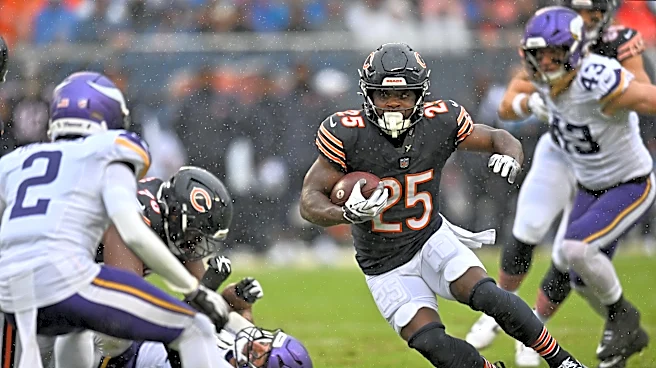
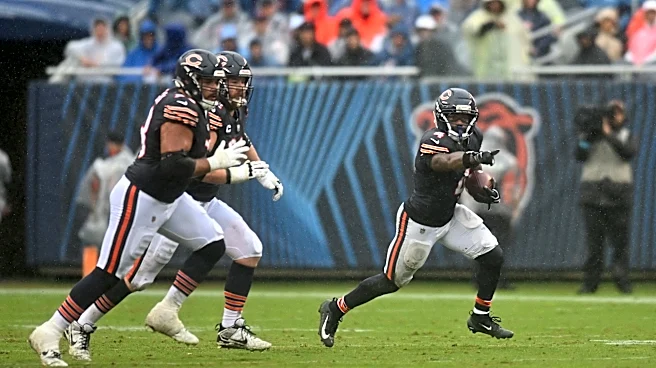
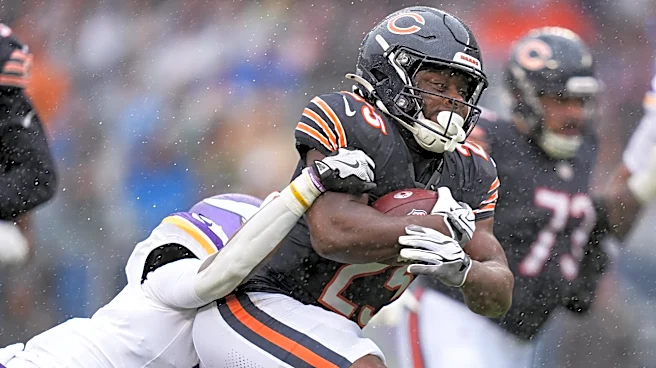
This detailed weather forecasting is important for several reasons, particularly for teams, coaches, and sports analysts. The changing conditions, such as falling temperatures, increasing humidity, and decreasing wind, can significantly influence game strategy and player performance. For instance, a wet ball due to rising dew could affect passing and catching, potentially leading to more fumbles or dropped passes. The easing wind might alter kicking strategies and long passes. Understanding these shifts allows coaches to make more informed decisions regarding play calls, player rotations, and equipment choices. For bettors and fantasy sports participants, this granular weather data provides a more accurate picture of potential game dynamics, which can influence predictions and wagers. The emphasis on the 'arc' of weather rather than a static 'game-time' forecast underscores a growing sophistication in sports analysis, recognizing that environmental factors are not constant but evolve throughout an evening game, thereby impacting the flow and outcome of the competition.
What's Next?
Moving forward, this detailed approach to weather forecasting for Monday Night Football games is likely to become a standard practice, especially for games played entirely after dark. Teams and coaching staff will increasingly integrate these dynamic weather predictions into their pre-game preparations and in-game adjustments. We can expect to see more sophisticated tools and analyses developed to track and predict these environmental shifts with even greater precision. Broadcasters and sports commentators may also incorporate these 'arc' forecasts into their pre-game and in-game discussions, providing viewers with a deeper understanding of how weather influences the action on the field. This trend could also lead to further research into the specific impacts of varying humidity, temperature drops, and wind changes on different aspects of football, such as field goal accuracy, running back grip, and wide receiver routes. The focus will be on leveraging this information to gain a competitive edge and enhance the overall understanding of the sport.
Beyond the Headlines
Beyond the immediate impact on game strategy, this detailed weather analysis for Monday Night Football reflects a broader trend in professional sports: the increasing reliance on data analytics and scientific insights to optimize performance and strategy. It highlights how even seemingly minor environmental factors are now being meticulously studied for their potential influence on athletic outcomes. This approach could extend to other sports and events where environmental conditions are variable, leading to more nuanced preparations and in-game decisions. Ethically, it raises questions about the extent to which natural elements can be 'gamed' or predicted to create an advantage, and whether such detailed forecasting might inadvertently diminish the unpredictable, 'human' element of sports. Culturally, it signifies a shift towards a more analytical and less purely intuitive understanding of athletic competition, where every variable, from player statistics to atmospheric pressure, is scrutinized for its potential impact.