





What's Happening?
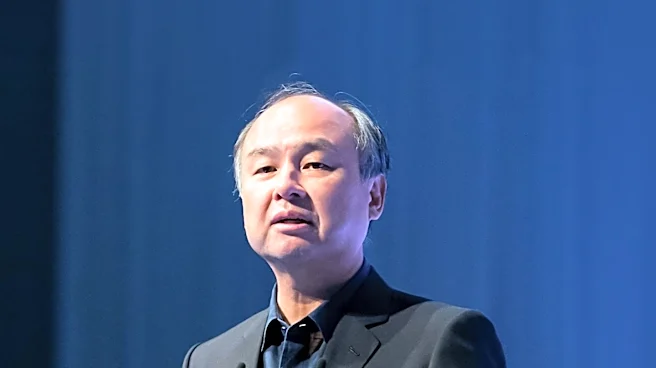
Masayoshi Son, Chairman and CEO of SoftBank Group, and Greg Hayes, former CEO of United Technologies (UTC) and RTX, have no documented business relationship, past or present. Their names became linked in news coverage in December 2016 due to separate
but concurrent major business stories. Son announced SoftBank's plan to invest $50 billion in the United States and create 50,000 jobs, appearing with President Trump at Trump Tower. Simultaneously, Hayes was engaged in negotiations to keep Carrier manufacturing jobs in Indiana from moving to Mexico, a situation that also garnered significant national attention. Despite appearing in the same news cycle concerning American jobs and investment, these were distinct events involving different companies and business decisions. The $50 billion investment pledge by SoftBank was later noted by reporters, including The Washington Post, as potentially not entirely new money, with much of it expected from the already announced $100 billion SoftBank Vision Fund.
Why It's Important?
The conflation of Masayoshi Son and Greg Hayes's activities in 2016 highlights how major business announcements and political pressures can intersect in public perception, even when the individuals and their companies are not directly connected. Son's pledge of significant investment in the U.S. was a notable event for the incoming Trump administration, signaling potential economic growth and job creation. Hayes's negotiations to retain Carrier jobs in Indiana were a high-profile example of the administration's focus on American manufacturing and employment. The distinction between these events is crucial for understanding the actual dynamics of U.S. economic policy and corporate decision-making during that period. It underscores the importance of scrutinizing the details of investment announcements and job retention efforts, as the underlying realities can be more complex than initial headlines suggest. For instance, Hayes's plan to invest in automation at the Carrier plant, while retaining some jobs, also carried the potential for future job reductions, illustrating the nuanced impact of such corporate strategies.
What's Next?
As of 2026, Masayoshi Son continues to lead SoftBank Group, with a primary focus on artificial intelligence (AI) and advanced computing. SoftBank announced a further $30 billion investment in OpenAI through its Vision Fund 2, aligning with Son's 'artificial superintelligence' (ASI) strategy. This indicates SoftBank's ongoing commitment to significant investments in the U.S. technology sector. Greg Hayes has transitioned from running companies to serving on corporate boards. He is currently the Lead Independent Director at Phillips 66, chairing its nominating and governance committee, and also holds a board seat at Becton, Dickinson and Company. His career trajectory suggests a continued influence in corporate governance and strategic advisory roles. The distinct paths of these two business leaders demonstrate how their professional focuses have diverged significantly since their coincidental appearance in the same 2016 news cycle, with Son driving technological innovation and Hayes contributing to corporate oversight.
Beyond the Headlines
The narrative linking Masayoshi Son and Greg Hayes, despite their lack of direct collaboration, illustrates a broader phenomenon in media coverage where concurrent events, especially those with high political or economic salience, can be inadvertently intertwined in the public consciousness. This can lead to misinterpretations about corporate alliances or policy impacts. The 2016 events occurred during a period of heightened focus on U.S. job creation and foreign investment under the new administration, making any related news particularly resonant. The case also highlights the evolving nature of corporate leadership, with Son's deep dive into AI reflecting the rapid technological shifts impacting global economies, while Hayes's move to board roles signifies a common transition for seasoned executives towards governance and strategic guidance. Understanding these separate trajectories is essential for a clear picture of the U.S. business landscape and the roles of its key players.