







What's Happening?
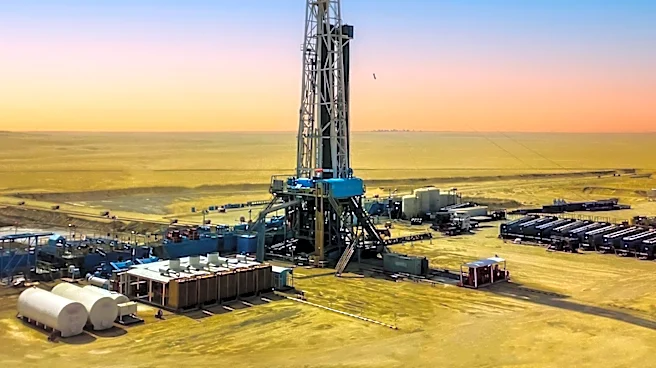
Halliburton Company, headquartered in Houston, Texas, has been identified as a leading entity in the global oil and gas drill bit market. The company is among the top 20 firms contributing to this sector, which is projected to grow from USD 8.86 Billion
in 2025 to USD 13.26 Billion by 2035, at a Compound Annual Growth Rate (CAGR) of 4.11%. The oil and gas drill bit market encompasses the manufacturing, distribution, and supply of various drilling bits essential for penetrating underground rock formations during oil and natural gas exploration and production. These include roller cone bits, fixed-cutter bits, and polycrystalline diamond compact (PDC) bits. The market's growth is driven by increasing global demand for oil and natural gas, rising exploration activities, and investments in offshore drilling and shale gas development.
Why It's Important?
Halliburton's prominent position in the oil and gas drill bit market signifies its critical role in supporting global energy production. As a key supplier of essential drilling tools, the company directly contributes to the efficiency and effectiveness of oil and gas exploration and extraction worldwide. The projected growth of this market underscores the continued reliance on fossil fuels for global energy needs, despite ongoing shifts towards renewable sources. Halliburton's involvement in developing advanced drilling technologies, such as PDC bits and hybrid drill bits, is crucial for improving drilling performance, reducing operational costs, and enabling access to challenging geological formations. This technological leadership helps maintain the viability and competitiveness of the oil and gas industry, impacting energy security and economic stability globally.
What's Next?
The oil and gas drill bit market is expected to continue its growth trajectory, driven by ongoing global energy demands and technological advancements. Halliburton, as a major player, will likely continue to invest in research and development to enhance its drill bit technologies, focusing on durability, penetration rates, and efficiency. The industry anticipates increased adoption of advanced materials, integration of artificial intelligence for optimized drilling, and the development of smart, sensor-enabled drill bits. Halliburton's strategic initiatives will likely align with these trends to maintain its competitive edge and meet the evolving needs of the oil and gas sector, particularly in expanding offshore and deepwater drilling operations. The company will also likely focus on customized drilling solutions to address specific geological challenges.
Beyond the Headlines
Halliburton's role in the drill bit market extends beyond mere manufacturing; it represents a critical component of the broader energy infrastructure. The advancements in drill bit technology, often pioneered by companies like Halliburton, have profound implications for the economics and environmental footprint of oil and gas extraction. More efficient drilling reduces the time and resources required to access reserves, potentially lowering production costs and minimizing environmental impact through optimized operations. The increasing integration of AI and advanced materials in drill bits also highlights the ongoing digital transformation within the traditional energy sector, pushing the boundaries of what's possible in subsurface exploration. This technological evolution is vital for meeting future energy demands while striving for more sustainable practices in resource extraction.