





What's Happening?
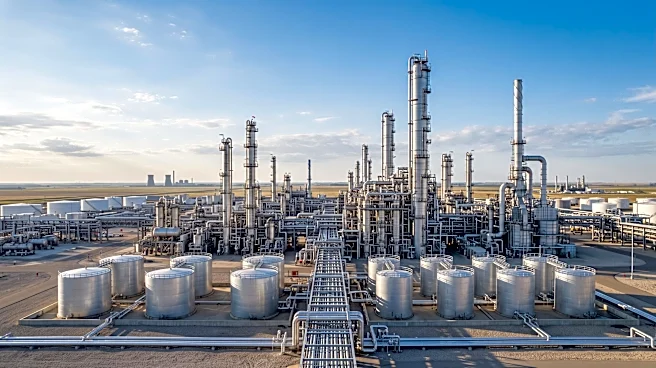
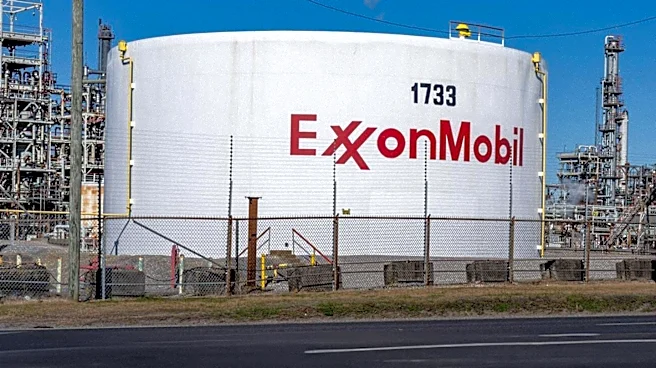
Exxon Mobil (XOM) announced robust Q3 2026 profits, driven by increased production from its U.S. refineries. This boost in production capitalized on high diesel fuel prices, which were influenced by the conflict in the Middle East. The oil and gas giant
declared a quarterly dividend of $1.07 per share, payable on December 10, marking a 3.9% increase. This dividend hike signifies Exxon Mobil's 44th consecutive year of dividend increases. The annualized dividend now stands at $4.28 per share, offering a yield of 2.53%. TD Cowen analyst Jason Gabelman reiterated a buy rating on Exxon stock and raised his price target to $193 from $180, citing higher downstream earnings and anticipated increased mid-cycle margins.
Why It's Important?
Exxon Mobil's strong Q3 performance and continued dividend growth are significant indicators of the company's financial health and its ability to navigate global market dynamics. The increased dividend payout, now for 44 consecutive years, underscores the company's commitment to returning value to shareholders and its long-term stability, making it an attractive option for income-focused investors. The boost in U.S. refinery production highlights the strategic importance of domestic refining capabilities in responding to global energy demands and price fluctuations. This performance also reflects the impact of geopolitical events on energy markets, as the Middle East conflict contributed to higher diesel fuel prices, benefiting Exxon Mobil's downstream operations. Analyst upgrades further reinforce positive market sentiment towards the company's future prospects.
What's Next?
Exxon Mobil's future performance will likely be influenced by global energy prices, geopolitical stability, and its ongoing investment in LNG projects. The company's strategy to increase ownership in LNG projects aims to reduce its concentration in the Middle East from 75% to 50%, potentially mitigating future geopolitical risks. Analysts anticipate that growth in the 2030s will be driven by projects in Guyana, Kashagan, Permian, and potentially Venezuela. The company also plans to maintain buybacks at $20 billion for 2027, indicating a continued focus on shareholder returns. Investors will monitor these strategic shifts and global energy market developments to assess Exxon Mobil's sustained profitability and dividend growth.
Beyond the Headlines
Exxon Mobil's sustained profitability and dividend increases reflect broader trends in the energy sector, particularly the ongoing reliance on traditional energy sources despite global pushes for renewable energy. The company's ability to leverage geopolitical events, such as the Middle East conflict, to boost profits highlights the complex interplay between global politics and energy markets. This performance also underscores the critical role of refining capacity in meeting immediate energy demands, especially for essential fuels like diesel. The long-term strategy to diversify away from heavy reliance on the Middle East through LNG investments signals a proactive approach to managing geopolitical risks and adapting to evolving energy landscapes, even as it continues to capitalize on existing fossil fuel infrastructure. This dual approach showcases the intricate balance major energy companies must strike between current market demands and future energy transitions.