







What's Happening?
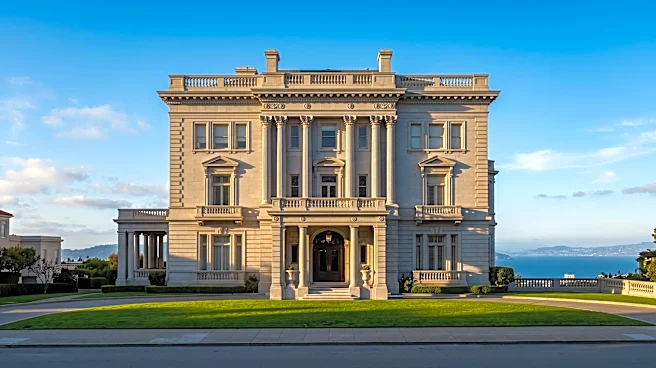
The historic Doe House, a Gilded Age mansion in San Francisco's Pacific Heights, has been listed for sale at $27 million. Built in 1908 for timber baron Frank P. Doe, president of the Frank P. Doe Lumber Company, the residence at 2120 Washington Street
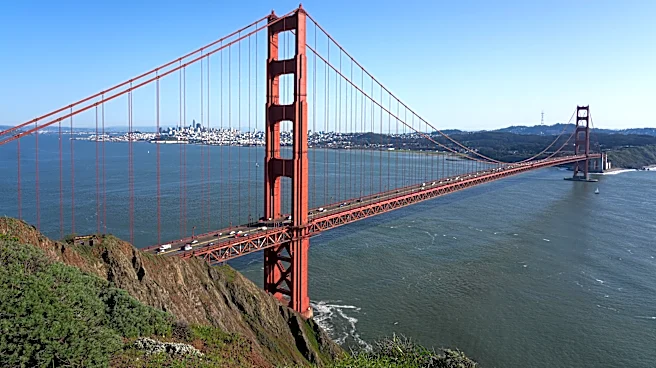
was constructed just two years after the devastating 1906 earthquake and fire. The period saw a boom in the lumber industry as the city's wealthiest families rebuilt. The 8,175-square-foot home features seven bedrooms and 6.5 bathrooms across four levels, situated on a rare flat double lot. It underwent a renovation in 2011 by Butler Armsden Architects, which preserved its original structure while updating the interior. The property boasts high ceilings, Neoclassical details, and views of the bay and Golden Gate Bridge.
Why It's Important?
The listing of the Doe House for $27 million underscores the enduring value and appeal of historic properties from the Gilded Age in prime urban locations. For the real estate market, this sale represents a significant transaction in the luxury segment, potentially setting new benchmarks for historic estates in San Francisco. It highlights the demand for homes that combine historical integrity with modern amenities, attracting affluent buyers who value unique architectural heritage. The property's history, tied to the post-1906 earthquake rebuilding efforts, also offers a tangible connection to a pivotal moment in San Francisco's development, showcasing how industries like lumber thrived during periods of reconstruction. This sale could influence pricing and interest in other grand homes from the same era, reinforcing the importance of historical preservation in maintaining property value and cultural identity.
What's Next?
The Doe House will likely attract considerable interest from high-net-worth individuals and real estate investors due to its historical significance, prime location, and recent renovations. Sotheby's International Realty, holding the listing, will manage showings and negotiations. The sale process could involve a period of marketing to find a suitable buyer who appreciates the unique blend of history and luxury the property offers. Given the rarity of such grand homes from the Gilded Age coming to market, especially those that have maintained their original footprint, the transaction could be closely watched as an indicator of the health of the ultra-luxury real estate market in San Francisco. The new owner will face the responsibilities and potential benefits of owning a historically significant property, including adherence to any local preservation guidelines.
Beyond the Headlines
The sale of the Doe House transcends a simple real estate transaction; it represents a continuation of the legacy of the Gilded Age in modern San Francisco. This period, characterized by immense wealth accumulation and architectural grandeur, left an indelible mark on American cities. The preservation and sale of properties like the Doe House highlight the ongoing tension between historical conservation and contemporary development. It also raises questions about the accessibility of such historical assets, as their high value often limits ownership to a select few. The house serves as a physical reminder of the city's resilience and the economic forces that shaped its early 20th-century landscape, offering a glimpse into the lives of the industrial titans who built America's urban centers. Its continued existence contributes to the city's unique architectural narrative and cultural heritage.