





What's Happening?
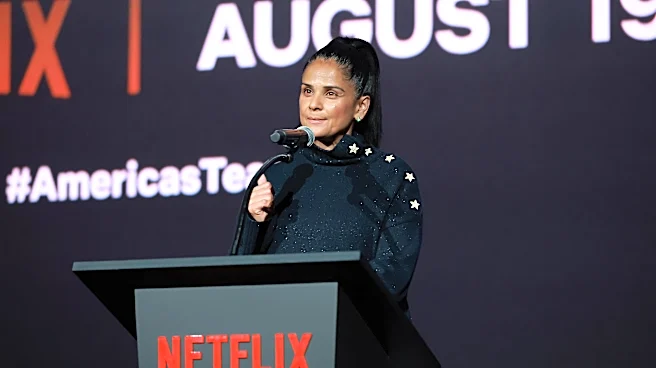
Bela Bajaria, former chief content officer at Netflix, has publicly addressed her departure from the company for the first time. Speaking at the 2026 International Emmys, where she received the Founders Award, Bajaria described her decade at Netflix as a "great,
fun chapter." She expressed pride in her team's accomplishments and noted that she has been taking time to rest after extensive global travel. Bajaria stepped down from her role on October 15, with Peter Rice, a former Fox and Disney executive, taking over as chief content officer. Her comments also touched upon the broader trend of prominent female executives leaving their positions, including Pam Abdy at Warner Bros. and Cindy Holland at Paramount, amidst industry-wide layoffs and restructurings. Netflix co-CEO Ted Sarandos acknowledged Bajaria's contributions in an internal memo, crediting her with building a global content organization and empowering talented decision-makers. The company has undergone significant workforce reductions, impacting approximately a thousand jobs, or about six percent of its staff.
Why It's Important?
Bajaria's public statements offer insight into the high-level executive changes occurring within the entertainment industry, particularly at major streaming platforms like Netflix. Her departure, alongside other prominent female executives, highlights a period of significant restructuring and leadership shifts across major studios and content providers. This trend can impact content strategy, production pipelines, and overall corporate culture within these influential companies. The emphasis Bajaria placed on strong leadership that prioritizes team well-being and thoughtful content decisions underscores the challenges and responsibilities faced by executives in a rapidly evolving media landscape. The acknowledgment from Netflix's co-CEO, despite the company's recent layoffs, indicates the substantial impact Bajaria had on shaping Netflix's global content strategy during her tenure. These leadership transitions can signal new directions for content development and acquisition, potentially influencing what audiences see on these platforms in the coming years.
What's Next?
Bajaria indicated that she is "really open" to future opportunities after celebrating her achievements at the International Emmys. Her next career move will be closely watched within the entertainment industry, given her extensive experience and leadership roles at Netflix and previously as president of Universal Television at NBCUniversal. The ongoing leadership changes at major media companies, including the appointment of Peter Rice as her successor at Netflix, suggest a continued period of strategic adjustments within the streaming and content production sectors. These shifts may lead to new content strategies, potential mergers or acquisitions, and further executive realignments as companies adapt to evolving market demands and competitive pressures. The broader industry trend of executive departures and restructurings is likely to continue, prompting further discussions about leadership stability and diversity within the entertainment sector.
Beyond the Headlines
The departure of high-profile executives like Bela Bajaria, particularly alongside other prominent women in leadership roles, raises questions about the broader dynamics of executive retention and career progression within the entertainment industry. While Bajaria expressed gratitude for her career, the context of widespread layoffs and restructurings suggests a challenging environment for even top-tier executives. This trend could reflect a shift in corporate priorities, increased pressure for profitability, or a re-evaluation of leadership structures in response to market saturation and evolving consumer habits in streaming. The emphasis on thoughtful decision-making in content approval, as highlighted by Bajaria, points to the immense responsibility and scrutiny faced by content executives, whose choices directly influence cultural narratives and global entertainment consumption. The ongoing changes may also prompt a re-examination of diversity and inclusion at the highest levels of media organizations.