






What's Happening?
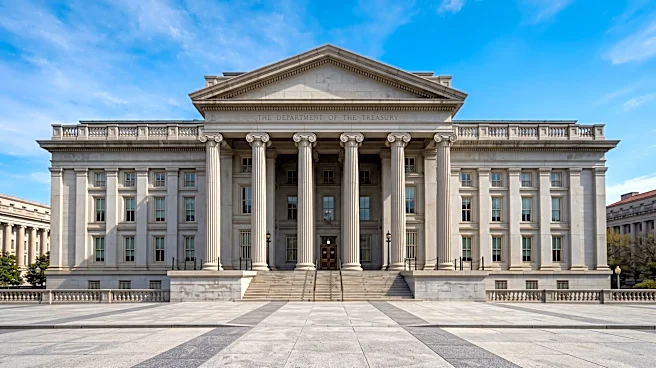
On October 22, 2026, the U.S. Department of the Treasury proposed new regulations aimed at prohibiting U.S. persons from investing in certain types of biotechnology developed by Chinese companies. These proposed rules implement the Comprehensive Outbound
Investment National Security (COINS) Act, enacted on December 18, 2025, as part of the FY2026 National Defense Authorization Act. While the COINS Act initially focused on five technologies (semiconductors, AI, quantum computing, supercomputers, and hypersonic systems), Treasury is now using its discretionary authority to add biotechnology as a sixth prohibited sector. The proposed regulations would cover Chinese entities that develop, engineer, or use biological systems to modify pharmaceutical compounds, develop hardware or software for automated scientific discovery, or produce certain biomanufacturing equipment, among other activities. The prohibition extends to equity investments, debt financing with equity-like components, joint ventures, greenfield formations, and investments in non-U.S. private equity or venture capital funds likely to invest in these Chinese biotech entities. Treasury is seeking public comments on this proposal until December 7, 2026, with final rules expected by March 13, 2027.
Why It's Important?
These proposed regulations represent a significant expansion of U.S. efforts to restrict China's access to critical technologies and capital, particularly in sectors deemed vital for national security. By including biotechnology, the U.S. government signals its concern over China's advancements in this field and its potential dual-use applications. If adopted as drafted, these rules could severely limit cross-border investments and joint ventures between U.S. investors and Chinese biotech companies, potentially reshaping the global biotechnology landscape. This move aims to prevent U.S. capital and expertise from inadvertently contributing to China's military or intelligence capabilities. The restrictions could impact a wide range of U.S. investors, including venture capital firms, private equity funds, and corporations engaged in strategic partnerships. While pure licensing transactions are currently excluded, the broad definition of 'joint ventures' could encompass various collaborative arrangements, necessitating careful legal review for U.S. entities operating in or with China's biotech sector.
What's Next?
The U.S. Department of the Treasury will review public comments received by December 7, 2026, before issuing final rules by March 13, 2027. The final rule will specify its effective date, which could be immediate or include a transition period. U.S. investors and biotech companies with existing or planned engagements in China will need to closely monitor the final wording and scope of these regulations to ensure compliance. Violations could lead to monetary penalties and divestment orders. The implementation of these rules will likely prompt U.S. companies to reassess their investment strategies and partnerships in China's biotech sector, potentially leading to a redirection of capital to other markets or domestic investments. The biotech and pharmaceutical industries in both the U.S. and China will be closely watching how key terms like 'biological systems' and 'pharmaceutical compounds' are ultimately defined, as these definitions will determine the breadth of the regulations' impact.
Beyond the Headlines
The inclusion of biotechnology in outbound investment restrictions highlights a growing trend of national security concerns extending beyond traditional military technologies to encompass dual-use civilian sectors. This move reflects a broader U.S. strategy to decouple critical supply chains and limit China's technological self-sufficiency in areas deemed strategic. The proposed regulations could accelerate the fragmentation of the global biotech industry, potentially leading to distinct innovation ecosystems in the U.S. and China. While intended to safeguard national security, these restrictions could also pose challenges for global scientific collaboration and the development of new medical treatments, especially if they hinder the free flow of research and development. The long-term implications could include increased R&D costs, slower innovation in certain areas, and a more bifurcated global market for biotech products and services, forcing companies to choose sides in an increasingly competitive geopolitical environment.