




What's Happening?
DJI, a leading drone manufacturer, has issued an updated end-of-service notice, ceasing support for its Inspire 2 drone and ten related products on December 1, 2026. This group includes Zenmuse X4S and X5S gimbal cameras, CrystalSky monitors, the original
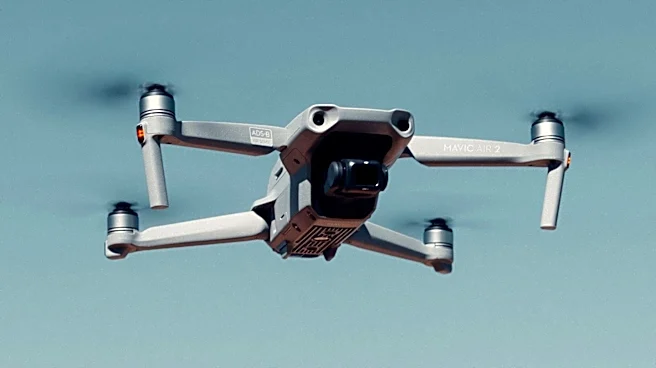
DJI Smart Controller, Tello IronMan edition, DJI Goggles and Goggles RE, and the DJI FPV System. A second wave of products, including the Phantom 4 RTK, Phantom 4 RTK SE, Phantom 4 Multispectral, Mavic 2 Enterprise Advanced, and RoboMaster S1, EP, and EP Core educational robots, will lose support on December 31, 2026. This means DJI will no longer provide official technical support, answer product inquiries, or offer factory repairs for these items after their respective dates. The company advises owners to consider upgrading to newer models, emphasizing that each product generation has a fixed lifecycle. This follows previous end-of-service announcements for products like the Phantom 4 Pro V2.0 and Mavic 2 Pro earlier in the year.
Why It's Important?
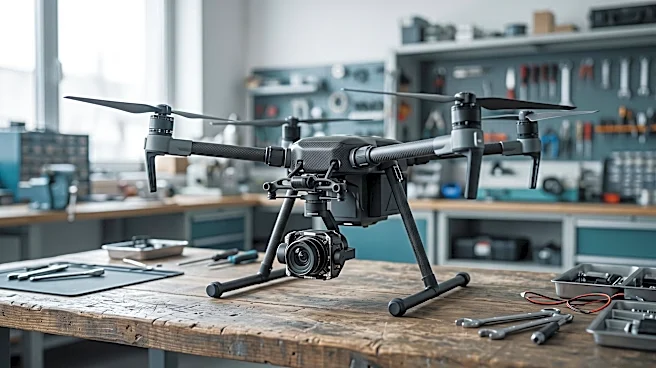
This announcement carries significant implications for U.S. drone operators, particularly those who rely on these models for professional or commercial purposes, such as film production with the Inspire 2 or surveying with the Phantom 4 RTK. The cessation of official support means a lack of factory repairs and technical assistance, potentially leading to increased operational costs and downtime. Operators will need to secure independent repair services and proactively stock spare parts like batteries, propellers, and gimbal components, which may become scarcer and more expensive over time. Furthermore, the U.S. regulatory landscape, including the FCC’s Covered List blocking new DJI models from authorization and rising tariffs on Chinese-made drones, complicates the process of finding suitable replacements. This situation could force businesses to re-evaluate their equipment budgets and operational strategies for 2027 and beyond, potentially impacting industries that heavily utilize these specific DJI drones.
What's Next?
Owners of the affected DJI products are advised to take immediate action. For those with the Inspire 2 platform and early FPV gear, it is crucial to open any necessary DJI repair cases before December 1, 2026. Phantom 4 RTK and Mavic 2 Enterprise Advanced owners have until December 31, 2026, to do the same. Beyond repairs, operators should prioritize stocking up on essential spare parts that are prone to wear and tear, such as batteries and propellers, while they are still available from authorized sellers. Identifying and establishing relationships with trusted independent repair shops will become vital for future maintenance. Additionally, businesses and individual operators must begin planning for the replacement of these aircraft, considering the challenges posed by U.S. regulations and tariffs on new DJI models. Ensuring continued compliance with regulations like Remote ID for older airframes will also be a critical next step for those choosing to continue flying them.
Beyond the Headlines
The discontinuation of support for these popular DJI models highlights a broader trend in the technology sector where product lifecycles are becoming increasingly defined, pushing consumers and businesses towards continuous upgrades. For the U.S. drone industry, this situation underscores the growing complexities introduced by geopolitical factors, such as the FCC's Covered List and tariffs, which limit access to certain technologies and increase operational costs. This could spur innovation and demand for non-Chinese drone alternatives within the U.S., or it might lead to a more robust independent repair and aftermarket parts ecosystem. The ethical implications of planned obsolescence, even if framed as a 'fixed life cycle,' also come into play, as users are compelled to replace functional but unsupported equipment. This development could accelerate the shift towards more localized drone manufacturing and service industries in the U.S. to mitigate reliance on foreign suppliers and navigate evolving regulatory environments.