




What's Happening?
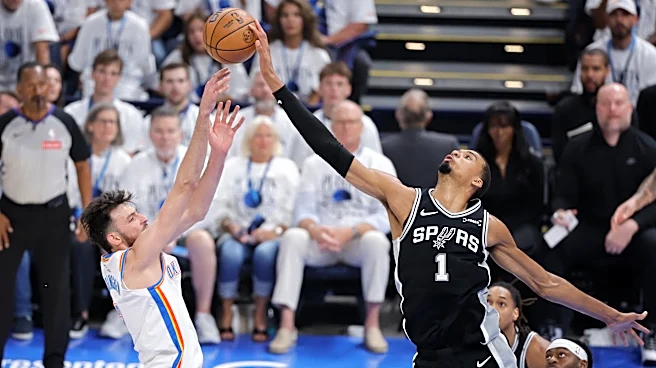
NBA legend Julius Erving believes that San Antonio Spurs' star Victor Wembanyama will usher in a new era for centers in the league, restoring their 'lost glory.' Erving noted in an interview with Scoop B. Robinson that the NBA was once dominated by centers,
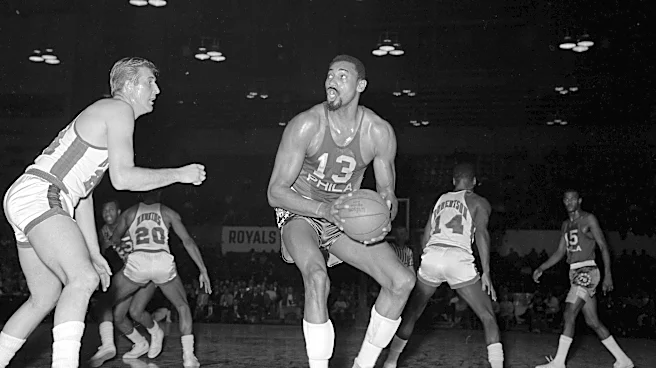
with MVPs from 1966 to 1982 predominantly being big men. This trend shifted in the early 1980s, with guards and forwards like Magic Johnson and Larry Bird becoming more prominent in MVP conversations, a pattern that has largely continued to the present day. Erving, whose favorite player is Kareem Abdul-Jabbar, expressed optimism that Wembanyama's unique talent and impact could reverse this long-standing trend. Wembanyama, at 22, has already made a significant mark, finishing third in MVP voting and being named the NBA's first unanimous Defensive Player of the Year, averaging 25.0 points, 11.5 rebounds, and a league-high 3.1 blocks per game.
Why It's Important?
This prediction from a respected NBA icon like Julius Erving highlights a potential significant shift in the strategic landscape of professional basketball. For decades, the league has increasingly favored versatile wing players and guards, leading to a decline in the traditional center's role. If Wembanyama indeed triggers a resurgence of dominant big men, it could influence team building strategies, player development, and even the style of play across the NBA. This shift could impact how teams draft, trade, and construct their rosters, potentially leading to a renewed emphasis on interior defense, rebounding, and post-play. The economic implications could also be substantial, as a change in player archetypes could affect player valuations and endorsement opportunities, particularly for centers. Furthermore, Wembanyama's rise could inspire a new generation of young athletes to focus on developing traditional big-man skills, altering the pipeline of talent entering the league.
What's Next?
The immediate future will see continued scrutiny of Victor Wembanyama's performance and his impact on the San Antonio Spurs. As he continues to develop, his ability to consistently dominate games and lead his team to success will be key to validating Erving's prediction. The NBA community, including coaches, general managers, and analysts, will be closely watching to see if other teams begin to prioritize drafting and developing centers with similar skill sets. Wembanyama's continued success could also influence marketing and media narratives, potentially leading to more spotlight on big men in future seasons. His appearance as a cover athlete for NBA 2K27 already signals a growing recognition of his star power. The coming seasons will reveal whether Wembanyama's individual brilliance is an anomaly or the vanguard of a broader trend in the league.
Beyond the Headlines
Beyond the immediate on-court implications, a resurgence of dominant centers could have deeper cultural and historical resonance within the NBA. The league has a rich history of iconic big men, and a return to their prominence could reconnect the modern game with its foundational roots. This shift might also spark debates about the evolution of basketball, comparing different eras and styles of play. Ethically, it could challenge the prevailing notion that smaller, more agile players are inherently superior in the modern game, promoting a more diverse appreciation for different player types. The long-term impact could even extend to youth basketball, influencing how young players are coached and what skills are emphasized, potentially leading to a more balanced development of talent across all positions. This could foster a more varied and dynamic game for future generations.