





What's Happening?
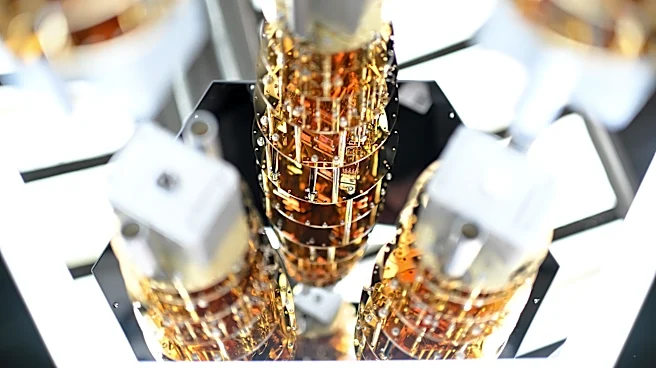
IBM has launched its most advanced quantum computer, the IBM Quantum System Two, in Chicago. This new system, powered by the Nighthawk chip, is initially located at Hyde Park Labs and will eventually be moved to the Illinois Quantum and Microelectronics
Park (IQMP) once construction is complete. This deployment marks IBM's first quantum computer in Illinois and is a collaborative effort involving IBM, the University of Chicago, the State of Illinois, and the IQMP. The initiative aims to create a new quantum hub designed to support research and commercial projects across various sectors, including universities, corporations, startups, and public agencies. This move is part of IBM's broader strategy to integrate advanced computing infrastructure and services globally, deepening collaborations between government, local institutions, and international partners on quantum computing applications. The company views quantum computing as a key extension of its hybrid cloud and AI strategy, aiming to convert advanced compute capabilities into sustained software and services demand.
Why It's Important?
The establishment of this quantum hub in Chicago is significant for several reasons. It positions Illinois as a key center for quantum computing research and development, fostering innovation and potentially attracting further investment and talent to the region. For IBM, this move reinforces its leadership in quantum technology and its commitment to building a robust quantum ecosystem. By providing a physical anchor where various entities can develop quantum workloads, IBM aims to drive the commercialization of quantum computing. This initiative could accelerate the development of quantum algorithms and error correction technologies, which are crucial for practical quantum applications. The success of this hub could influence future enterprise AI spending patterns and the adoption of hybrid cloud solutions, as quantum computing is increasingly seen as an integral part of advanced computing infrastructure. The project also highlights the growing trend of public-private partnerships in advancing cutting-edge technologies, with potential benefits for scientific discovery and economic growth.
What's Next?
Looking ahead, the IBM Quantum System Two will eventually relocate to the Illinois Quantum and Microelectronics Park, indicating further development and expansion of the quantum hub. Investors and stakeholders will closely monitor the hub's progress in attracting research projects, securing commercial contracts, and generating tangible outcomes in quantum computing applications. The focus will be on how effectively IBM can convert its quantum advancements into sustained software and services demand, particularly in conjunction with its Red Hat OpenShift, security tooling, and AI orchestration offerings. The integration of quantum computing with hybrid cloud environments will be a key area to watch, as IBM aims to demonstrate how these tightly integrated compute layers can drive business value. The success of this hub could also influence future government funding and policy decisions related to quantum technology and advanced computing infrastructure in the U.S.
Beyond the Headlines
Beyond the immediate technological advancements, IBM's quantum hub in Chicago carries broader implications. Ethically, the development of powerful quantum computers raises questions about data security, privacy, and the potential for new forms of cyber threats, necessitating ongoing discussions about responsible innovation. Legally, the intellectual property generated from this hub, especially through collaborations with universities and startups, will be a critical area, potentially shaping future patent landscapes in quantum technology. Culturally, the establishment of such a cutting-edge facility can inspire a new generation of scientists and engineers, fostering a culture of innovation and technological pursuit within the region and beyond. In the long term, the success of this quantum hub could trigger shifts in various industries, from finance and healthcare to materials science, by enabling solutions to problems currently intractable for classical computers. This development underscores the ongoing race for quantum supremacy and its potential to redefine technological capabilities and global economic power dynamics.