





What's Happening?
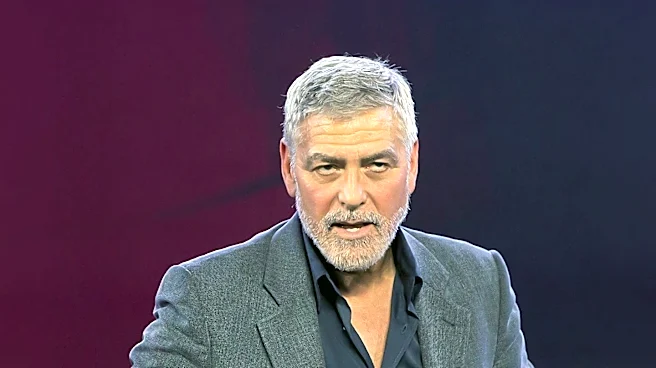
Former reality star Spencer Pratt has publicly criticized actor George Clooney, accusing him of delivering 'woke scold lectures' while his wife, Amal Clooney, displayed an expensive outfit at the Venice Film Festival. Pratt, who recently ran for mayor
of Los Angeles, took to social media to claim that the money spent on Amal Clooney's single-use dress and accessories could have permanently housed eight homeless individuals. According to Page Six, Amal Clooney wore a custom Haider Ackermann for Tom Ford look, Cartier earrings valued at $149,000, and a Cartier diamond bracelet costing $225,000. George Clooney had delivered speeches at the festival, including one where he accepted the Golden Lion for Lifetime Achievement award, discussing the importance of empathy and criticizing those who 'peddle in fear.' He also commented on the state of U.S. politics, describing it as an 'unfortunate' moment and using the term 'kakistocracy' to describe a country run by the least qualified people.
Why It's Important?
This public critique highlights a growing tension between celebrity activism and perceived displays of wealth, particularly in the context of social and economic inequality. Pratt's comments reflect a sentiment among some that wealthy public figures who advocate for social causes should also demonstrate their commitment through their personal spending habits. The incident could fuel broader discussions about the role of celebrities in political discourse and the authenticity of their messages when contrasted with their lifestyles. For George Clooney, known for his humanitarian work and political commentary, such criticism could potentially impact his public image and the reception of his advocacy efforts. It also underscores the scrutiny public figures face in the digital age, where their actions and words are constantly analyzed and debated across social media platforms.
What's Next?
The immediate aftermath may see continued debate on social media regarding celebrity wealth, political commentary, and social responsibility. Other public figures or commentators might weigh in on Pratt's criticism or Clooney's statements, potentially escalating the discussion. There could be further scrutiny of celebrity spending habits, especially during high-profile events like film festivals, as the public and media draw connections between their lifestyles and their expressed social concerns. This event might also prompt other celebrities to be more mindful of how their public appearances and personal expenditures align with any social or political messages they convey. The broader conversation about wealth disparity and the role of the affluent in addressing societal problems is likely to persist, with this incident serving as a recent example.
Beyond the Headlines
This exchange touches upon deeper societal questions regarding performative activism versus genuine commitment to social change. It raises ethical considerations about the responsibility of individuals with significant wealth and influence to align their actions with their stated values. The incident also reflects a cultural shift where public figures are increasingly held accountable for perceived hypocrisies, especially when advocating for issues like poverty or social justice. Furthermore, it highlights the ongoing debate about the effectiveness of celebrity endorsements in political and social movements, and whether lavish lifestyles undermine their credibility. The tension between personal luxury and public advocacy can lead to a questioning of motives, potentially eroding public trust in celebrity-led initiatives and fostering cynicism towards broader social causes.