
What's Happening?
An exercise physiologist, Courtney Smith, a registered dietitian and certified personal trainer with a master's degree in exercise physiology, has issued a warning against performing static stretches before
cold-weather workouts. Smith states that static stretching does not adequately raise muscle temperature or increase blood flow, which are crucial for preparing muscles for activity, especially in temperatures below 45 degrees Fahrenheit. Research supports this, with a 2019 review in *Frontiers in Physiology* indicating that static stretching for over 60 seconds per muscle group can lead to a 4% to 7.5% temporary decrease in strength and power performance. Some older studies even reported losses up to 28% from extreme stretching protocols. Smith emphasizes that while static stretching is not inherently dangerous, it is counterproductive before exercise as it leaves muscles cold and stiff, which is the opposite of what is desired for effective and safe training.
Why It's Important?
This information is important for individuals engaged in fitness activities, particularly those who train in colder environments. Misinformation or outdated practices regarding warm-up routines can lead to suboptimal performance and increased risk of injury. The advice from an exercise physiologist, backed by scientific research, highlights the critical distinction between dynamic and static stretching in the context of pre-workout preparation. Understanding that static stretching can temporarily reduce strength and power directly impacts training efficacy and safety. Athletes and general fitness enthusiasts who traditionally incorporate static stretches into their warm-up routines may be inadvertently hindering their performance and making themselves more susceptible to muscle strains or other injuries, especially when muscles are cold. Adopting dynamic warm-ups instead can lead to better muscle readiness, improved performance, and enhanced injury prevention.
What's Next?
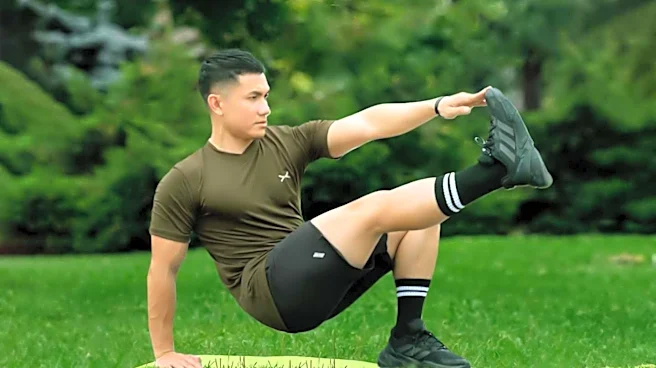
Individuals and fitness professionals are encouraged to re-evaluate their pre-workout routines, especially when exercising in cold conditions. The recommendation is to prioritize dynamic stretching, which involves continuous movement through a joint's full range of motion, such as leg swings, walking lunges, and arm circles. These movements effectively raise core and muscle temperature, increase blood flow, and stimulate synovial fluid in joints, preparing the body for strenuous activity. Static stretching should be reserved for post-workout cool-downs when muscles are already warm, as this is when flexibility gains are more likely to occur without compromising immediate strength or power. The fitness community may see a continued shift towards evidence-based warm-up protocols that emphasize dynamic movements over static holds before exercise.
Beyond the Headlines
The discussion around static versus dynamic stretching before workouts reflects a broader evolution in sports science and exercise physiology. For years, static stretching was a universally accepted component of warm-ups, often performed without a full understanding of its physiological effects on immediate performance. This shift underscores the importance of continuous research and evidence-based practices in fitness and athletic training. It also highlights how common practices, even those deeply ingrained, can be refined or overturned with new scientific understanding. The implications extend beyond individual athletes to fitness programs, coaching methodologies, and public health recommendations, emphasizing the need for ongoing education to ensure that exercise practices are both effective and safe, aligning with the latest scientific consensus rather than tradition.