






What's Happening?
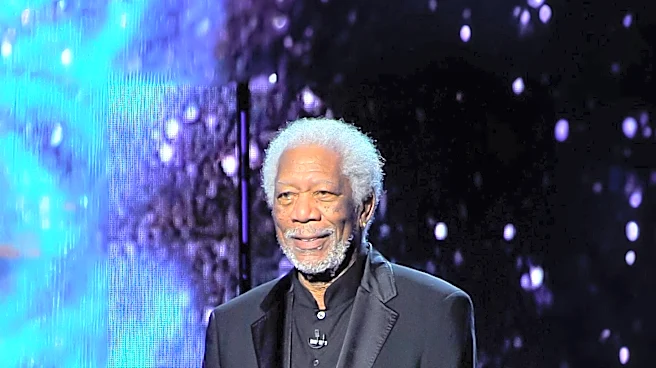
Morgan Freeman, an actor with a career spanning over half a century, set two primary career goals in 1993. He aimed to play 'King Lear' on stage and to portray a 'hot-shot lawyer' or 'detective' on screen. While he has successfully achieved the latter,
notably playing Detective Somerset in David Fincher’s 1995 psychological thriller 'Seven,' his aspiration to perform 'King Lear' on stage remains unfulfilled. Freeman has a rich background in both television and theater, appearing in over 17 stage productions and earning Broadway credits and Tony nominations before his rise to A-list film stardom. His early stage work included performances in Shakespearean plays like 'Coriolanus' and 'The Taming of the Shrew.' His on-screen roles as a detective or lawyer were driven by a desire to play characters distinctly different from himself, a goal he achieved with his performance in 'Seven,' which showcased his signature acting style of quiet restraint.
Why It's Important?
This insight into Morgan Freeman's career aspirations highlights the deliberate choices and artistic motivations of a prominent American actor. His pursuit of diverse roles, particularly those contrasting with his personal persona, demonstrates a commitment to challenging himself creatively. The success in achieving his on-screen goals, such as playing a detective, has significantly shaped his filmography and public perception, solidifying his status as a versatile and respected performer in Hollywood. The unfulfilled goal of playing 'King Lear' on stage underscores the enduring artistic ambitions even for established actors, reflecting a desire to tackle iconic roles that test their craft. This narrative provides a deeper understanding of the dedication and strategic planning involved in a long-standing acting career, influencing how audiences and industry professionals view his body of work and future potential projects.
What's Next?
While the source does not explicitly state immediate next steps for Morgan Freeman regarding his 'King Lear' ambition, it implies that this goal remains a significant, albeit unachieved, aspiration. Given his extensive career and continued activity in the film industry, it is plausible that he may still pursue this stage role in the future. His past success in transitioning between theater, television, and film suggests that a return to the stage for such a prominent role is not out of the question. Future announcements regarding his theatrical engagements would be a key indicator of progress towards this long-held goal. The continued evolution of his career will likely be watched by fans and critics alike, eager to see if he will eventually fulfill this particular artistic ambition.
Beyond the Headlines
Morgan Freeman's career trajectory, marked by a conscious effort to diversify his roles and challenge his acting range, offers a compelling case study in artistic longevity and personal fulfillment within the entertainment industry. His preference for characters 'absolute opposite' of himself speaks to a deeper artistic philosophy: the exploration of human nature through varied lenses. This approach not only enriches his performances but also contributes to a broader cultural understanding of character development in acting. The distinction between his achieved on-screen goals and his unfulfilled stage ambition for 'King Lear' also highlights the different demands and prestige associated with various acting mediums. It suggests that for some actors, the stage, particularly classical theater, represents a pinnacle of artistic achievement, distinct from the successes found in film and television. This ongoing pursuit reflects a dedication to craft that transcends commercial success.