








What's Happening?
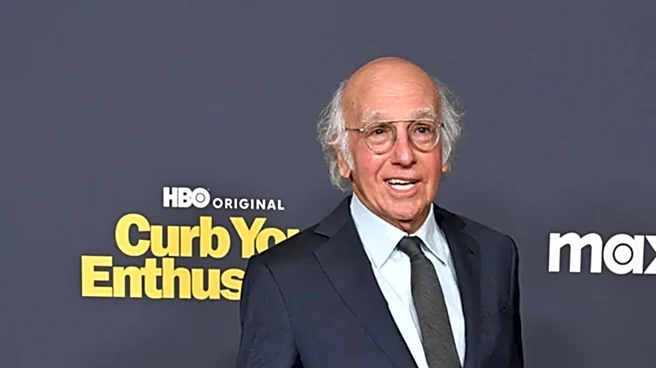
Blake J. Harris, author of 'Emperor of Nothing: The Making of Larry David,' has explored Larry David's Jewish background and its influence on his comedy, despite David's reluctance to discuss his Jewishness as a writer. Harris, a long-time fan of 'Seinfeld,'
spent six years on the biography, which involved numerous conversations with David and even an appearance in the 'Curb Your Enthusiasm' finale. The book traces David's roots from his Brooklyn Jewish upbringing to his encounters with Jewish comedy and the cultural anxieties that became recurring material in his shows. While David himself rarely spoke about the significance of his Jewish identity to his writing, Harris's book delves into this aspect, highlighting David's influences from Jewish comedy luminaries like Mel Brooks and Woody Allen.
Why It's Important?
This biography is important because it offers a deeper understanding of one of America's most influential comedic figures, Larry David, and the often-unacknowledged role of his Jewish heritage in shaping his unique brand of humor. By exploring David's upbringing and the Jewish cultural context of his work, Harris sheds light on the origins of the 'Seinfeld' and 'Curb Your Enthusiasm' sensibilities, which have profoundly impacted American television comedy. The book's revelation that David was hesitant to explicitly discuss his Jewishness as a creative mission adds a layer of complexity to his public persona, suggesting a more nuanced relationship with his identity than previously understood. This exploration can enrich academic and public discourse on Jewish representation in media and the evolution of comedic storytelling in the U.S.
What's Next?
The release of 'Emperor of Nothing: The Making of Larry David' is likely to spark renewed interest in Larry David's career and the cultural impact of his shows. Readers and critics will have the opportunity to re-evaluate his work through the lens of his Jewish background, as presented in Harris's biography. This could lead to further discussions about the role of identity in creative expression and the often-subtle ways in which personal history shapes artistic output. The book may also encourage other biographers to delve into the unspoken influences on public figures, particularly those who prefer to keep aspects of their personal lives private. The insights provided by Harris could also influence future analyses of 'Seinfeld' and 'Curb Your Enthusiasm,' offering new interpretations of their themes and characters.
Beyond the Headlines
Beyond the immediate biographical details, Harris's book on Larry David touches upon broader cultural and ethical implications. David's reluctance to explicitly connect his Jewishness to his comedic mission, despite his work being steeped in Jewish cultural references, raises questions about the pressure on artists to define their identity in relation to their art. It also highlights the phenomenon of 'too Jewish' concerns in the entertainment industry, as evidenced by NBC's initial worries about 'Seinfeld.' This aspect of the book can spark discussions about cultural gatekeeping and the subtle biases that can influence creative production. Furthermore, the book's exploration of David's humor, including controversial episodes like 'Palestinian Chicken,' prompts reflection on the evolving boundaries of comedy and what is considered acceptable or 'racist' in different cultural moments, underscoring the dynamic nature of social norms and artistic expression.