


What's Happening?
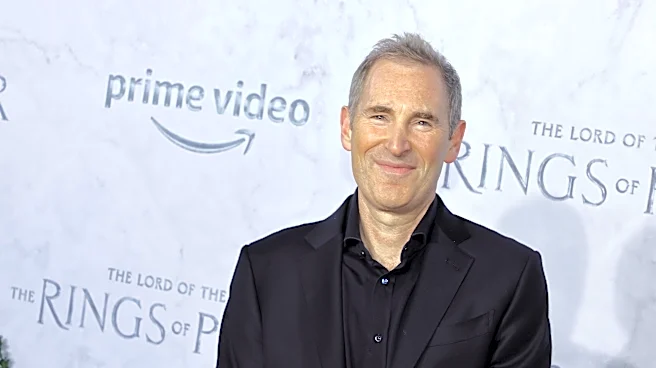
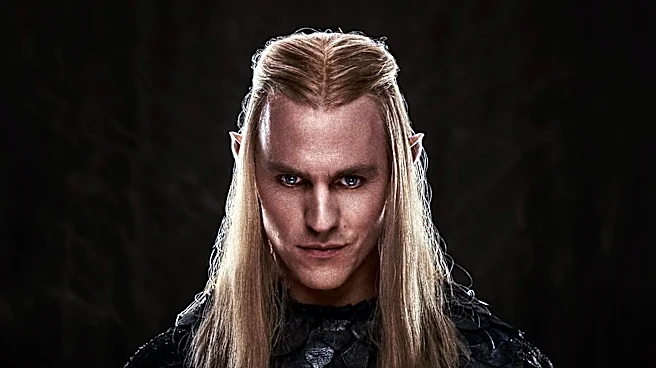
The television series 'The Lord of the Rings: The Rings of Power' is not strictly canonical within the universe of Peter Jackson's 'Lord of the Rings' films, despite both being adaptations of J.R.R. Tolkien's Middle-earth. According to 'The Rings of Power' co-showrunner
Patrick McKay, the series exists alongside various interpretations of Tolkien's material rather than being directly tied to Jackson's cinematic universe. This distinction is largely due to contractual matters, as Amazon was reportedly obligated to keep the series separate from the films when acquiring the rights. The show is set thousands of years before the events depicted in 'The Hobbit' and 'The Lord of the Rings' books and their film adaptations, exploring the Second Age of Middle-earth's history. While Jackson was initially considered for involvement, Amazon reportedly 'ghosted' him during development, citing the need to maintain a distinct and separate series for legal reasons.
Why It's Important?
This separation has significant implications for the 'Lord of the Rings' franchise, particularly for fans who seek a cohesive narrative across different adaptations. The decision to keep 'The Rings of Power' distinct from Jackson's films, driven by contractual obligations, means that viewers cannot expect direct canonical links or seamless integration between the two. This could lead to differing interpretations of characters, events, and lore, potentially fragmenting the fan experience. For Amazon, this legal constraint likely influenced creative decisions and the overall direction of the series, as they had to carve out a unique space for their adaptation. Meanwhile, Peter Jackson is involved in a new film, 'The Hunt for Gollum,' and Warner Bros. is developing another 'LOTR' movie, indicating a continued expansion of the franchise across different studios and creative teams, each potentially operating under their own set of canonical rules.
What's Next?
The ongoing development of new 'Lord of the Rings' content, including 'The Hunt for Gollum' and another Warner Bros. film, suggests a future where multiple interpretations of Tolkien's work coexist. Fans will likely continue to navigate these different adaptations, evaluating each on its own merits and its adherence to the broader Middle-earth lore. The legal and contractual frameworks that dictate these separations will continue to shape how the franchise evolves, potentially leading to more distinct projects rather than a unified cinematic or television universe. The success of 'The Rings of Power' and future projects will depend on their ability to engage audiences while operating within these established boundaries, offering fresh perspectives on a beloved fantasy world.
Beyond the Headlines
The situation highlights the complex interplay between intellectual property rights, creative freedom, and fan expectations in major franchises. The legal necessity to keep 'The Rings of Power' separate from Jackson's films underscores how contractual agreements can significantly influence artistic and narrative choices. This can lead to a richer, more diverse set of interpretations of a source material, but also risks alienating fans who prefer a singular, consistent canon. It also raises questions about the long-term strategy for managing expansive fictional universes, especially when rights are distributed among different entities. The ongoing proliferation of 'Lord of the Rings' content across various platforms and studios reflects a broader trend in the entertainment industry to maximize the value of established intellectual property, even if it means navigating complex legal and creative challenges.