







What's Happening?
The Philippines' electric vehicle (EV) sector is being advised to strengthen its integration with the Association of Southeast Asian Nations (ASEAN) to ensure its growth and competitiveness. As major global powers like the United States, China, and the European
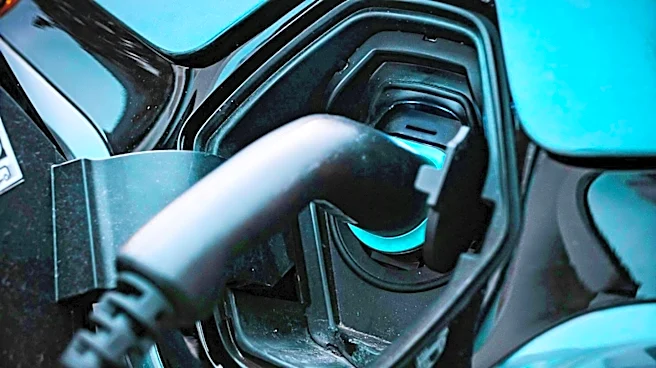
Union heavily subsidize their domestic clean energy industries, individual Southeast Asian nations risk being marginalized. By acting as a unified regional bloc, ASEAN can leverage its market scale to secure technology transfer agreements, joint-venture battery investments, and localized component manufacturing contracts with international industrial conglomerates. The ASEAN Leaders’ Declaration on Developing the Regional Electric Vehicle Ecosystem is already facilitating coordination among member states to harmonize standards, including common technical grounds for Type 2 alternating-current interfaces, Combined Charging System (CCS) 2 direct-current fast plugs, and standardized battery swapping formats for light two-wheelers. This regional approach aims to prevent the Philippines from relying on costly finished EV imports, which would make modernized electric fleets unaffordable for transport cooperatives.
Why It's Important?
This strategic integration is crucial for the Philippines to develop a robust and affordable electric vehicle ecosystem. Without it, the country's transport sector could remain dependent on expensive imported EVs, hindering the widespread adoption of electric mobility. By aligning with ASEAN's production machinery, the Philippines gains access to standardized platforms, reliable regional parts inventories, and economies of scale. This will drive down vehicle prices, making electric vehicles more accessible and affordable for both individual consumers and public transport operators. The move also positions the Philippines to benefit from regional trade agreements and multi-country supply lines, fostering local manufacturing capabilities and creating jobs within the clean energy sector. This collaborative approach is essential for Southeast Asian nations to compete effectively in the global clean energy market and achieve their sustainability goals.
What's Next?
The ongoing efforts to harmonize EV standards within ASEAN are expected to continue, with further discussions and agreements aimed at solidifying a common technical framework. This will likely involve continued collaboration among member states to implement the standards for charging interfaces and battery swapping formats. The focus will be on translating these agreements into tangible benefits for individual nations like the Philippines, ensuring that their domestic transport sectors can access affordable and standardized EV platforms. Future initiatives may include exploring more joint ventures for battery production and component manufacturing within the ASEAN region. The success of these efforts will depend on the continued commitment of member states to regional cooperation and their ability to attract global investment into the integrated EV ecosystem.
Beyond the Headlines
The push for regional integration in the EV sector highlights a broader trend of developing nations forming blocs to counter the economic dominance of larger global players. This strategy not only addresses immediate economic concerns but also fosters technological self-reliance and reduces dependence on external markets. Ethically, it promotes equitable access to sustainable transportation solutions, ensuring that the benefits of the clean energy transition are not limited to wealthier nations. Culturally, it could lead to a more unified regional identity around shared environmental goals and technological advancements. In the long term, a successful ASEAN EV ecosystem could serve as a model for other developing regions seeking to build sustainable industries through collective action, potentially shifting global manufacturing and supply chain dynamics in the clean energy sector.