





What's Happening?
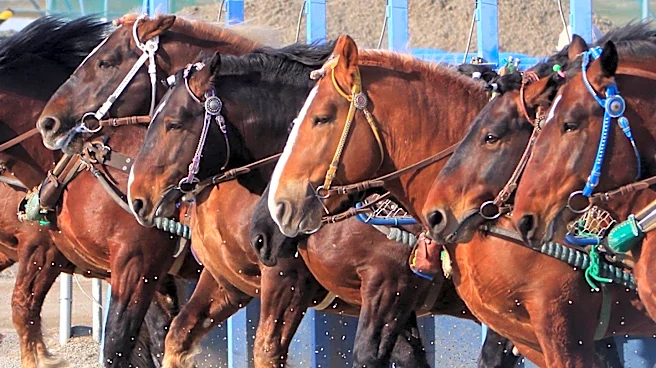
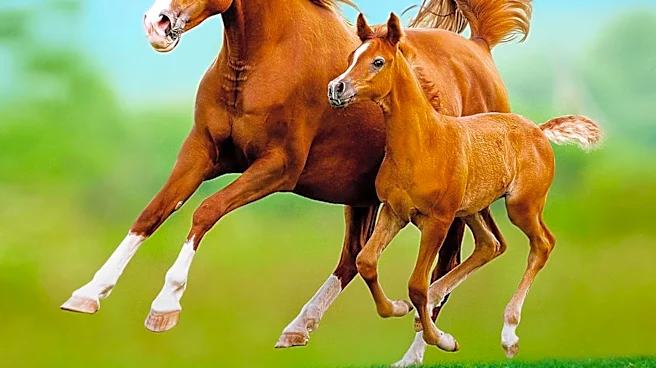
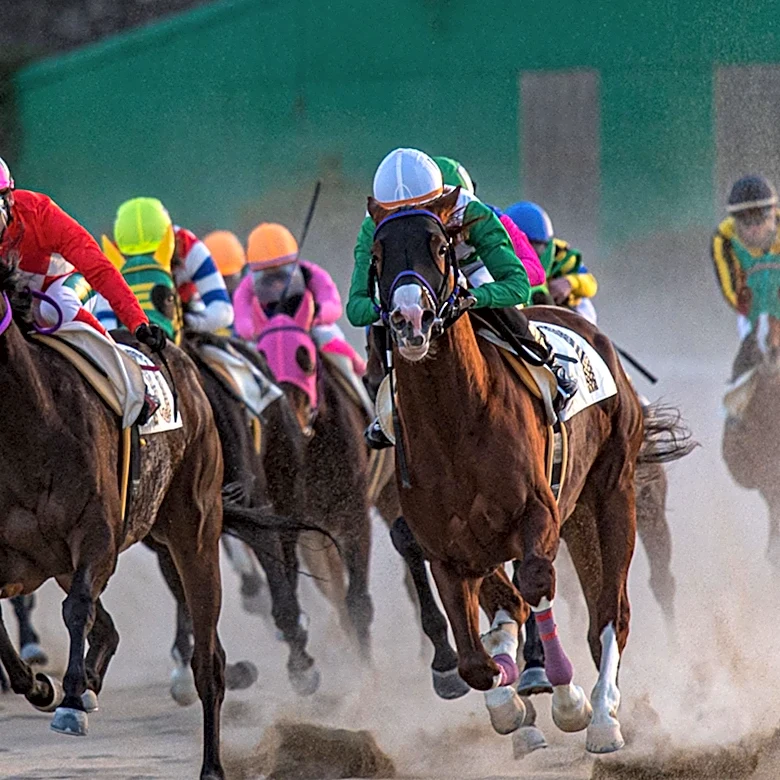
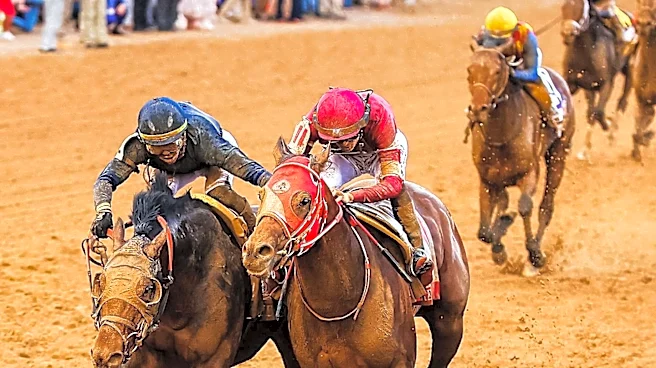
The thoroughbred horse racing industry has long pursued the goal of breeding faster horses, but this ambition has led to a paradox where genetic diversity is being compromised. The breeding of thoroughbreds, which began in the 17th century with horses from
Arabia, Central Asia, and North Africa, has focused on speed and endurance. However, the genetic pool has narrowed significantly, with 95% of all living thoroughbreds descending from a few stallions. This has raised concerns about the long-term sustainability and health of the breed, as the lack of genetic diversity can lead to increased susceptibility to diseases and other health issues.
Why It's Important?
The narrowing genetic diversity in thoroughbred horses poses significant challenges for the racing industry. While the pursuit of speed has led to remarkable achievements, such as Secretariat's unmatched record in the Belmont Stakes, it also risks the health and viability of future generations of horses. The industry faces the challenge of balancing the desire for faster horses with the need to maintain a healthy and diverse gene pool. This situation highlights broader issues in animal breeding practices and the potential consequences of prioritizing performance over genetic health.
What's Next?
The thoroughbred racing industry may need to reconsider its breeding practices to ensure the long-term health and sustainability of the breed. This could involve diversifying the genetic pool by introducing new bloodlines and implementing breeding strategies that prioritize genetic health. Additionally, advancements in genetic research and technology, such as gene editing, may offer new opportunities to address these challenges. The industry may also face increased scrutiny and pressure from animal welfare advocates to adopt more sustainable and ethical breeding practices.
Beyond the Headlines
The thoroughbred breeding paradox reflects broader ethical and scientific questions about the role of human intervention in animal genetics. The pursuit of speed and performance in horse racing raises questions about the limits of selective breeding and the potential consequences for animal welfare. This situation may prompt discussions about the ethical responsibilities of breeders and the need for regulations to ensure the health and well-being of animals in competitive industries.