


What's Happening?
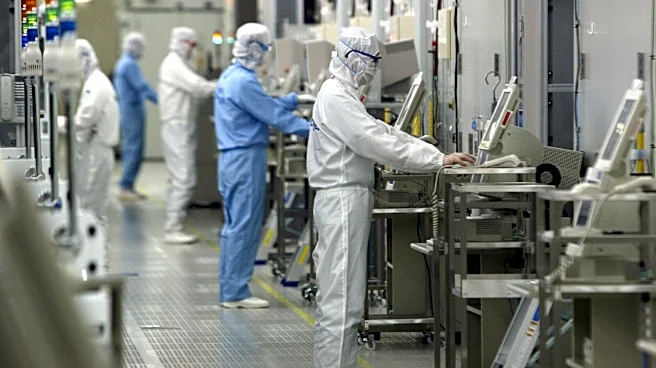
Texas Instruments (TI) is marking its 70th anniversary of operations in Europe, underscoring its enduring commitment to semiconductor innovation, research and development, manufacturing, and collaboration with European customers. This milestone coincides
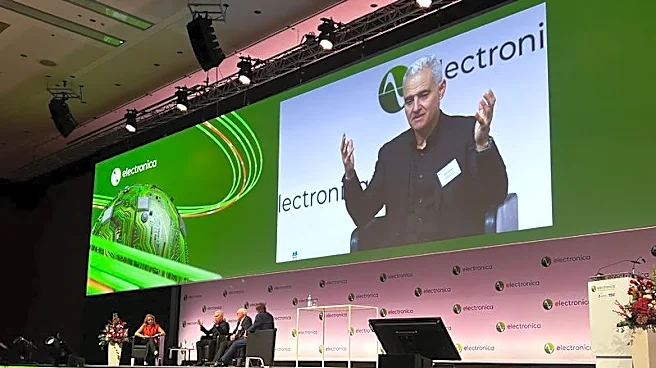
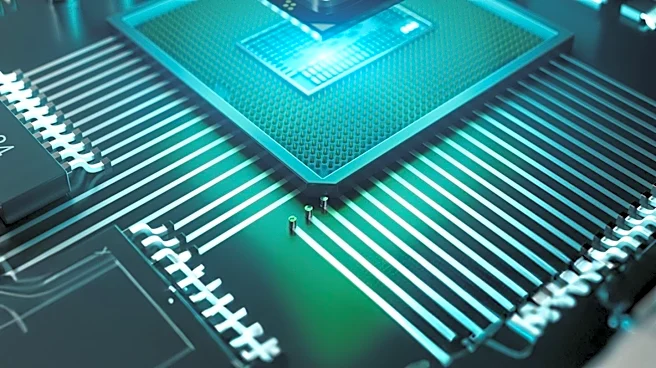
with TI's participation in electronica 2026, scheduled from November 10 to 13 in Munich, Germany. Throughout its seven decades in Europe, TI has played a pivotal role in advancing technological progress across various sectors. The company's extensive portfolio, comprising over 80,000 analog and embedded processing semiconductor products, facilitates efficient power management, precise sensing, seamless connectivity, and on-device AI processing. TI supports more than 100,000 customers globally, including major European companies like ABB Robotics, Porsche, Schneider Electric, and Husqvarna Group, to accelerate innovation in key markets such as industrial automation, automotive, and sustainable energy management. Robert Berghoff, president of TI EMEA, emphasized the company's dedication to providing engineers with the tools needed for the transition towards more autonomous, AI-based, and intelligent systems.
Why It's Important?
This anniversary highlights Texas Instruments' significant and long-standing impact on the global semiconductor industry, particularly within the European market. The company's continuous innovation in analog and embedded processing chips is crucial for the advancement of various U.S. and international industries, including automotive, industrial automation, and data centers. By collaborating with leading European firms, TI is not only shaping the future of mobility, work, and everyday life but also reinforcing its position as a key technology enabler. The development of advanced semiconductor solutions for AI-based infrastructure, electric vehicles, and smart industrial systems directly influences the competitiveness and technological capabilities of U.S. companies operating in these global markets. Furthermore, TI's commitment to reliable, high-performance semiconductors supports the broader technological ecosystem, fostering innovation that can lead to new products and services benefiting consumers and businesses worldwide.
What's Next?
Texas Instruments will showcase its latest innovations at electronica 2026 in Munich, demonstrating how its analog and embedded processing products contribute to the future of intelligent systems. These demonstrations will cover advancements in automation, automotive technology, and sustainable energy solutions. The company is expected to continue its collaborations with European industry leaders, further integrating its semiconductor technology into next-generation products and systems. For instance, ongoing partnerships with ABB Robotics will focus on physical AI for autonomous versatile robots, while collaboration with Porsche will advance audio and gallium nitride (GaN) technologies for electric vehicles. With Schneider Electric, TI will continue to address power density and energy efficiency challenges for AI data centers. These ongoing efforts suggest a continued focus on developing foundational technologies that will drive future technological shifts and market demands.
Beyond the Headlines
The celebration of Texas Instruments' 70 years in Europe reflects a deeper trend of global technological interdependence and the critical role of semiconductor companies in driving innovation across continents. This long-term presence underscores the strategic importance of international partnerships in developing complex technologies like AI and advanced automation. The ethical implications of these advancements, particularly in areas like autonomous systems and AI-based infrastructure, will become increasingly prominent. As TI's technologies enable more autonomous and intelligent systems, discussions around data privacy, algorithmic bias, and the societal impact of automation will intensify. Furthermore, the focus on sustainable energy management and efficient power conversion highlights the growing imperative for environmentally responsible technological development, influencing global standards and practices in manufacturing and energy consumption.