






What's Happening?
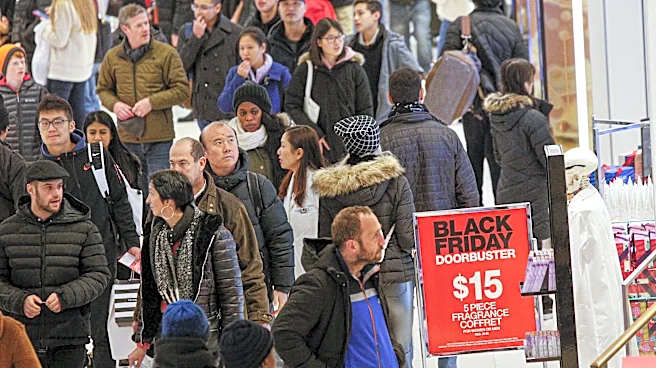
Black Friday deals have commenced, with major U.S. retailers such as Amazon, Best Buy, Target, and Walmart, alongside brands like REI, Lululemon, Sephora, and Wayfair, offering substantial discounts. These sales encompass a broad spectrum of products,
including technology, home goods, fashion, and appliances. While Black Friday officially falls on November 27 this year, the promotional period has expanded to cover most of November and is expected to continue into early December. Consumers can find some of the year's deepest discounts on various items, though not all products will be on sale. For instance, luxury bedding may see more significant price reductions during January's 'white sales,' and travel-related deals are often more prevalent on 'Travel Tuesday.' The event has largely merged with Cyber Monday, creating an extended period of markdowns, although Black Friday traditionally includes both in-store and online offers, while Cyber Monday is primarily web-focused.
Why It's Important?
The early launch and extended duration of Black Friday sales significantly impact the U.S. retail sector and consumer spending patterns. Retailers are strategically initiating discounts earlier to capture a larger share of holiday shopping budgets, potentially leading to increased sales volumes over a longer period. This competitive environment benefits consumers by providing more opportunities to purchase goods at reduced prices, especially for high-value items like electronics and large appliances. However, it also necessitates careful comparison shopping, as not all deals offer the best value, and some discounts may be less substantial than they appear. The shift towards an extended 'Black November' period also influences supply chain management and inventory planning for businesses, requiring them to adapt to prolonged demand fluctuations rather than a single peak shopping day. This trend could also impact smaller businesses that may struggle to compete with the aggressive pricing strategies of larger retailers.
What's Next?
Black Friday sales are expected to continue through the holiday weekend and into Cyber Monday on November 30. Consumers should anticipate ongoing updates from retailers as new deals are introduced and existing ones expire. The distinction between Black Friday and Cyber Monday deals may blur further, with many promotions extending across both events. Shoppers are advised to monitor price histories and compare offers across different retailers to ensure they are securing the most advantageous deals. Following the main Black Friday and Cyber Monday events, some categories, such as luxury bedding, will likely see deeper discounts in January. Travel-related deals, including hotels and airfare, are projected to be more prominent on 'Travel Tuesday.' Retailers will continue to analyze sales data from this extended period to inform future promotional strategies and inventory management.
Beyond the Headlines
The evolution of Black Friday into an extended 'Black November' reflects a broader shift in consumer behavior and retail strategy. This prolonged sales period can lead to 'deal fatigue' among consumers, making it harder for retailers to stand out. It also raises questions about the sustainability of constant discounting and its impact on brand perception and profit margins. From an ethical standpoint, the emphasis on rapid consumption and potentially misleading 'doorbuster' deals can encourage impulse purchases rather than thoughtful spending. The environmental impact of increased production, shipping, and potential returns during such a prolonged sales event also warrants consideration. Furthermore, the intense competition during this period can disproportionately affect smaller, independent businesses that lack the resources to offer similar deep discounts, potentially contributing to market consolidation among larger players.