







What's Happening?
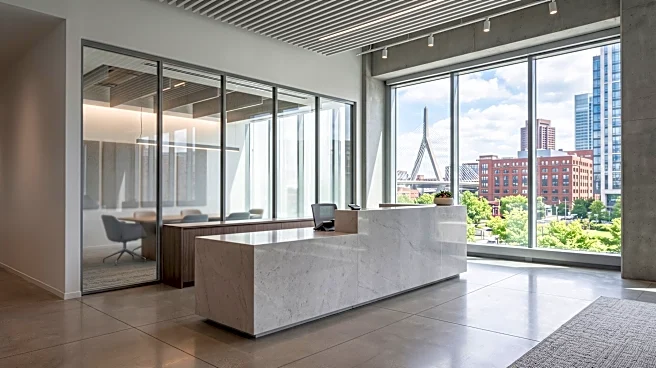
MassChallenge, a prominent startup incubator, is moving its headquarters from the Seaport district to 401 Park in the Fenway neighborhood of Boston. The nonprofit has signed a lease for 22,500 square feet, maintaining a similar footprint to its previous
location on Fan Pier Boulevard. This move marks the first time MassChallenge's headquarters will be outside the Seaport since its founding in 2009. The relocation was prompted by MassMutual, the previous landlord, informing the nonprofit a year ago that it needed its space back. MassChallenge, which has mentored over 5,000 startups without taking equity, considered leaving Boston entirely, exploring locations in Somerville and Cambridge before securing the new Fenway space. Alexandria Real Estate Equities, the owner of 401 Park, showed significant interest in hosting MassChallenge, offering a substantial discount on market rate rent. The bulk of MassChallenge's $8.5 million annual budget is funded by contracts with large companies and government agencies.
Why It's Important?
This relocation signifies a shift in Boston's innovation ecosystem and highlights the evolving real estate market for startups. The Seaport, once dubbed the 'Innovation District,' has seen rising costs and a move towards luxury developments, making it less accessible for some non-profits and startups. MassChallenge's move to Fenway, an area increasingly recognized for its life sciences and tech presence, could further solidify Fenway's reputation as a hub for innovation. The decision by Alexandria Real Estate Equities to widen its tenant base beyond life sciences to include tech and innovation tenants like MassChallenge reflects a strategic adaptation to market conditions, particularly a glut of lab space. This move is crucial for MassChallenge, which relies on accessible and affordable space to continue its mission of supporting entrepreneurs. The organization's ability to secure discounted rent underscores the value placed on its role in fostering the startup community, which is vital for economic growth and job creation in Massachusetts. The move also impacts the visibility and accessibility of MassChallenge's programs for its approximately 10,000 annual visitors and participating startups.
What's Next?
MassChallenge will establish its new headquarters at 401 Park, with the space designed to accommodate up to 150 startups in various tranches throughout the year. This move is part of CEO Cait Brumme's five-year plan to double the organization's size, based on revenue and startups served, by 2030. The new location is expected to bring significant energy to the Fenway-Kenmore area, potentially attracting more innovation-focused businesses and talent. The organization recently received its largest single individual donation, a $2 million gift from Joshua and Amy Boger, to create an 'Innovation Fund,' which will support its growth initiatives. MassChallenge will continue to run smaller, overlapping cohorts of startups, with entrepreneurs required to be in Boston two or three times a month, even if not permanently relocated. The success of MassChallenge in its new location could further influence real estate development and urban planning in Boston, as other areas vie to become the next 'Innovation District.'
Beyond the Headlines
The relocation of MassChallenge reflects broader trends in urban development and the challenges faced by non-profit organizations in high-cost urban centers. The Seaport's transformation from an emerging innovation hub to a more established, expensive district illustrates the double-edged sword of success in urban revitalization. While the Seaport has thrived, it has also priced out some of the very entities that helped build its reputation. MassChallenge's move to Fenway highlights the importance of strategic partnerships between non-profits and landlords, where mutual benefits extend beyond simple rent transactions. Alexandria Real Estate Equities' decision to offer discounted space demonstrates a recognition of the ecosystem value that organizations like MassChallenge bring. This situation also underscores the need for cities to continuously foster diverse and affordable spaces for innovation to prevent the concentration of economic activity in a few, increasingly exclusive, areas. The long-term success of Fenway as an innovation hub will depend on its ability to maintain a balance between growth and accessibility, learning from the experiences of other rapidly developing districts.