







What's Happening?
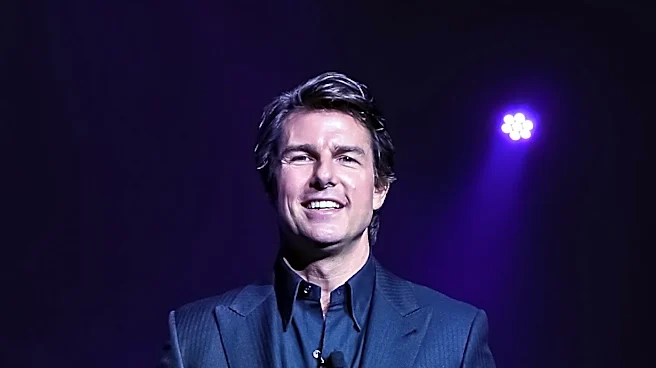
Comedian Bert Kreischer recently shared insights into actor Tom Cruise's meticulously planned daily routine during an episode of his podcast, "2 Bears, 1 Cave." According to Kreischer, who claims to have heard this information secondhand from individuals
who have worked with Cruise, the actor's life is organized "to a T." This includes having staff edit sports broadcasts, specifically Formula 1 and soccer, to remove commercials and highlight only the key moments. This allows Cruise to watch a condensed version of events while working out. Furthermore, Kreischer stated that Cruise's meals are prepared and ready as he finishes his workouts, and even his shower is steaming upon his entry into the bathroom. This level of organization ensures minimal wasted time and maximum efficiency in Cruise's day.
Why It's Important?
This revelation offers a glimpse into the extreme lengths to which some high-profile individuals go to optimize their time and daily activities. While seemingly a personal anecdote, it highlights a broader cultural fascination with the routines of successful figures and the pursuit of peak performance. For the entertainment industry, it underscores the demanding schedules and precise management often associated with top-tier actors. It also touches upon the growing trend of personalized services and efficiency optimization, where individuals with significant resources can curate their experiences to an unprecedented degree. This level of personal management, while aspirational for many, also raises questions about the balance between efficiency and spontaneity in daily life.
What's Next?
While this information is based on a secondhand account and has not been confirmed by Tom Cruise himself, it is likely to continue circulating within entertainment news and fan communities, further contributing to the mystique surrounding the actor's disciplined lifestyle. The anecdote may inspire discussions about personal productivity hacks or the role of personal assistants in managing the lives of celebrities. It could also lead to further speculation or humorous takes on the extreme measures taken by public figures to maintain their demanding careers and personal brands. There are no immediate foreseeable consequences or scheduled decisions directly stemming from this particular revelation, as it primarily serves as an anecdotal insight into a celebrity's routine.
Beyond the Headlines
Beyond the immediate entertainment value, Kreischer's account subtly touches on themes of control, optimization, and the commodification of time in modern society. The idea of having every moment curated, from sports viewing to meal preparation, reflects a desire to eliminate inefficiencies and maximize output, a mindset often prevalent in high-stakes professions. This level of control, while enabling peak performance, could also be seen as a form of detachment from the organic flow of daily life, where unexpected moments and downtime are often valued. It prompts reflection on the psychological impact of such a highly structured existence and the potential trade-offs between ultimate efficiency and personal well-being. The story also implicitly highlights the significant support systems that enable such lifestyles, often unseen by the public.