


What's Happening?
Russia's Special Economic Zones (SEZs) have entered a new phase of international industrial cooperation, attracting over US$45.8 billion in cumulative investments by the end of 2025 and creating more than 120,000 jobs. This development was highlighted
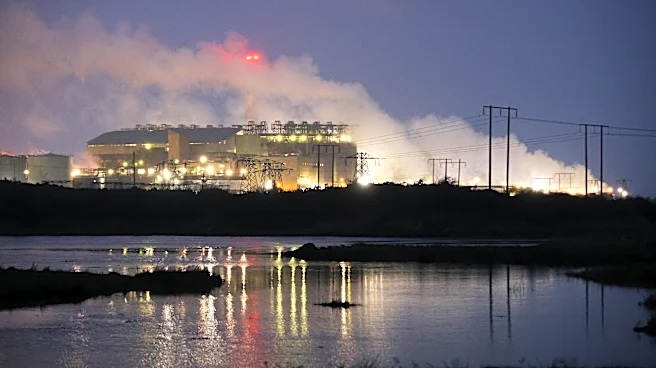
at the 4th International Forum of Special Economic Zones in Moscow. The forum focused on connecting industrial sites, identifying foreign suppliers, and developing joint manufacturing projects. Russia is actively duplicating China's successful SEZ model, which offers tax incentives, reduced operating costs, and import duty exemptions to attract foreign investors. The Moscow Technopolis SEZ, for instance, has reported investments from over 250 high-technology enterprises specializing in microelectronics, instrument engineering, biomedicine, information technology, and robotics. The initiative aims to strengthen industrial cooperation across Russia and expand its reach to BRICS nations and other international partners.
Why It's Important?
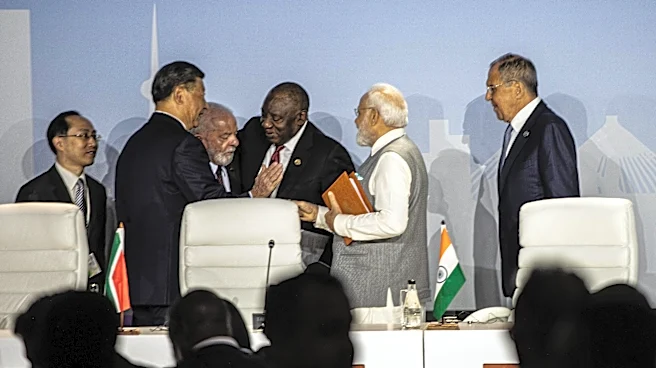
The significant investment in Russia's SEZs underscores a strategic effort to diversify its economy and reduce reliance on natural resources. By fostering industrial cooperation and attracting foreign capital, Russia aims to boost its manufacturing capabilities, enhance technological sovereignty, and create a more robust economic infrastructure. The expansion of this model across BRICS nations signifies a broader geopolitical and economic strategy to build stronger trade and industrial ties with emerging economies, potentially creating new supply chains and market opportunities outside traditional Western alliances. This could lead to increased competition in global manufacturing and a shift in economic power dynamics. For businesses, these SEZs offer attractive incentives for localization and market access, while for Russia, they represent a pathway to sustainable economic growth and technological advancement.
What's Next?
The immediate future will see Russia focusing on converting the cooperation agreements signed at the Moscow SEZ forum into concrete investment commitments, component supply contracts, and operational production lines. Key initiatives include the development of an International Association of BRICS Special Economic Zones and a digital map of BRICS SEZs to facilitate partner searches and communication between investors and zone management. Russia also plans to strengthen interregional agreements to expand electromobility and transport production chains. Further efforts will be directed towards attracting more foreign investors, particularly from Asia, the Eurasian Economic Union, and Africa, by showcasing the benefits and opportunities within its SEZs. The success of these efforts will be measured by continued investment growth, job creation, and the establishment of new industrial partnerships.
Beyond the Headlines
The rapid development of Russia's SEZs and its ambition to expand this model across BRICS nations carries deeper implications beyond economic growth. It reflects a strategic move to build a more multipolar global economic system, where trade and investment flows are less dominated by Western economies. This could lead to the formation of new economic blocs and influence global trade policies. Ethically, the development of SEZs often raises questions about labor standards, environmental impact, and equitable distribution of benefits, which will need careful monitoring as these zones expand. Legally, the harmonization of investment regulations and intellectual property rights across diverse nations within the BRICS framework will be crucial for sustained cooperation. Culturally, increased industrial collaboration could foster greater understanding and exchange between participating nations, but also potentially lead to competition for resources and markets.