



What's Happening?
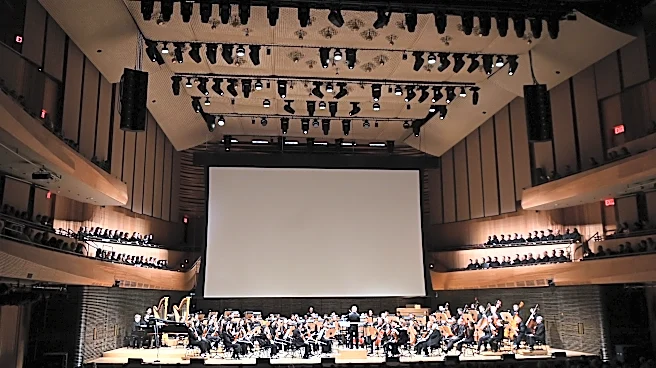
The 2028 Austria Choral Festival, featuring composer Elaine Hagenberg and Dr. Allen Hightower, Director of Choral Studies at the University of North Texas, is set to offer participants a deep cultural immersion experience. Scheduled for June 20-27, 2028,
in Salzburg and Vienna, the festival will center on Hagenberg's compositions, 'Illuminare' and 'Aeterna Via.' Performers will have the opportunity to sing these works in Austria's renowned musical heartland, immersing themselves in a culture celebrated for its musical excellence and grand architecture. The festival aims to connect ensembles with a living legacy of music, providing an inspiring setting where artistic excellence and cultural immersion are intertwined.
Why It's Important?
This festival offers a significant opportunity for U.S. choral ensembles and music students to engage with European musical traditions and cultural heritage. The involvement of Dr. Allen Hightower from the University of North Texas highlights a direct link for American participants, providing them with world-class instruction within a culturally rich environment. For U.S. music education, such international experiences are invaluable, offering exposure to different performance practices and historical contexts that can deepen artistic understanding and skill. It also fosters international collaboration and cultural exchange, which can enrich the U.S. music scene by bringing back diverse perspectives and inspirations. This initiative underscores the importance of global engagement in artistic development.
What's Next?
The 2028 Austria Choral Festival is likely to attract numerous U.S. high school, university, and community ensembles, seeking both artistic development and cultural enrichment. Following the festival, participants may bring back new insights and techniques that could influence U.S. choral programs and performances. This event could also pave the way for more international collaborations involving U.S. artists and institutions, fostering a greater exchange of musical ideas and talent. Organizers of similar festivals might look to this model for integrating cultural immersion more deeply into their programs, recognizing its value beyond mere performance opportunities. The long-term impact could be a more globally informed and diverse U.S. choral landscape.
Beyond the Headlines
Beyond the immediate musical performances, the festival's emphasis on cultural immersion carries profound implications for personal growth and cross-cultural understanding. For U.S. participants, experiencing music in its historical and cultural context in Austria can foster a deeper appreciation for the arts and European heritage. This kind of immersion can break down cultural barriers, promote empathy, and broaden worldviews, contributing to more globally aware citizens. Ethically, it reinforces the idea of music as a universal language that connects people across borders. Long-term, such experiences can inspire future generations of U.S. musicians and artists to explore international collaborations and draw inspiration from diverse cultural sources, enriching the global artistic dialogue.