






What's Happening?
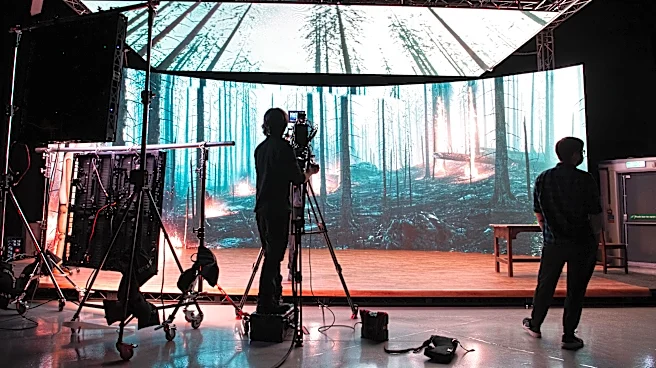
Filmmakers frequently utilize 'movie magic' techniques to simulate challenging or impractical scenes, such as night shots, underwater sequences, or adverse weather conditions. This approach allows for greater control over the production environment and
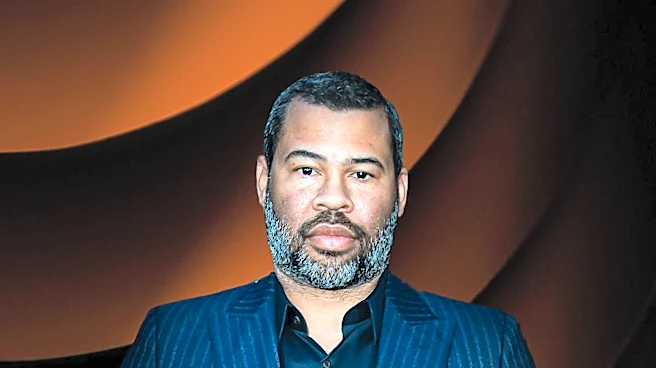
can significantly reduce costs and safety concerns. For instance, many night exteriors in Jordan Peele's 'Nope' were filmed during daylight using infrared cameras to render the sky black while preserving landscape detail. Similarly, Guillermo del Toro's 'The Shape of Water' depicted a flooded apartment using a 'dry for wet' technique, suspending furniture and actors on wires on a dry stage. Even weather effects are often faked; 'It's a Wonderful Life' used artificial snow made from foamite, sugar, water, and soap flakes during a hot Southern California summer, and 'Halloween' used painted paper leaves to simulate fall colors during a spring shoot. These methods prioritize the audience's perception and narrative investment over strict authenticity, often resulting in more visually compelling and controlled outcomes.
Why It's Important?
The widespread use of 'movie magic' in filmmaking has significant implications for the U.S. entertainment industry. It enables productions to achieve ambitious visual effects and complex narratives that would otherwise be prohibitively expensive, dangerous, or logistically impossible. This creative problem-solving fosters innovation in special effects and cinematography, pushing the boundaries of visual storytelling. By reducing reliance on unpredictable real-world conditions, filmmakers can maintain tighter schedules and budgets, making more projects feasible. This approach also allows for artistic license, enabling directors to create stylized or dream-like visuals that enhance the film's aesthetic. Ultimately, these techniques contribute to the industry's ability to produce high-quality, immersive cinematic experiences that captivate audiences, reinforcing the U.S. as a leader in film production.
What's Next?
The evolution of 'movie magic' is likely to continue with advancements in digital technology and practical effects. As CGI and virtual production techniques become more sophisticated and accessible, filmmakers will have even more tools to create convincing simulations. This could lead to further reductions in location shooting and reliance on natural elements, potentially altering traditional production workflows. The industry will continue to balance the use of practical effects with digital enhancements, seeking the most effective and efficient ways to tell stories. Training programs for filmmakers and technicians will need to adapt to these evolving techniques, ensuring a skilled workforce capable of implementing cutting-edge 'movie magic.' The ongoing pursuit of visual spectacle and narrative immersion will drive continuous innovation in this field.
Beyond the Headlines
Beyond the practical benefits, the art of 'movie magic' delves into the psychological aspect of audience perception and the suspension of disbelief. It highlights how human perception can be guided and manipulated to create a desired emotional or narrative impact, even when the visual elements are not strictly authentic. This raises questions about the nature of reality in media and the power of storytelling to create believable worlds. Ethically, while these techniques are generally accepted as part of the filmmaking process, their increasing sophistication could blur the lines between reality and illusion in other forms of media. Culturally, the ability to create any scene imaginable contributes to the rich tapestry of cinematic expression, allowing for fantastical narratives and imaginative worlds that reflect and shape societal dreams and anxieties.